Fitness - under $500
Best Treadmill Under $500 (October 2026)
The category where our usual answer changes. Under $500 you can buy an excellent walking machine or a poor running machine - and most people buy the wrong one.
By Brijon M. - Published October 2, 2026

The short answer
Under $500 the honest answer is to buy a walking pad or a walking-focused treadmill rather than a cheap running treadmill. Motors in this bracket are typically 1.5-2.5 continuous horsepower with short, narrow decks, which is adequate for walking and incline work and genuinely not adequate for sustained running by a heavier runner.
Disclosure: we earn commission on qualifying purchases made through the links below, at no extra cost to you. It never changes the order of our picks - here is how that works.
The honest framing before any product
This is one of the categories on this site where the budget tier does not deliver a reduced version of the expensive product - it delivers a different product with the same name, and buying it expecting the first thing is how people end up with an expensive clothes rack.
A $2,000 treadmill has a 3.0+ CHP motor, a 60-inch deck, substantial cushioning and a frame rated for heavy use. A $450 treadmill has a 2.0-2.25 CHP motor, a 45-50 inch deck and a frame rated optimistically. The first is a running machine. The second is a walking machine that can jog.
That is not a reason to avoid the category. Walking is genuinely valuable exercise, a treadmill or walking pad that gets used daily beats a running machine that does not, and the under-desk walking pad category has become excellent and cheap. It is a reason to buy the right thing for the right use.
The specs that actually matter, in order
Continuous horsepower (CHP), not peak horsepower. Peak is a marketing number describing a momentary burst. CHP is what the motor sustains. The rough guide: 2.0 CHP for walking, 2.5 for jogging, 3.0+ for regular running. A motor run continuously above its rating overheats and dies, and that is the most common failure in cheap treadmills.
Deck length. A running stride needs roughly 55-60 inches of belt; walking needs around 45-50. A tall runner on a 48-inch deck will be clipping the motor cowling, and that is both unpleasant and unsafe. Deck length is the specification most often quietly short in this price bracket.
Belt width. 16 inches is tight; 20 inches is comfortable. Narrow belts make you run in an unnaturally constrained line.
User weight rating, read pessimistically. Treat a stated rating as a static figure. Running imposes impact forces of several times body weight, so a machine rated to 220 lb is not a machine a 210 lb person should run on regularly.
Cushioning. Cheap decks are stiff, which transfers impact to knees. For walking it matters little; for running it matters a lot.
- CHP, not peak HP. 2.0 walking, 2.5 jogging, 3.0+ running.
- 55-60 inch deck if you will actually run. Shorter is a walking machine.
- Read the weight rating as a static figure, not a running one.
Quick picks
The short version. Tap any row to jump to the full write-up, or go straight to Amazon to check the current price.
| # | Product | Best for | Price |
|---|---|---|---|
| 1 | Under-desk walking pad The category that actually works at this price, and it works very well. | Best overall under $500 | |
| 2 | Folding treadmill with handrail A walking machine with support, which a walking pad does not offer. | Best if you need a handrail | |
| 3 | Incline-capable budget treadmill Incline turns a walking machine into serious exercise. | Best for calorie burn without running | |
| 4 | Manual (non-motorized) treadmill No motor means nothing to burn out. | Best durability per dollar | |
| 5 | Silicone treadmill lubricant and mat A $20 bottle is the difference between five years and eighteen months. | The purchase that decides how long the treadmill lasts |
We do not print prices on this site. Every button opens the live Amazon listing so you see the real price at the moment you click. See our affiliate disclosure.
1. Best overall under $500
Under-desk walking pad
The category that actually works at this price, and it works very well.
- Typically 0.5-4 mph
- Slim, no handrail
- Slides under a sofa
- Quiet motor
This is the genuine recommendation. A walking pad is designed from the start to do what a $500 treadmill can actually do - walk - and because it is not pretending to be a running machine, the engineering is matched to the job.
The motor is sized for sustained low-speed use rather than being an undersized running motor. It is quiet enough to use during calls. It slides under a sofa or a bed, which is the difference between a machine that gets used and one that gets resented.
For anyone whose goal is daily step count, standing-desk walking or low-impact movement, this is the best use of $300-500 in this category by a wide margin.
What you give up
Tops out around 4 mph on most models, no incline on the cheaper ones, and no handrail - which is a genuine consideration if balance is an issue.
2. Best if you need a handrail
Folding treadmill with handrail
A walking machine with support, which a walking pad does not offer.
- ~2.0-2.25 CHP
- Folding deck
- Handrails
- Manual or light incline
If balance, age or a rehab program means you need something to hold, a walking pad is the wrong product and this is the right one. A proper folding treadmill with full handrails and a safety key gives support that a flat pad cannot.
Expect a 2.0-2.25 CHP motor and a deck in the 45-50 inch range, which is adequate for walking at any speed and for a gentle jog by a lighter user.
The folding mechanism matters - check whether it folds flat enough for where you intend to store it, because "folding" covers a wide range of outcomes.
What you give up
Noisier and far bulkier than a walking pad even folded, and the motor is not rated for sustained running by a heavier user.
3. Best for calorie burn without running
Incline-capable budget treadmill
Incline turns a walking machine into serious exercise.
- Manual or powered incline
- ~2.25 CHP
- 45-50 inch deck
- Under $500
Incline is the most underrated feature in this tier. Walking at 3 mph on a 10-12% incline is genuinely demanding cardiovascular exercise, it is far gentler on knees than running, and it is entirely within what a budget motor can sustain - low speed, high effort.
If your goal is fitness rather than running specifically, an incline walking treadmill is a better buy at this price than any running machine you can afford, and it gets around the central limitation of the category instead of fighting it.
Powered incline is worth the premium over manual, because manual incline means stopping to change it, which means you never change it.
What you give up
Powered incline mechanisms are a common failure point on cheap machines, and incline reduces the effective deck length available to your stride.
4. Best durability per dollar
Manual (non-motorized) treadmill
No motor means nothing to burn out.
- Self-powered belt
- No electricity needed
- Usually fixed incline
- Simple mechanism
A manual treadmill's belt is driven by your feet. There is no motor, which means the single most common failure mode in this price bracket does not exist, and the machine will outlast several motorized ones.
The tradeoff is feel: flat manual treadmills require real effort to get moving and the motion is less natural than a powered belt. The curved manual treadmills that athletes use are excellent and cost thousands.
Worth considering specifically if you want something that cannot break, and if you have tried one and know you get on with the motion.
What you give up
The walking and running motion feels noticeably unnatural compared to a powered belt, and cheap flat manual treadmills are hard work at low speeds.
5. The purchase that decides how long the treadmill lasts
Silicone treadmill lubricant and mat
A $20 bottle is the difference between five years and eighteen months.
- 100% silicone deck lubricant
- Applied every few months
- Equipment mat
- Under $40 together
Not a treadmill, and the most important thing on this page after the machine itself. The belt runs over a board, and silicone lubricant between them is what keeps friction off the motor. A dry deck is the most common cause of a burnt-out motor in a budget treadmill, and the fix costs about $20 a year.
Buy 100% silicone - not a general-purpose spray lubricant, which can damage the belt - and follow the interval in your machine's manual, typically every few months.
An equipment mat underneath does two more things: it stops the machine walking across the floor under use, and it keeps carpet fibers and dust out of the motor housing, which is the second-biggest killer in this price bracket.
What you give up
It is maintenance rather than a feature, and it is a job you have to remember. Set a calendar reminder when you buy the machine.
Making a cheap treadmill last
Two maintenance habits account for most of the difference between a budget treadmill that lasts five years and one that dies in eighteen months.
Lubricate the deck. The belt runs over a board, and a silicone lubricant between them is what stops friction from loading the motor. A dry deck is the most common cause of a burnt-out motor on a cheap treadmill, and the manual's lubrication schedule - typically every few months - is not optional advice.
Keep the belt tensioned and centered. A belt that slips under your foot or drifts to one side wears unevenly and strains the motor. Both are adjusted with an Allen key in a couple of minutes.
Also: do not run it on an extension cord, keep it out of a dusty garage if you can, and vacuum under the motor cowl occasionally. Dust inside the motor housing is the second-biggest killer.
What over $500 actually buys
A motor that can take it. 3.0+ CHP is the threshold for genuine running, and it is simply not available new in this tier. This is the single real difference.
A deck you can run on. 60 inches, 20 inches wide, with proper cushioning. A tall runner physically cannot use a 48-inch deck comfortably.
A frame that does not flex. Heavier steel, better welds, and a weight rating that means something under impact.
A warranty worth having. Lifetime frame and motor warranties are standard above $1,000 and essentially absent below $500.
The used route. If you genuinely want to run at home and $500 is the budget, buying new is the wrong move. A five-year-old Sole, Precor or Life Fitness machine that cost $2,000 new routinely sells in this range, and the motor and frame are in a different class from anything new at the price. Run it at speed for ten minutes before paying, listen for bearing noise, check the belt for fraying, and ask how many hours it has done. The honest caveats are no warranty and the problem of moving 250-350 pounds of steel through your doorways. We do not link used listings, because a specific used machine is gone by the time you read about it.
Our position: if you will run regularly, save up to roughly $1,000 new or buy used at $500. If you will walk, buy a walking pad now and enjoy it. What we would avoid is a $450 new running treadmill, which satisfies neither case.
The cheaper alternatives worth considering
Running outside is free and, for most people, better - more varied terrain, daylight, and no motor to burn out. A pair of running shoes under $100 and a route is the whole setup.
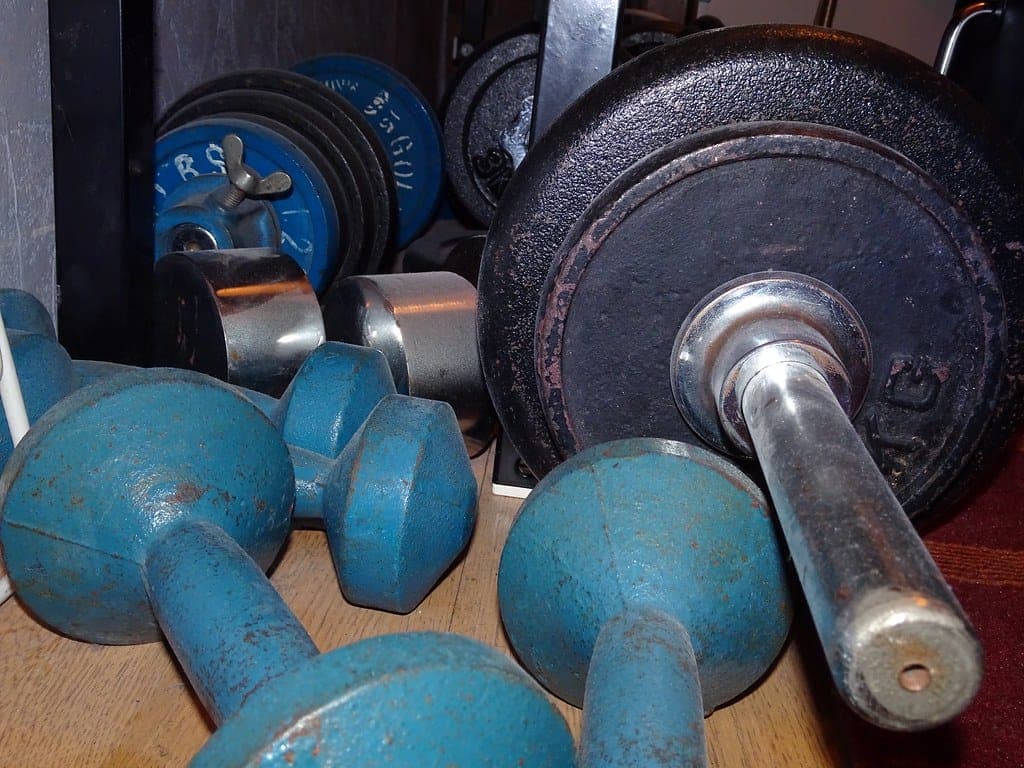
For strength rather than cardio, adjustable dumbbells under $200 deliver far more capability per dollar than any cardio machine at this price.
The full reasoning on what to check and what to avoid is in the cheap treadmill buying guide.
How we picked
Every pick on this page is a real, currently-sold product that we could find at or under $500 at the time of the last update. Rank order is set before any link is attached.
We are research-led, not lab-led. We do not run a test lab and we do not claim to have personally used every product on this site. Picks come from manufacturer specifications, owner-reported reliability and failure patterns, expert-publication consensus, and real availability at the stated price ceiling. Read the full method.
Common questions
+Can you get a decent treadmill for under $500?
A decent walking treadmill or walking pad, yes - and those are genuinely good at this price. A decent running treadmill, not new. Motors in this bracket are 2.0-2.5 CHP with short decks, which is a walking specification.
+What motor size do I need?
Continuous horsepower, not peak: roughly 2.0 CHP for walking, 2.5 for jogging, 3.0 or more for regular running. A motor run continuously above its rating overheats, and that is the most common failure in cheap machines.
+Are walking pads worth it?
Yes, and they are the best use of this budget for most people. They are engineered for the job they actually do, they are quiet, and they store under a sofa - which is the difference between a machine that gets used daily and one that gets resented.
+Why do cheap treadmills break?
Usually an overheated motor caused by a dry, unlubricated deck, or a worn belt running out of alignment. Both are preventable with a few minutes of maintenance every few months, and both are where most of the reported failures come from.
+Should I buy used instead?
If you want to genuinely run at home on a $500 budget, yes. A five-year-old commercial-grade machine beats anything new at the price on motor and deck. Run it before you pay, and be realistic about moving 300 pounds of steel.
Sources
Read next

Fitness
Cheap Treadmill Buying Guide
Three numbers decide it: continuous horsepower, deck length, weight rating. Plus the maintenance that prevents most failures.

Best running shoes under $100
Best Running Shoes Under $100 (October 2026)
Last year's model of a good shoe beats this year's cheap one. Five picks, and why fit outranks every spec.
Best adjustable dumbbells under $200
Best Adjustable Dumbbells Under $200 (October 2026)
Spin-lock beats cheap selectorized at this price, and the reason is a plate landing on your foot. Five picks with the safety case made plainly.

Shop by price
Under $500
The serious end of budget. Laptops, mattresses, espresso machines and automatic watches.
Category
Fitness
Trackers, dumbbells, shoes and treadmills, with the honest line on where budget gear stops being safe.
Think we got a pick wrong, or spotted one that is out of stock or over its ceiling? Tell us - corrections go to the front of the queue.