Kitchen - under $100
Best Knife Set Under $100 (October 2026)
Most knife sets are a marketing format rather than a kitchen one. Here is how to buy a good one, and why three knives is usually the right answer.
By Brijon M. - Published October 2, 2026

The short answer
You need three knives: a chef's knife, a paring knife and a serrated bread knife. A $100 three-piece set from a real knife maker beats a fifteen-piece block from a housewares brand, because the block pads the count with steak knives and a pair of scissors.
Disclosure: we earn commission on qualifying purchases made through the links below, at no extra cost to you. It never changes the order of our picks - here is how that works.
The piece-count trick
A fifteen-piece knife block sounds like better value than a three-piece set at the same price. It almost never is, because of how the count is assembled.
A typical fifteen-piece block contains: a chef's knife, a bread knife, a paring knife, a utility knife, a santoku, six steak knives, a pair of kitchen shears, a sharpening steel and the wooden block itself. Those last nine items are counted as 'pieces'. The steak knives are usually serrated and unsharpenable. The sharpening steel is a honing rod, which realigns an edge but does not sharpen it. The block is furniture.
So a $100 fifteen-piece set has spread its budget across four or five actual knives plus accessories, and each of those knives is correspondingly cheaper. A $100 three-piece set has put the whole budget into three knives.
You need three knives. A chef's knife does roughly 80% of kitchen work. A paring knife does small, in-hand tasks. A serrated bread knife does bread and tomatoes. A fourth knife is a preference; a fifteenth is a marketing number.
Stamped or forged, and which steel
Stamped knives are cut from a sheet of steel; forged knives are shaped from a billet under heat and pressure. Forged knives are heavier, usually have a bolster between blade and handle, and cost more.
Neither is better. Forged knives feel more substantial and balance differently; stamped knives are lighter, often sharper out of the box, and are what most professional cooks use. Under $100, stamped is where the value is - a good stamped knife beats a cheap forged one comfortably.
On steel: German stainless (X50CrMoV15 and similar) is softer, holds an edge for less time, and is very easy to sharpen. Japanese stainless (VG-10, AUS-8, and the common budget steels) is harder, holds an edge longer, and chips if you twist it or hit bone.
For a first set, German-style steel is the more forgiving choice precisely because it sharpens easily - and sharpening often matters far more than edge retention.
Quick picks
The short version. Tap any row to jump to the full write-up, or go straight to Amazon to check the current price.
| # | Product | Best for | Price |
|---|---|---|---|
| 1 | Victorinox Fibrox three-piece The knives professional kitchens actually use, in the three sizes you need. | Best overall | |
| 2 | Mercer Culinary Millennia set Culinary-school standard issue at a price that makes it obvious why. | Best value | |
| 3 | Wusthof Gourmet two or three-piece A proper German name, by buying fewer pieces. | Best German knives at this price | |
| 4 | Misen three-piece starter A blade geometry between German and Japanese, which suits most people. | Best hybrid profile | |
| 5 | Entry knife block (the one to skip) Fifteen pieces, four of which are knives. | Best illustration of what not to buy |
We do not print prices on this site. Every button opens the live Amazon listing so you see the real price at the moment you click. See our affiliate disclosure.
1. Best overall
Victorinox Fibrox three-piece
The knives professional kitchens actually use, in the three sizes you need.
- Stamped Swiss steel
- Textured grip handle
- Chef, paring, bread
- Dishwasher tolerant
Victorinox Fibrox knives are standard equipment in professional kitchens, which is the strongest recommendation available: they are chosen by people who use knives all day and pay for them themselves.
The stamped blade is light and takes a very sharp edge. The Fibrox handle is textured plastic that grips when wet, which is why it is specified in commercial settings over wood.
They are not beautiful. They are correct, and a three-piece set lands comfortably under $100.
What you give up
Plainly utilitarian - plastic handles and no visual appeal. The softer steel needs honing every few uses to stay keen.
2. Best value
Mercer Culinary Millennia set
Culinary-school standard issue at a price that makes it obvious why.
- Stamped high-carbon steel
- Santoprene grip
- Multiple set sizes
- Very low price
Mercer is what many American culinary schools issue to students, for the same reason Victorinox dominates professional kitchens: it is sharp, cheap enough to replace, and does not pretend to be anything else.
The Santoprene handle grips reliably with wet or greasy hands, which matters more than aesthetics once you are actually cooking.
A three or four-piece Mercer set leaves change from $60, which is the most money-efficient entry into decent knives available.
What you give up
Fit and finish is rough in places - the handle molding is visible and the spine is not polished. Entirely cosmetic.
3. Best German knives at this price
Wusthof Gourmet two or three-piece
A proper German name, by buying fewer pieces.
- Stamped German steel
- Full tang
- Riveted handle
- Classic profile
Wusthof's Gourmet line is its stamped range, and it is how you get genuine German knife-making under $100 - by buying two or three knives rather than a block.
The classic German profile has a curved belly suited to rocking cuts, and the softer steel sharpens readily on a basic stone or pull-through.
This is the pick if you want knives that look like knives rather than professional tools.
What you give up
You get two or three pieces for the price of a competitor's five. Softer steel needs honing frequently.
4. Best hybrid profile
Misen three-piece starter
A blade geometry between German and Japanese, which suits most people.
- AUS-10 steel
- Hybrid blade profile
- Full tang
- Sloped bolster
Misen's blades sit between the curved German profile and the flatter Japanese one, which means they work for both rocking and push cuts without being ideal at either. For a single knife set in a home kitchen, that compromise is the right one.
AUS-10 steel holds an edge noticeably longer than German stainless while still being sharpenable at home.
The sloped bolster lets you sharpen the full length of the blade, which a traditional full bolster prevents - a small design detail that matters over years.
What you give up
Sits near the top of the $100 ceiling for three pieces. Harder steel is less forgiving of twisting and will chip on bone.
5. Best illustration of what not to buy
Entry knife block (the one to skip)
Fifteen pieces, four of which are knives.
- High piece count
- Includes steak knives
- Honing rod
- Wooden block
This entry exists to be argued against, honestly. A fifteen-piece block at $60-$100 contains perhaps four knives you will use, six serrated steak knives that cannot be sharpened, a honing rod many people mistake for a sharpener, and a block.
If you genuinely want steak knives and a block as furniture, it is not an irrational purchase. If you want good knives, the same money buys three considerably better ones.
The block itself also holds knives edge-down against wood, which dulls them - a magnetic strip or an in-drawer holder is better and cheaper.
What you give up
The piece count is padded with items that are not knives, so the actual knives are much cheaper than the price suggests.
Sharpening matters more than the knife
A $35 knife that is sharp outperforms a $200 knife that is dull, every time, and the dull $200 knife is also more dangerous because it slips.
Honing - running the blade on a steel rod - realigns a rolled edge and takes ten seconds. Do it every few uses. It is not sharpening, despite the rod usually being sold as a 'sharpening steel'.
Sharpening removes metal to create a new edge. A $25 pull-through sharpener works and is the pragmatic choice for most households. A whetstone produces a better edge, takes practice and costs about the same.
Doing either one regularly is the single biggest improvement available to anyone's knife situation, and it costs almost nothing.
If you only buy one knife
Buy a chef's knife, and buy a good one. It handles roughly 80% of kitchen tasks and is the knife you will reach for every day.
The best chef's knife under $50 covers that single purchase, and for a lot of households it is the better spend than a set - one excellent knife plus a $10 paring knife beats three mediocre ones.
Our affordable knife set buying guide goes deeper on steel, profiles and what a set should actually contain.
How we picked
Every pick on this page is a real, currently-sold product that we could find at or under $100 at the time of the last update. Rank order is set before any link is attached.
We are research-led, not lab-led. We do not run a test lab and we do not claim to have personally used every product on this site. Picks come from manufacturer specifications, owner-reported reliability and failure patterns, expert-publication consensus, and real availability at the stated price ceiling. Read the full method.
Common questions
+What is a good affordable knife set?
A three-piece set - chef's knife, paring knife, serrated bread knife - from a maker that supplies professional kitchens, such as Victorinox or Mercer. Three good knives at $100 beat fifteen mediocre pieces at the same price.
+How many knives do I actually need?
Three. A chef's knife does about 80% of the work, a paring knife handles small in-hand tasks, and a serrated knife cuts bread and tomatoes. Everything beyond that is specialization, not necessity.
+What knives do chefs recommend?
Professional kitchens overwhelmingly use inexpensive stamped knives - Victorinox Fibrox is the most common example - because they are sharp, light and cheap enough to replace. That is a strong signal about where the value actually sits.
+Are expensive knives worth it?
They hold an edge longer and feel better in the hand, which matters if you cook for hours daily. They do not cut better when both are sharp. Sharpening a cheap knife regularly beats owning an expensive dull one by a wide margin.
+Can knives go in the dishwasher?
They should not. Detergent is abrasive, the heat loosens handle adhesives, and knives knock against other items and chip. Hand-washing and drying immediately takes twenty seconds and roughly doubles a knife's usable life.
Sources
Read next

Best chef's knife under $50
Best Chef's Knife Under $50 (October 2026)
The clearest budget win on the site. Five chef's knives under $50, and why sharpening beats steel.
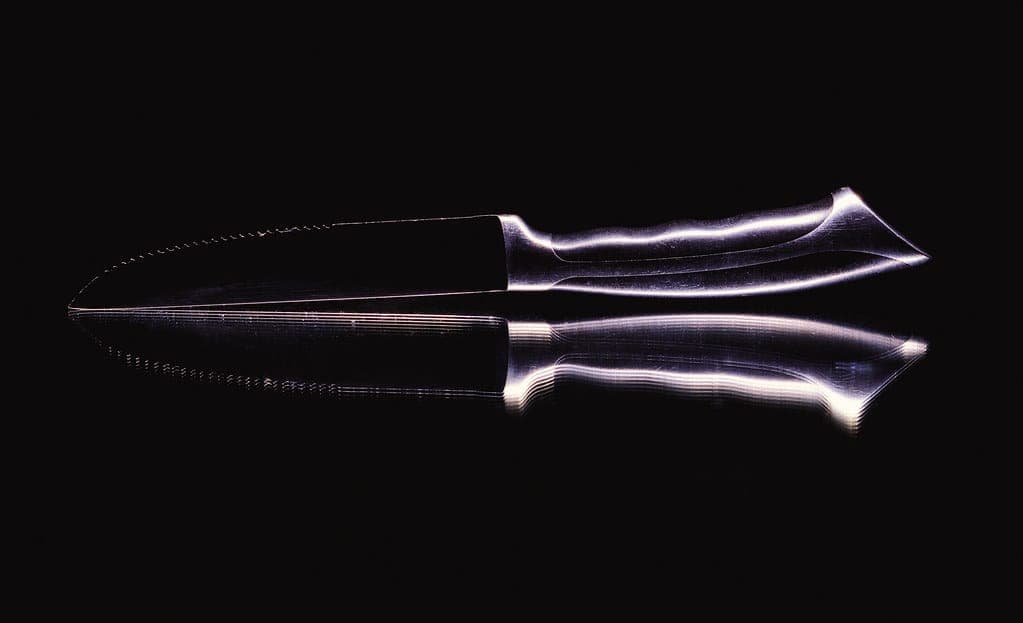
Kitchen
Affordable Knife Set Buying Guide
Which three knives you need, how piece counts are padded, and why sharpening beats spending.

Shop by price
Under $100
The sweet spot. The only price ceiling with real search demand in all seven categories we cover.
Category
Kitchen
Air fryers, blenders, knives and coffee gear - the categories where spending more buys the least.
Think we got a pick wrong, or spotted one that is out of stock or over its ceiling? Tell us - corrections go to the front of the queue.