Pet
What Size Dog Crate Do I Need?
Two measurements and one piece of arithmetic. The common mistake is buying too big, not too small.
By Brijon M. - Published October 11, 2026
The short answer
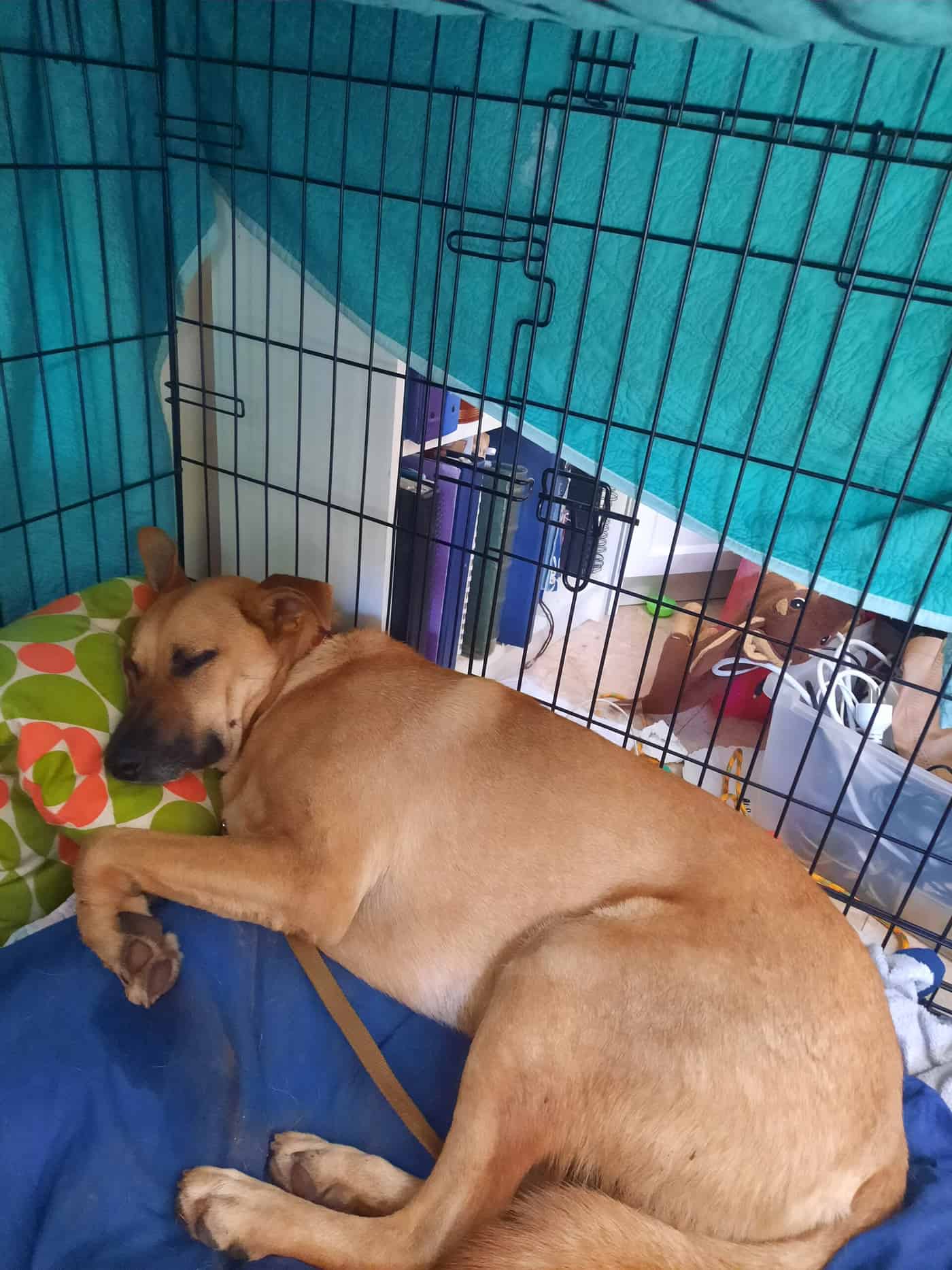
Measure your dog from nose to the base of the tail, and from the floor to the top of the head while standing. Add two to four inches to each figure - that is your minimum crate length and height. Buy the size your dog will reach as an adult and use a divider panel to shrink it while they grow, because an oversized crate undermines house-training.
Disclosure: we earn commission on qualifying purchases made through the links below, at no extra cost to you. It never changes the order of our picks - here is how that works.
The two measurements
You need a tape measure and a dog standing still. Treats help with the second part.
Length: nose to the base of the tail. Not the tip of the tail - a crate sized to include a Labrador's full tail would be far too long. Measure to where the tail joins the body.
Height: floor to the top of the head, standing. For a breed with upright ears - a German Shepherd, a Corgi - measure to the top of the ears instead, because the dog has to stand without them touching the roof.
Add two to four inches to each figure. Two inches is snug and correct for a dog that likes a close den; four inches is generous and better for a dog that sprawls on its side.
That is the whole calculation. Length determines the crate size you buy, height determines whether that size is tall enough - and for tall, narrow breeds the height is sometimes what forces you up a size rather than the length.
Crate sizes are advertised by length in inches: 24, 30, 36, 42, 48. Round up to the next size, not down.
Why bigger is worse
This is counter-intuitive and it is the single most common crate-buying error, so it is worth explaining the mechanism rather than just asserting it.
House-training a puppy works because dogs are reluctant to soil the place they sleep. A correctly sized crate is a bed, and the puppy will hold on and ask to go out. An oversized crate is a bedroom with an en-suite: the puppy sleeps at one end, relieves itself at the other, and stays clean and comfortable while learning precisely the opposite of what you intended.
Once that habit forms it is genuinely difficult to undo, which is why the sizing matters more at eight weeks than at any other point in the dog's life.
The solution is not to buy a small crate and replace it. It is to buy the adult-size crate and use a divider panel - a wire or plastic sheet that clips in and reduces the usable floor area. Move it out an inch or two at a time as the puppy grows. One crate, correctly sized at every stage.
There is a second, smaller argument: a dog in an oversized crate has nothing to brace against in a moving car, and a correctly sized crate is considerably safer in transit.
- Measure nose to tail base, not tail tip.
- Measure height to the top of the ears for upright-eared breeds.
- Add 2-4 inches, then round up to the next advertised crate size.
- Buy for the adult size and use a divider.
Quick picks
The short version. Tap any row to jump to the full write-up, or go straight to Amazon to check the current price.
| # | Product | Best for | Price |
|---|---|---|---|
| 1 | A wire crate with a divider panel included One crate for the dog's whole life, correctly sized at every stage. | The answer for a growing puppy | |
| 2 | A universal divider panel A $15 fix for the most common crate-sizing mistake. | If you already own an oversized crate | |
| 3 | A crate mat sized to the crate, not the dog A mat that fits wall to wall is what makes a correctly sized crate comfortable. | Getting the inside right |
We do not print prices on this site. Every button opens the live Amazon listing so you see the real price at the moment you click. See our affiliate disclosure.
1. The answer for a growing puppy
A wire crate with a divider panel included
One crate for the dog's whole life, correctly sized at every stage.
- Six sizes from 24 to 54 inches
- Divider panel in the box
- Double doors on most sizes
- Folds flat
Everything above argues for one product feature, so here it is concretely. A wire crate sold with a divider lets you buy the adult-size crate on day one and present the puppy with a correctly sized space inside it.
Check the listing explicitly says the divider is included. Some ranges sell it separately and some do not offer one at all, and a crate without a divider is a crate you will buy twice.
Size selection: look up your breed's adult length and height, run the calculation above against those figures, and buy that size.
For a mixed-breed puppy of unknown parentage, your vet can usually estimate adult size from paw and frame at the first vaccination appointment.
What you give up
Wire crates rattle, and the plastic pan is the weak point on the larger sizes. For a dog that prefers a fully enclosed den, a plastic kennel suits better - but those do not come with dividers, so you buy two.
2. If you already own an oversized crate
A universal divider panel
A $15 fix for the most common crate-sizing mistake.
- Wire or plastic panel
- Clips to standard wire crate bars
- Adjustable position
- Sized by crate width
If you have already bought a crate that is too big - a very common situation, often because the crate was a gift or came with the dog - you do not need a new crate. You need a panel.
Universal dividers clip to the vertical bars of any standard wire crate and are sold by crate width. Check the width of your crate before ordering, because the panel has to span it exactly.
Fit it so the puppy has room to stand, turn and stretch out and little more, then move it as they grow.
This is a far cheaper correction than it feels like it should be.
What you give up
Only works on wire crates - plastic kennels and soft crates have nothing to clip to. Width matching is fiddly, and a poorly fitted panel leaves a gap a determined puppy will squeeze through.
3. Getting the inside right
A crate mat sized to the crate, not the dog
A mat that fits wall to wall is what makes a correctly sized crate comfortable.
- Low-loft washable mat
- Sized to standard crate footprints
- Machine washable
- Chew-resistant versions available
Having sized the crate properly, the floor is what determines whether the dog actually likes it. A bare plastic pan is cold, slippery and noisy.
Buy a mat sized to the crate's internal footprint rather than to the dog, so there are no edges to chew at and no gaps that collect hair.
Low-loft is better than plush for a puppy or a chewer: less stuffing to shred, and far less to swallow if they do. A swallowed mass of bedding fill is a genuine blockage risk.
Two mats is a sensible purchase, because one will be in the wash.
What you give up
A puppy that chews bedding should not be left unsupervised with any mat, which means a bare pan for a while. Thick mats also raise the dog, which effectively reduces the crate's internal height.
Crate size by dog weight and breed
Use this to narrow the choice, then confirm with the measurements above - these ranges are a starting point, and individual dogs vary a great deal within a breed.
24-inch crate, dogs up to about 25 lb. Chihuahua, Yorkshire Terrier, Maltese, Pomeranian, Shih Tzu, Papillon, Pug, Jack Russell Terrier, Dachshund.
30-inch crate, roughly 25-40 lb. Beagle, French Bulldog, Cocker Spaniel, Shetland Sheepdog, Welsh Corgi, Miniature Poodle, Boston Terrier.
36-inch crate, roughly 40-70 lb. Border Collie, American Pit Bull Terrier, Basset Hound, Goldendoodle, English Setter, Siberian Husky, Springer Spaniel.
42-inch crate, roughly 70-90 lb. Labrador Retriever, Golden Retriever, German Shepherd, Boxer, Doberman, Irish Setter.
48-inch crate and up, 90 lb and over. Great Dane, Mastiff, Saint Bernard, Rottweiler, Bernese Mountain Dog, Newfoundland.
Two breed notes. Upright-eared breeds frequently need a taller crate than their length suggests - measure to the ear tips. And deep-chested breeds like Greyhounds need length rather than height, because they lie fully extended rather than curled.
When a crate is the wrong tool
Sizing correctly does not make a crate right for every situation, and it is worth naming the cases where something else fits better.
A dog alone for a full working day. No crate size fixes that. A puppy pen, a gated room, or a dog walker is the answer.
A dog with genuine separation anxiety. Confinement often makes it worse rather than better, and dogs have injured themselves trying to get out of crates. That is a question for a vet or a qualified behaviorist, not a sizing question.
A dog that has never been crated and is now elderly. Introducing confinement late is possible but slow, and often not worth it compared with a comfortable bed in a quiet corner.
Transport in a car. A crate is the safest option, but it needs to be secured. A loose crate in a boot is a projectile.
For the crates themselves, the best dog crates under $100 covers the five types and which dog each suits.
How we put this together
The measuring method and the add-on range here are the standard guidance published by crate manufacturers and veterinary retailers, and they agree closely with one another - two to four inches over the dog's standing height and nose-to-tail-base length, with the dog able to stand, turn and lie extended.
The breed ranges are compiled from published crate sizing charts and are deliberately given as ranges, because within-breed variation is large enough that a chart alone should never be the final answer. Measure the dog.
We have not measured dogs ourselves and claim no veterinary expertise. For a dog with a medical or behavioral condition, ask your vet rather than a buying guide. Our approach to this kind of guide is at how we pick.
Common questions
+How do I measure my dog for a crate?
Two measurements with the dog standing: nose to the base of the tail for length, and floor to the top of the head - or the ear tips, on upright-eared breeds - for height. Add two to four inches to each, then round up to the next advertised crate size.
+Should a dog crate be bigger or smaller?
Slightly snug beats oversized. The dog must be able to stand without ducking, turn around and lie fully stretched. Beyond that, extra space undermines house-training, because a puppy will sleep at one end and relieve itself at the other.
+What size crate for a Labrador or German Shepherd?
A 42-inch crate suits most adult Labradors, Golden Retrievers and German Shepherds. German Shepherds often need the taller version of that size because of their upright ears - measure to the ear tips while the dog is standing.
+Do I need to buy a bigger crate as my puppy grows?
No, if you buy a crate with a divider panel. Buy the adult size on day one and use the divider to reduce the usable space, moving it outward as the puppy grows. That is one crate for the dog's life rather than three.
+What if I already bought a crate that is too big?
Buy a universal divider panel, which clips to the vertical bars of any standard wire crate and costs very little. Check your crate's internal width before ordering, since the panel has to span it exactly.
Sources
Read next

Best dog crate under $100
Best Dog Crate Under $100 (October 2026)
Five crates under $100 sorted by type - wire, soft, plastic and furniture - plus the sizing rule that prevents most crate problems.

Best budget dog bed
Best Budget Dog Beds (October 2026)
Washable cover, dense fill, right size. Five picks and the orthopedic-foam claim worth checking.

Best budget dog harness
Best Budget Dog Harnesses (October 2026)
Four affordable dog harnesses that actually reduce pulling, plus how to measure your dog so the first one fits.
Think we got a pick wrong, or spotted one that is out of stock or over its ceiling? Tell us - corrections go to the front of the queue.