Tech & gadgets - under $50
Best Bluetooth Speaker Under $50 (October 2026)
One of the few categories where the budget tier competes on performance rather than on features. Here is what $50 genuinely gets you.
By Brijon M. - Published October 2, 2026
The short answer
The JBL Go 4 is the pick under $50: fully waterproof, pocket-sized, and tuned better than anything else at the price. If you want more volume for the same money, the Anker Soundcore 3 trades pocketability for a bigger driver pair and around 24 hours of battery.
Disclosure: we earn commission on qualifying purchases made through the links below, at no extra cost to you. It never changes the order of our picks - here is how that works.
Physics decides this category, not price
A portable speaker's low-frequency output is governed by how much air the driver can move and how large the sealed cabinet is. That is a physical constraint, and no amount of DSP changes it. A pocket-sized speaker will not produce deep bass at any price, and a speaker that claims to is either distorting or using a passive radiator to fake the impression of one.
This is good news for a budget buyer. Because the limitation is physical rather than electronic, the gap between a $45 speaker and a $150 one of the same size is much smaller than the price suggests. What the expensive one buys you is cleaner output at high volume, better waterproofing and a longer warranty - not a fundamentally different sound.
So the honest way to shop this category is by size and by use case. Pick the physical form that suits where you will actually use it, then pick the best-tuned speaker in that size.
The specs worth reading
IP rating is the one that matters most, because these live outdoors. IPX7 means full immersion for thirty minutes; IPX5 means jets of water but not submersion. For a shower, a pool or a beach, hold out for IP67 or IPX7.
Battery at realistic volume is roughly half the quoted figure, because manufacturers measure at around 50% volume indoors. A quoted 24 hours is about 12 real ones at a volume you would use in a garden.
Pairing two speakers for stereo is widely supported now and is the cheapest way to get a genuinely better sound - two $40 speakers paired usually beat one $80 speaker for music in a room.
Quick picks
The short version. Tap any row to jump to the full write-up, or go straight to Amazon to check the current price.
| # | Product | Best for | Price |
|---|---|---|---|
| 1 | JBL Go 4 The best-tuned small speaker at this price, and genuinely waterproof. | Best overall | |
| 2 | Anker Soundcore 3 Twice the drivers and three times the runtime, for the same money. | Best for volume and battery | |
| 3 | Tribit XSound Go The cheapest speaker here we would happily own. | Best value | |
| 4 | Ultimate Ears Wonderboom 3 Floats, survives drops, and throws sound in every direction. | Best for outdoors | |
| 5 | Soundcore Mini 3 Pocketable with a longer battery than the JBL. | Best tiny speaker |
We do not print prices on this site. Every button opens the live Amazon listing so you see the real price at the moment you click. See our affiliate disclosure.
1. Best overall
JBL Go 4
The best-tuned small speaker at this price, and genuinely waterproof.
- IP67 water and dust
- ~7h battery
- Pocket-sized
- Auracast pairing
The Go 4 fits in a jacket pocket, survives being dropped in a pool, and sounds better than any speaker its size has a right to. JBL's advantage in this category is tuning experience - the company has made small speakers for long enough to know exactly where to roll off the bass so the driver never audibly strains.
IP67 covers both dust and immersion, which matters at the beach as much as in the shower. Auracast lets you pair it with other recent JBL speakers for a larger setup later.
Battery is the compromise at around seven hours, which is a full day of intermittent use but not a festival weekend.
What you give up
Seven hours is the shortest battery here, and there is no meaningful bass below about 100Hz - a physical consequence of the size, not a flaw.
2. Best for volume and battery
Anker Soundcore 3
Twice the drivers and three times the runtime, for the same money.
- Dual drivers
- ~24h battery
- IPX7
- App EQ
If the Go 4 is the speaker you carry, the Soundcore 3 is the speaker you leave somewhere. Two drivers with titanium diaphragms and a pair of passive radiators give it genuine stereo separation and considerably more output than the pocket-sized options.
Around 24 hours of quoted battery means a realistic full weekend of garden use without a charger, and IPX7 covers rain and poolside accidents.
The Soundcore app adds a full EQ, which is more useful here than on most budget speakers because the default tuning is heavier than the drivers really want.
What you give up
Too large for a pocket, and the default bass boost pushes the drivers into audible strain at high volume until you flatten it in the app.
3. Best value
Tribit XSound Go
The cheapest speaker here we would happily own.
- IPX7
- ~24h battery
- Dual passive radiators
- Under 1 lb
Tribit built a reputation on this exact product: a plain rectangular speaker with no features, a long battery and a tuning that is far more even than the price implies. It has been recommended continuously for years, which in this category is unusual.
There is no app and no EQ. What you get is a flat-ish response with modest bass reinforcement from the passive radiators, IPX7 waterproofing, and around 24 hours of runtime.
If you want one speaker for a kitchen, a garage or a tent and do not care about brand, this is the most speaker per dollar on the page.
What you give up
No app, so the tuning is whatever Tribit decided. The buttons are stiff and unlabelled by touch, which is irritating in the dark.
4. Best for outdoors
Ultimate Ears Wonderboom 3
Floats, survives drops, and throws sound in every direction.
- IP67 and floats
- ~14h battery
- 360-degree output
- Outdoor Boost mode
The Wonderboom's trick is a cylindrical cabinet that radiates in 360 degrees rather than firing forwards, which makes it the obvious choice when people are sitting around it rather than in front of it. It also floats, which sounds like a gimmick until it goes in a lake.
Outdoor Boost is a dedicated mode that shifts the tuning for open spaces where bass disappears into the air. It is a small change that makes a real difference at a picnic.
Build quality is the best here - the fabric exterior and over-molded rubber have survived years of abuse in owner reports.
What you give up
Frequently sits just above $50 outside of sales, and the 360-degree design means less stereo imaging than a forward-firing speaker.
5. Best tiny speaker
Soundcore Mini 3
Pocketable with a longer battery than the JBL.
- IPX7
- ~15h battery
- BassUp mode
- App EQ
The Mini 3 occupies the same pocket-sized category as the JBL Go 4 but trades a little tuning finesse for roughly double the runtime, and adds app EQ that the JBL lacks.
BassUp is Anker's DSP mode that lifts the low end. On a speaker this size it is more marketing than physics, but it does make spoken-word content and podcasts fuller without obvious distortion.
For a bag, a bike or a hotel room, it is the better travel speaker; for outright sound quality at the same size, the Go 4 still edges it.
What you give up
DSP works harder than the driver can really support, so busy tracks compress audibly at high volume.
When to spend more
Two reasons, and neither is sound quality at normal volume.
Volume without distortion is the first. If you want a speaker for a party, a large garden or a workshop, the extra money buys bigger drivers and more amplifier headroom, and the difference is obvious. Below about $80 nothing fills a large space cleanly.
Multi-speaker ecosystems are the second. If you expect to add more speakers and run them as a system, buying into a platform like JBL's Auracast from the start is worth doing deliberately rather than ending up with three incompatible speakers.
Otherwise this category genuinely peaks early. If you have $100 to spend on audio, a pair of earbuds under $100 will improve more of your week than a bigger speaker will.
Pair two instead of buying one bigger
Most speakers here support pairing a second identical unit for true stereo. Two $40 speakers placed a few feet apart produce a wider, more convincing sound in a room than one $80 speaker does, because stereo separation is doing work that a single cabinet physically cannot.
It is also a better upgrade path: buy one, see whether you want more, and add the second later at whatever it costs then.
How we picked
Every pick on this page is a real, currently-sold product that we could find at or under $50 at the time of the last update. Rank order is set before any link is attached.
We are research-led, not lab-led. We do not run a test lab and we do not claim to have personally used every product on this site. Picks come from manufacturer specifications, owner-reported reliability and failure patterns, expert-publication consensus, and real availability at the stated price ceiling. Read the full method.
Common questions
+How much bass can you actually get from a $50 speaker?
Usefully down to around 80-100Hz on the larger models, and less on pocket-sized ones. That covers most of the audible bass line in popular music but not the lowest notes. Any small speaker claiming deep bass is using a passive radiator to suggest it rather than produce it.
+Is IPX7 worth holding out for?
If the speaker will go near a pool, a bath or the sea, yes - IPX7 means survivable immersion while IPX5 only means splashes. For a kitchen counter or a desk, IPX5 is plenty and you can prioritize sound instead.
+Does Bluetooth codec matter on a portable speaker?
Far less than on headphones. The limiting factor is the driver and the cabinet, not the data rate, so SBC versus aptX makes no practical difference on a speaker this size. Do not pay extra for it here.
+How long do budget Bluetooth speakers last?
Owners typically report four to six years, with the battery degrading long before the driver does. Models with USB-C charging and no proprietary parts stay useful longest, since you can keep them plugged in once the cell is tired.
+Can I use a Bluetooth speaker for a TV?
You can, but Bluetooth introduces audio latency that makes lip sync visibly wrong on most TVs. For TV audio, a wired connection or a soundbar is the right answer - a portable speaker is the wrong tool regardless of its quality.
Sources
Read next

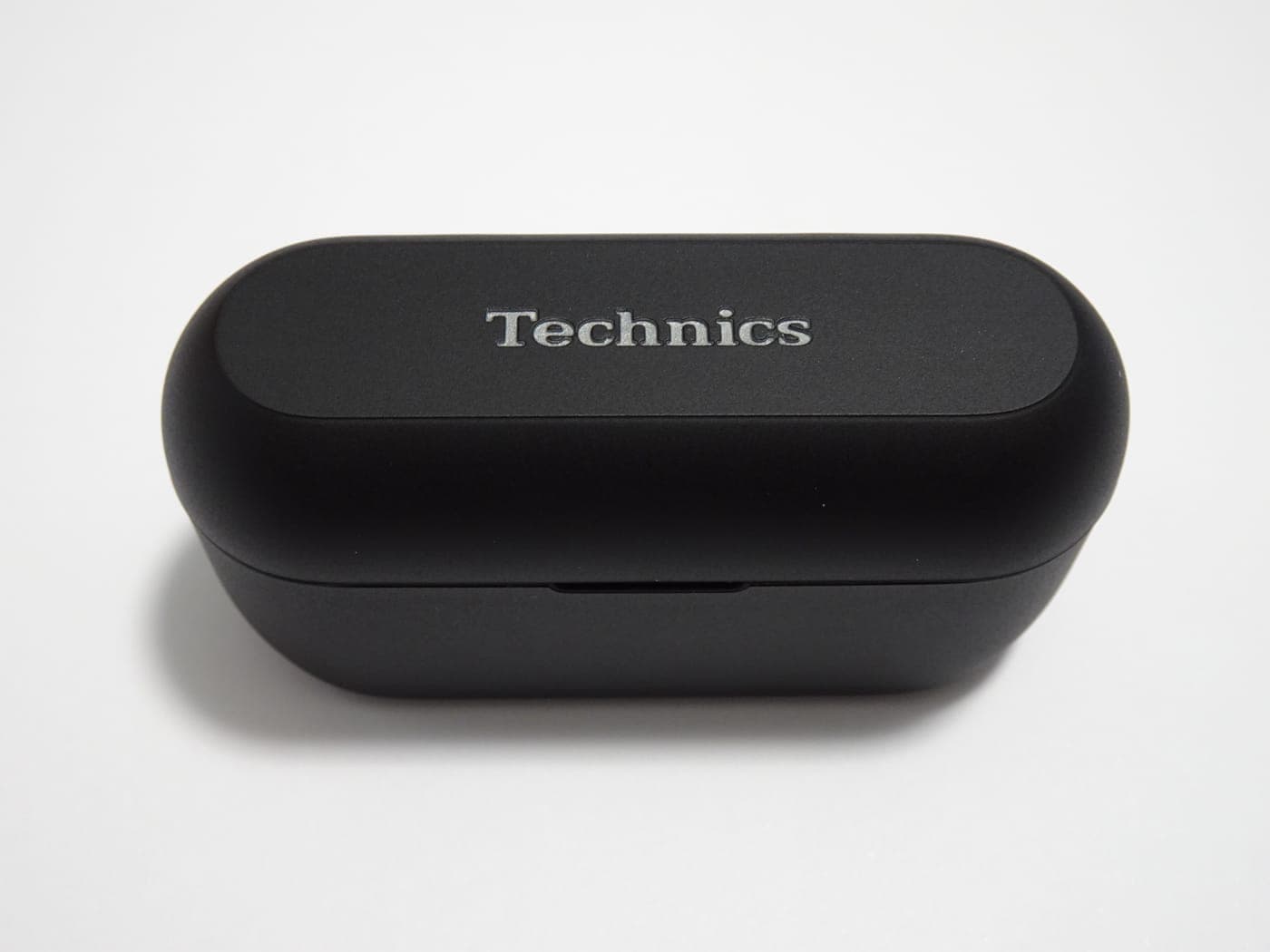
Best earbuds under $50
Best Wireless Earbuds Under $50 (October 2026)
The $50 floor is better than it was. Five picks, and a straight answer on what the extra $50 actually buys.
Best earbuds under $100
Best Wireless Earbuds Under $100 (October 2026)
Adaptive ANC, multipoint and 50-hour cases are standard at $100 now. Five picks, with the compromise named on each.
Shop by price
Under $50
The impulse tier. Some categories are genuinely solved at $50; others are a false economy, and we say which.

Category
Tech & Gadgets
Earbuds, laptops, monitors, cameras and the rest - where the budget tier is genuinely close to the flagship.
Think we got a pick wrong, or spotted one that is out of stock or over its ceiling? Tell us - corrections go to the front of the queue.