Fitness
Foam Roller vs Massage Gun
One costs twenty dollars and never needs charging. The other reaches places you cannot put your body weight on.
By Brijon M. - Published October 17, 2026
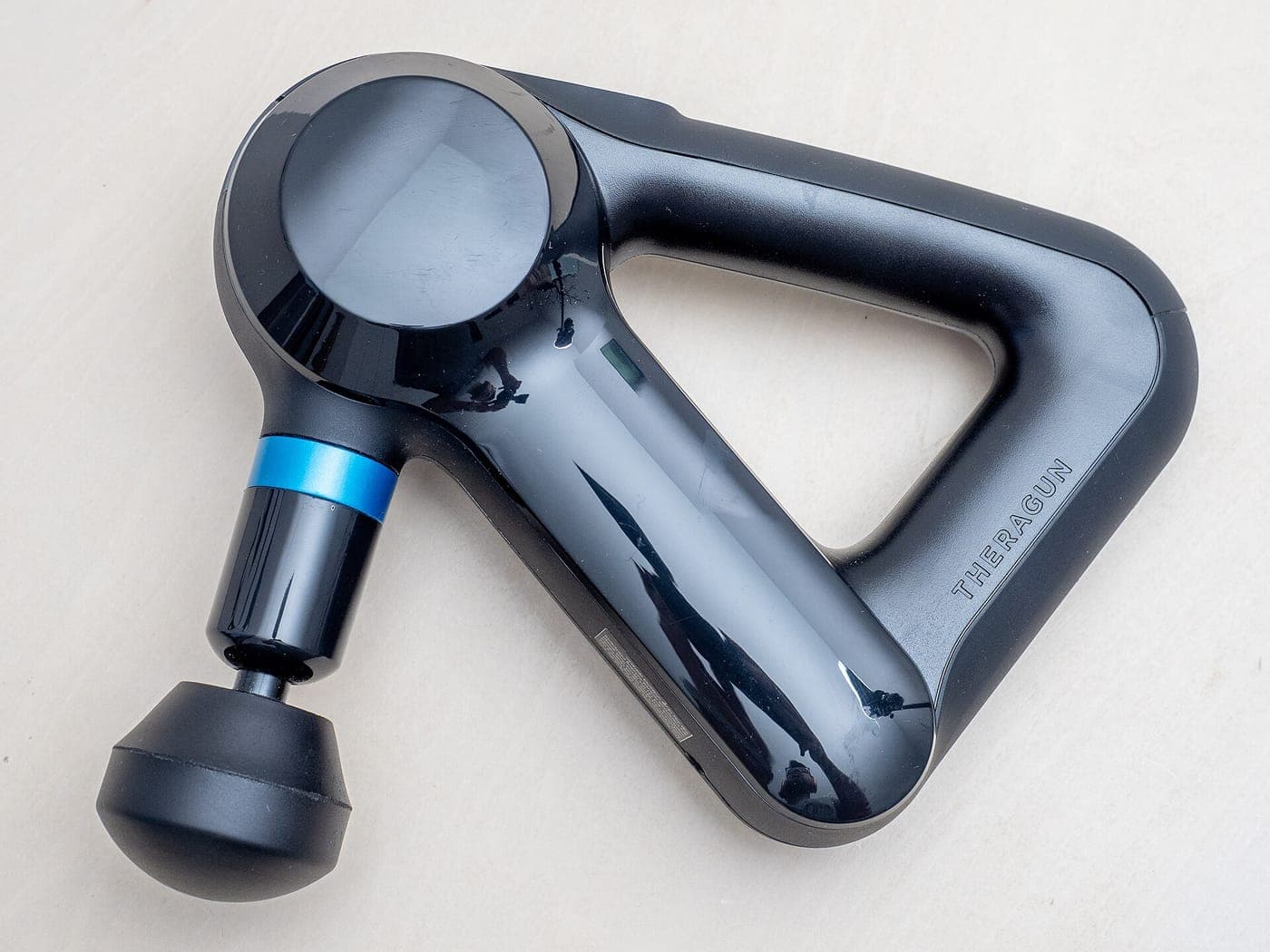
The short answer
Buy a foam roller first. It costs under $30, covers large muscle groups quickly, has the better-settled evidence for range of motion, and needs no battery. A massage gun earns its higher price when you need to target small or awkward areas - calves, forearms, the area around a knee - that a roller cannot reach well.
Disclosure: we earn commission on qualifying purchases made through the links below, at no extra cost to you. It never changes the order of our picks - here is how that works.
What each one actually does
A foam roller is a cylinder you lie on. Your body weight supplies the pressure and you move slowly along the muscle. It is entirely passive - no motor, no battery, nothing to break - and it costs between about $15 and $50.
A massage gun is a motorised percussion device. A head oscillates rapidly, delivering high-frequency pulses into soft tissue. It is targeted, you can use it on yourself without getting on the floor, and quality models are difficult to find under about $100.
They are doing broadly similar things - applying mechanical pressure to soft tissue - by very different means, and that difference maps cleanly onto which muscles each one suits.
Neither one breaks up scar tissue, lengthens a muscle permanently or flushes lactic acid. Those are marketing claims that have outlived the physiology. What both reliably do is reduce the *feeling* of soreness and temporarily improve range of motion, which is a real and useful effect.
- Roller: cheap, big muscles, no battery, needs floor space and the ability to get down to it.
- Gun: targeted, usable in a chair, reaches calves, forearms and necks, needs charging.
- Both reduce DOMS versus doing nothing. The effect is modest and short-term.
- Neither is a treatment. Persistent pain is a physio's job, not a gadget's.
What the research supports
Both tools have supporting studies, and both sets of studies are smaller and more modest than the advertising suggests.
Foam rolling has the more settled evidence base, particularly for range of motion. Brief foam rolling before activity reliably improves joint range without the strength loss that static stretching can cause - which is a useful, practical finding. One study found foam rolling reduced delayed-onset muscle soreness about 30% more than no recovery intervention.
Massage guns also show benefits: vibration therapy has been found to reduce muscle soreness and improve range of motion in published work.
A 2025 comparison of the two found the foam roller came out ahead on measures of muscle tone, stiffness and elasticity recovery, while the massage gun did not show the same effect - and notably, soreness declined at the same rate in both groups regardless of which treatment they received.
The fair summary: both beat doing nothing, the effects are small and short-lived, and the roller has the slightly better evidence for the specific outcome most people want. Garage Gym Reviews' own conclusion after comparing them is that consistency matters more than which tool you pick, which matches the data.
Quick picks
The short version. Tap any row to jump to the full write-up, or go straight to Amazon to check the current price.
| # | Product | Best for | Price |
|---|---|---|---|
| 1 | A high-density EVA foam roller (36 inch) Twenty dollars, covers everything large, and nothing on it can fail. | Best first purchase | |
| 2 | A budget percussive massage gun Reaches what a roller cannot, and the sub-$100 tier is now genuinely usable. | Best for targeted work | |
| 3 | A lacrosse ball or massage ball set Five dollars, and it reaches the trigger points a roller cannot. | Cheapest targeted option |
We do not print prices on this site. Every button opens the live Amazon listing so you see the real price at the moment you click. See our affiliate disclosure.
1. Best first purchase
A high-density EVA foam roller (36 inch)
Twenty dollars, covers everything large, and nothing on it can fail.
- 36-inch length
- High-density EVA foam
- Smooth surface
- Supports spine alignment work lying lengthwise
Start here. A smooth, dense, 36-inch roller does the large-muscle work that most people actually need - quads, IT band area, glutes, upper back, lats - and it does it quickly.
The 36-inch length is the one to buy over the short ones for a specific reason: you can lie on it lengthwise along your spine for thoracic mobility and chest opening work, which a short roller cannot do.
Smooth rather than knobbly is also the right first choice. Textured rollers concentrate pressure, which is more intense and harder to tolerate, and the textured ones solve a problem beginners do not yet have.
High-density EVA holds its shape for years, where cheaper low-density foam compresses into a flat-sided tube within months.
What you give up
Needs floor space and the ability to get down to it and back up, which rules it out for some people entirely. It cannot reach calves, forearms or anywhere around a joint with useful pressure.
2. Best for targeted work
A budget percussive massage gun
Reaches what a roller cannot, and the sub-$100 tier is now genuinely usable.
- Multiple speed settings
- Several interchangeable heads
- Rechargeable, typically 2-6 hours per charge
- Usually 1.5-2.5 lbs
The reason to own one is specific: calves, forearms, the muscles around a knee or shoulder, and the upper trapezius are all places a roller cannot apply useful pressure, and all places that get tight.
It is also the option for anyone who cannot easily get on the floor - using it in a chair at a desk is a genuine advantage over any roller.
The under-$100 tier has improved substantially. Garage Gym Reviews notes that noise is the main thing separating the tiers, with some well-known premium guns described as quite loud themselves.
Heads matter more than speed settings. A flat head for general work and a bullet head for a specific trigger point cover almost everything; the rest are usually unused.
What you give up
Three to five times the cost of a roller, a battery that degrades over a few years, audible operation, and it is slow on large muscle groups because the head is small.
3. Cheapest targeted option
A lacrosse ball or massage ball set
Five dollars, and it reaches the trigger points a roller cannot.
- Single ball or a graded set
- Firm rubber
- Works against a wall or on the floor
- Fits in a bag
Before spending $100 on a gun for targeted work, spend five dollars on this. A firm ball against a wall reaches the glute medius, the rhomboids, the pec minor and the sole of the foot - which is most of the targeted work people buy massage guns for.
It is also the most portable recovery tool there is, and it never needs charging.
The honest comparison is that a ball is harder work and less comfortable than a gun, but it reaches the same places for a twentieth of the price.
What you give up
Pressure is very hard to modulate - it is largely on or off - and it is uncomfortable in a way that stops some people using it. No use at all for large muscle groups.
Side by side
How to actually use a foam roller
Most people use one badly, which is part of why the results disappoint.
Go slow. Rolling fast up and down a quad does very little. Move at roughly an inch per second and stop on tender spots for twenty to thirty seconds.
Thirty to ninety seconds per muscle group is the range used in most of the research. Ten minutes on one leg is not better.
Breathe and stay relaxed. Tensing against the pressure defeats the mechanism. If you cannot breathe normally, you are putting too much weight on it.
Before activity, keep it brief. The range-of-motion benefit shows up with short bouts, and that is the use with the best evidence behind it.
Avoid rolling directly on the IT band, the lower back and over joints or bone. The IT band is dense connective tissue that does not meaningfully deform under a roller, and the lower back has no bony protection for the kidneys. Roll the muscles around those areas instead - glutes, TFL, quads.
When the gun is genuinely the better buy
You cannot get on and off the floor easily. This is the most important one and it is rarely mentioned. A roller is useless if using it is the hardest part of your day.
Your problem areas are small. Calf tightness, forearm pain from climbing or desk work, a tight upper trapezius - a roller does none of these well.
You want to use it at a desk. Thirty seconds on the traps between meetings is a real-world use case that no roller fits.
You find rolling too intense. A gun's pressure is adjustable in a way that body weight is not, which makes it a gentler option for people who find rolling unbearable.
You will actually use it. This is the real variable. The research says consistency matters more than tool choice, so the right purchase is whichever one you will pick up. If the roller has been under the bed for six months, the roller is not working.
What we would actually buy
A 36-inch high-density roller and a lacrosse ball. That is about twenty-five dollars total and it covers large muscles and trigger points, which is essentially the whole job.
Add a massage gun only if one of the situations above applies - limited mobility, a desk-based problem area, or you have genuinely used the cheap tools and hit their limits.
Do not buy a premium gun as a first recovery purchase. Spending $300 on recovery before spending anything on sleep, protein intake or a sensible training progression is the wrong order, and it is a common one.
If recovery is the actual goal, the cheapest effective intervention is still a decent night's sleep, and the next cheapest is not training through an injury. Are smart scales worth it applies the same "does the gadget change the outcome" test to body-composition tracking, and best yoga mat under $50 covers the surface you will be rolling on.
Common questions
+Is a foam roller or a massage gun better?
A foam roller for most people - it is three to five times cheaper, faster on large muscle groups and has better-settled evidence for range of motion. A massage gun is better for small or awkward areas like calves, forearms and the upper traps, and for anyone who cannot easily get on the floor.
+Do massage guns actually work?
They produce modest, short-term reductions in muscle soreness and improvements in range of motion, which is supported in published work. What they do not do is break up scar tissue or flush lactic acid. A 2025 comparison found soreness declined at the same rate whichever tool was used.
+Should I buy both a foam roller and a massage gun?
Only after you have used the cheap one consistently. Start with a 36-inch roller and a lacrosse ball for about twenty-five dollars, which covers large muscles and trigger points. Add a gun if you hit a specific limit - small areas, desk use, or difficulty getting on the floor.
+How long should you foam roll for?
Thirty to ninety seconds per muscle group, moving at roughly an inch per second and pausing on tender spots for twenty to thirty seconds. Before activity, keep it brief - that is the use with the strongest evidence. Longer is not better.
+Where should you not use a foam roller?
Directly on the IT band, the lower back, and over joints or bone. The IT band is dense connective tissue that does not meaningfully deform under a roller, and the lower back lacks bony protection. Roll the surrounding muscles - glutes, TFL, quads - instead.
+Is a cheap massage gun any good?
The sub-$100 tier is now genuinely usable. The main thing extra money buys is lower noise and a longer-lasting battery, and even well-known premium guns are described by reviewers as loud. Heads matter more than the number of speed settings - a flat head and a bullet head cover nearly everything.
Sources
Read next

Best yoga mat under $50
Best Yoga Mat Under $50 (October 2026)
Grip, thickness, length. Five mats under $50 and the sweat problem that decides between PVC and rubber.
Fitness
Are Smart Scales Worth It?
Great scales, unreliable body-fat readings. What impedance actually measures and how to use the data honestly.

Resistance band pick
Best Resistance Bands Under $50
Loop, tube or pull-up band - three different products, three different jobs. Five sets under $50 and how to stop them snapping.
Category
Fitness
Trackers, dumbbells, shoes and treadmills, with the honest line on where budget gear stops being safe.
Think we got a pick wrong, or spotted one that is out of stock or over its ceiling? Tell us - corrections go to the front of the queue.