Fitness - under $50
Best Yoga Mat Under $50 (October 2026)
A solved product. Grip, thickness and length are the entire specification, and all three are available well under $50.
By Brijon M. - Published October 2, 2026

The short answer
The Gaiam Premium 6mm mat is the sensible pick under $50: enough cushioning for joints, reliable grip once broken in, and a price low enough that replacing it in three years costs nothing. If you sweat heavily, a Manduka PROlite or a mat with a natural-rubber surface will grip when a PVC mat turns slick.
Disclosure: we earn commission on qualifying purchases made through the links below, at no extra cost to you. It never changes the order of our picks - here is how that works.
The three specs, and nothing else
Thickness. 3mm is a travel mat and transmits the floor; 6mm is the standard and the right default; 8-10mm is a joint-protection mat and is too soft for balance poses. If you have sensitive knees, go thicker and accept wobblier standing work. If you do a lot of balance, go thinner.
Grip, in two forms. Dry grip and wet grip are different problems. PVC mats grip well dry and become slippery when you sweat on them. Natural rubber and polyurethane surfaces grip better when damp, which is the entire reason hot-yoga practitioners pay more. Work out which problem you have before spending.
Length and width. Standard mats are 68 inches, which is short for anyone over about 5'10" - your head or your heels end up on the floor. Extra-long 72- and 74-inch mats exist at this price and are worth seeking out if you are tall.
Everything else - the alignment lines printed on it, the carry strap, the brand - is packaging. An alignment grid is genuinely useful for a complete beginner practicing alone, and irrelevant within a few months.
Materials, plainly
PVC is the cheap standard: durable, grippy when dry, cushioned, and it will last years. It is not biodegradable and it is the material most likely to arrive smelling strongly of plastic for the first week or two.
TPE is the common eco-adjacent alternative: lighter, less smell, usually recyclable, and softer. It also wears out faster - TPE mats tend to dent and pill within a year or two of heavy use.
Natural rubber grips best when wet and is the right material if you sweat. It is heavier, it smells distinctly of rubber at first, and it is unsuitable if anyone in the household has a latex allergy.
Cork over rubber gets grippier as it gets damp, which is the neatest solution to the sweat problem, and sits at the top of this tier.
- 6mm PVC is the right default for most people doing yoga on a hard floor.
- Natural rubber or cork if you sweat heavily or practice hot yoga.
- Check the length if you are over 5'10" - 68 inches is short.
Quick picks
The short version. Tap any row to jump to the full write-up, or go straight to Amazon to check the current price.
| # | Product | Best for | Price |
|---|---|---|---|
| 1 | Gaiam Premium 6mm yoga mat The default mat, at the default thickness, for a sensible price. | Best overall | |
| 2 | Manduka PROlite The mat that outlasts the practice. | Best durability | |
| 3 | Natural rubber yoga mat The answer if PVC turns into an ice rink under your hands. | Best grip when you sweat | |
| 4 | BalanceFrom GoYoga 12mm Thick cushioning for knees, at a price that barely registers. | Best for joints and floor work | |
| 5 | Cork-topped yoga mat Gets grippier as you sweat, and does not hold smell. | Best surface at the ceiling |
We do not print prices on this site. Every button opens the live Amazon listing so you see the real price at the moment you click. See our affiliate disclosure.
1. Best overall
Gaiam Premium 6mm yoga mat
The default mat, at the default thickness, for a sensible price.
- 6mm PVC
- 68 inches
- Textured both sides
- Wide pattern range
There is a reason this mat is in so many living rooms. 6mm is the correct general-purpose thickness, the textured surface grips well dry, and it is durable enough that people report four and five years of regular home use.
It is also sold in a huge number of patterns, which matters more than it should - a mat you like the look of is a mat that stays unrolled in the corner rather than in a cupboard.
For home yoga, pilates and general floor work on a hard floor, this is the right purchase and there is no need to spend more.
What you give up
PVC gets slippery once you sweat on it, and it arrives with a strong plastic smell that takes a week or two of airing to fade.
2. Best durability
Manduka PROlite
The mat that outlasts the practice.
- 4.7mm
- Closed-cell surface
- 71 inches
- Lifetime guarantee on some models
Manduka's reputation rests on mats that do not wear out, and the PROlite is the version that comes closest to $50 - it sits at the top of the tier and sometimes just above.
The closed-cell surface does not absorb sweat or bacteria, which means it cleans properly rather than accumulating smell over years. That is the genuine argument for it: a cheap open-cell mat is a sponge, and after two years of use it is a sponge you have sweated into.
It is also longer than standard at 71 inches.
What you give up
The surface is genuinely slippery when new and needs breaking in - usually a few weeks of use or a salt scrub. Frequently drifts over $50.
3. Best grip when you sweat
Natural rubber yoga mat
The answer if PVC turns into an ice rink under your hands.
- Natural rubber
- ~5mm
- Open-cell surface
- Grips better damp
If your problem is that your hands slide forward in downward dog ten minutes into a session, the material is the problem and natural rubber is the fix. Rubber grips better as it gets slightly damp, which is the opposite behavior to PVC.
The compromises are real: rubber is heavy to carry, it smells strongly for the first couple of weeks, and it is open-cell, meaning it absorbs sweat and needs proper cleaning rather than a wipe.
Not suitable for anyone with a latex sensitivity.
What you give up
Heavy, strongly scented when new, absorbs sweat, and wears faster than PVC. Unsuitable with a latex allergy.
4. Best for joints and floor work
BalanceFrom GoYoga 12mm
Thick cushioning for knees, at a price that barely registers.
- 12mm NBR foam
- 71 inches
- Carry strap included
- Very light
This is the mat to buy if your actual use case is floor exercise, physio work, planks and stretching rather than balance-heavy yoga. At 12mm it genuinely protects knees and elbows on a hard floor in a way a 6mm mat does not.
It is also extremely cheap, very light, and comes with a strap.
What it is not is a yoga mat in the strict sense. Standing balance poses on 12mm foam are unstable, and dedicated practitioners will dislike it for exactly that reason.
What you give up
Too soft for standing balance work, and NBR foam dents and compresses faster than PVC or rubber under concentrated pressure.
5. Best surface at the ceiling
Cork-topped yoga mat
Gets grippier as you sweat, and does not hold smell.
- Cork surface over rubber base
- ~4-5mm
- Naturally antimicrobial
- Top of tier
Cork is the elegant solution to the sweat problem: it becomes grippier as it gets damp, and it is naturally antimicrobial, so it does not develop the smell that open-cell mats do after a year.
It feels different underfoot - firmer and slightly textured - which people either prefer immediately or dislike immediately. There is not much middle ground.
Cork mats sit at the top of the $50 tier and the good ones often above it, so check the price and the thickness together.
What you give up
Firmer and less cushioned than a foam mat, heavier than PVC, and the cheapest cork mats use a thin veneer that wears through at the hands and feet.
The sweat problem, and the $12 fix
The most common complaint about cheap yoga mats is slipping, and in almost every case the cause is sweat on a PVC surface rather than a defective mat.
Before replacing the mat, try a yoga towel laid over it. A microfibre towel designed for this absorbs sweat and grips the mat underneath, costs around $12-20, and completely solves the problem for a PVC mat. It is also machine washable, which a mat is not.
If you practice hot yoga, buy the towel regardless of which mat you own. Nobody's mat grips through that.
Cleaning, which affects lifespan more than price
Wipe it down after sweaty sessions with a damp cloth and a little mild soap, or a dilute vinegar solution. Avoid alcohol-based cleaners and essential oils on rubber - both degrade it.
Dry it flat or hanging, never rolled. A mat rolled up damp is how mats start to smell, and once an open-cell mat smells it does not stop.
Store it rolled with the top surface facing outward. Rolled the other way the edges curl up and never quite lie flat again.
What else $50 buys in fitness
A mat is the cheapest entry point to home exercise and one of the few pieces of fitness equipment where the budget version is genuinely the right version. Resistance bands are the other.
If you are building a home setup from nothing, the honest order is a mat, then bands, then adjustable dumbbells when the budget allows - that last one is where the real capability jump is. The broader $50 tier across every category is on the best things under $50.
How we picked
Every pick on this page is a real, currently-sold product that we could find at or under $50 at the time of the last update. Rank order is set before any link is attached.
We are research-led, not lab-led. We do not run a test lab and we do not claim to have personally used every product on this site. Picks come from manufacturer specifications, owner-reported reliability and failure patterns, expert-publication consensus, and real availability at the stated price ceiling. Read the full method.
Common questions
+What thickness yoga mat should I buy?
6mm for general use on a hard floor. Go thinner (3-4mm) if you do a lot of standing balance work and want to feel the floor; go thicker (8mm+) if your knees need protection and you are mostly doing floor work rather than balance poses.
+Why does my yoga mat get slippery?
Sweat on a PVC surface. It is the material behaving normally rather than a defect. A microfibre yoga towel over the mat fixes it for around $15, or switch to natural rubber or cork, which grip better when damp.
+Are expensive yoga mats worth it?
For most home practice, no - a $30 6mm mat does the job for years. The genuine reasons to spend more are heavy sweating (where material matters), daily studio use (where durability matters), and closed-cell construction that does not absorb sweat over time.
+Why does my new mat smell?
Off-gassing from the manufacturing process, which is normal for PVC and natural rubber. Unroll it and leave it somewhere ventilated for a week or two and it fades. TPE mats smell least.
+How long should a yoga mat last?
A good PVC mat, three to five years of regular home use. TPE and cheap foam mats, closer to one or two. Replace it when the surface texture has worn smooth at the hands and feet - that is when grip genuinely fails.
Sources
Read next
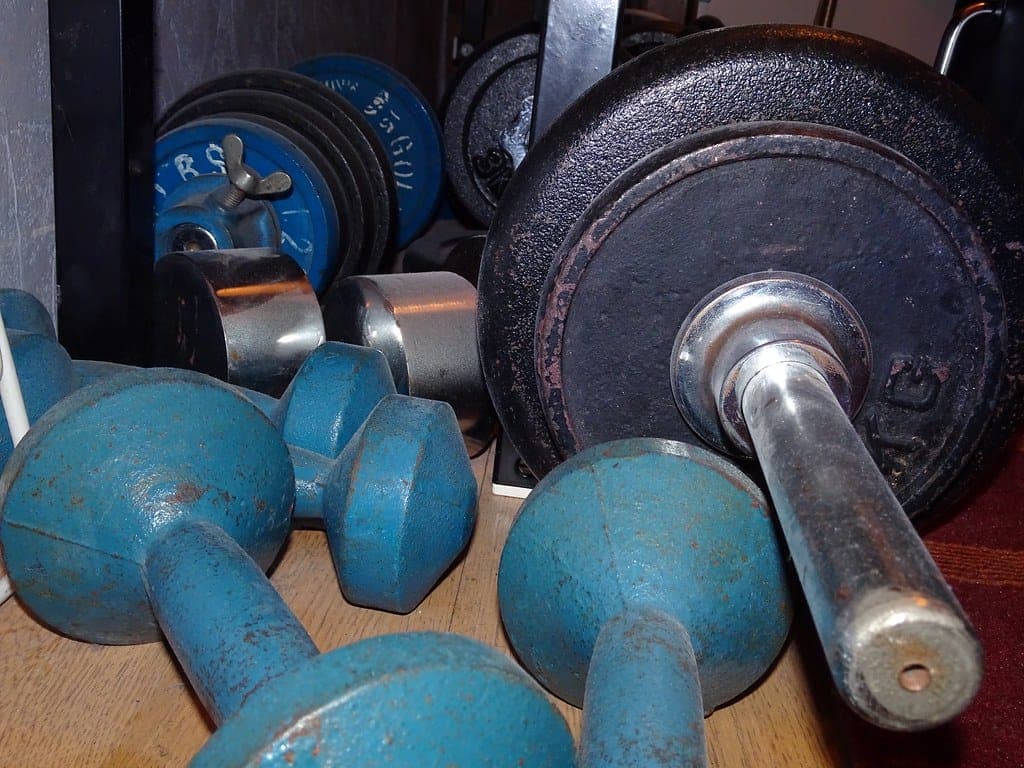
Best adjustable dumbbells under $200
Best Adjustable Dumbbells Under $200 (October 2026)
Spin-lock beats cheap selectorized at this price, and the reason is a plate landing on your foot. Five picks with the safety case made plainly.

Best fitness tracker under $100
Best Fitness Tracker Under $100 (October 2026)
Steps and heart rate are solved at $40. What is not, at any price, and five picks that get the basics right.

Shop by price
Under $50
The impulse tier. Some categories are genuinely solved at $50; others are a false economy, and we say which.
Category
Fitness
Trackers, dumbbells, shoes and treadmills, with the honest line on where budget gear stops being safe.
Think we got a pick wrong, or spotted one that is out of stock or over its ceiling? Tell us - corrections go to the front of the queue.