Fitness
Theragun Alternatives: What You Gain and What You Give Up
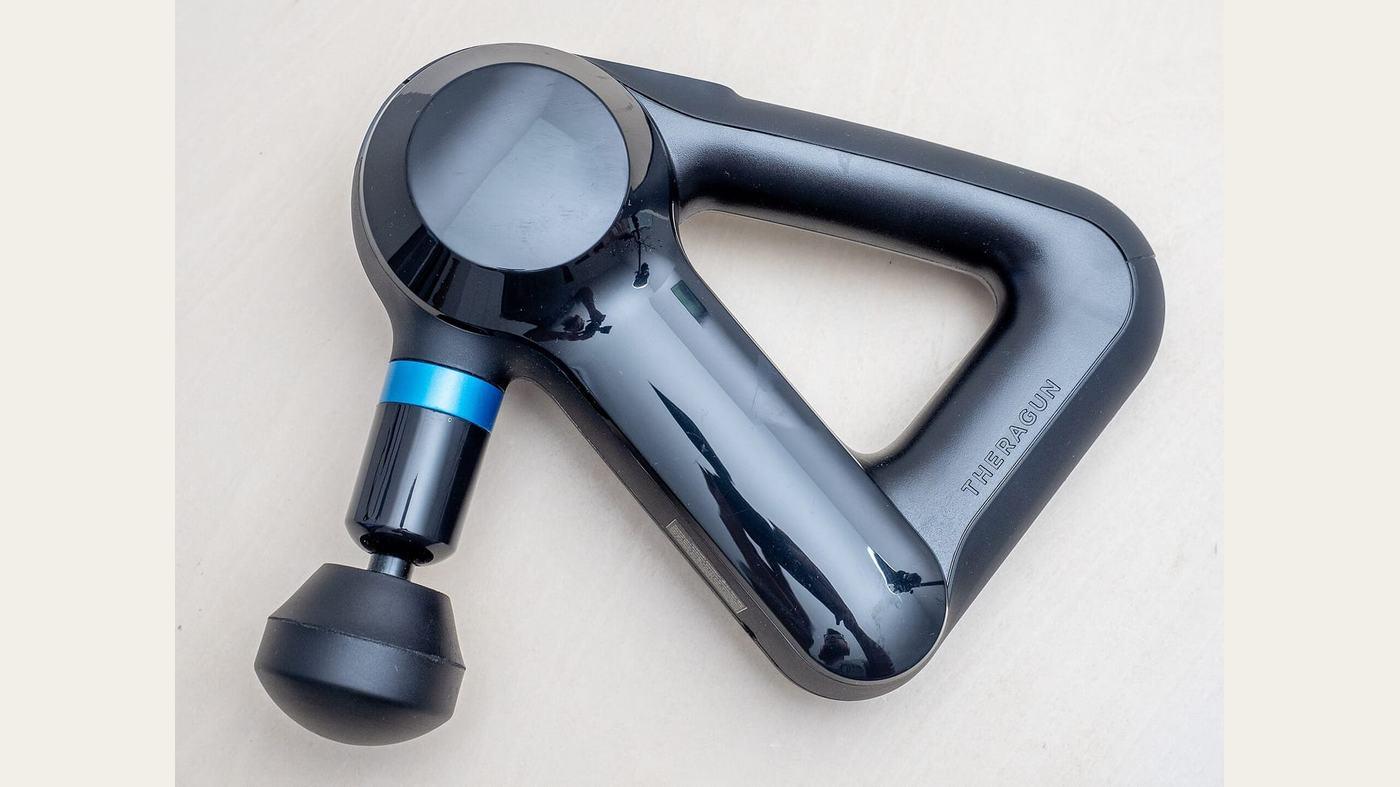
Theragun invented this category and still builds the deepest stroke in it. Almost everything else about the price is brand, and here is where the line falls.
By Brijon M. - Published November 13, 2026
The short answer
The closest cheaper alternative is the Ekrin Athletics B37 - 12mm amplitude, 56 lb of stall force and a lifetime warranty for roughly $230 against the Theragun Prime's $329.99. Under $100, the Renpho Active is the one worth buying. Under $70, the Bob and Brad Q2 Mini is a real tool rather than a toy.
Disclosure: we earn commission on qualifying purchases made through the links below, at no extra cost to you. It never changes the order of our picks - here is how that works.
Amplitude is the spec, and it is the one they hide
If you read one thing before shopping for a massage gun, read this. Nearly every listing in this category leads with speed - percussions per minute, usually a number between 1,800 and 3,200 - and speed is the least informative number on the box.
Amplitude is how far the head travels on each stroke, in millimeters. It is what determines whether the device vibrates the surface of a muscle or actually moves tissue. Therabody's own buyer guide puts the Theragun Prime and the PRO Plus at 16mm, and that is the deepest stroke sold at consumer prices. Most of the competition sits at 10mm to 12mm, and the compact models drop to 7mm or less.
Stall force is the second number, in pounds: how hard you can press before the motor stalls out. Therabody markets its motor as delivering up to 60 lb of no-stall force. A good $230 gun will quote around 56 lb. A $70 one is nearer 32 lb.
Notice what happens when you go shopping: Theragun publishes amplitude. Ekrin publishes amplitude. Hyperice does not publish it for the Hypervolt Go 2 anywhere we could find, and several budget brands list conflicting figures across their own retail listings - we found the same Renpho model described at 8mm, 10mm and 12mm on three different storefronts.
That is the practical state of this market, and it is why the question is not whether a cheaper massage gun is as good. It is which part of the job you need done.
- Amplitude (mm) - how deep. 16mm is Theragun, 10-12mm is good, 7mm is surface work.
- Stall force (lb) - how hard you can press. 50 lb+ is serious, 30 lb is a travel tool.
- Percussions per minute - the number everybody advertises and almost nobody needs.
- If a brand does not publish amplitude, assume it is not a selling point for that model.
What Theragun actually does for the money
Being honest about this is more useful than pretending the gap is zero, because for some buyers the gap is the whole purchase.
The 16mm stroke. Nothing cheaper matches it. If you are a large person, carry dense muscle, or are working on a deep glute or quad rather than a calf, the extra four to six millimeters of travel is the difference between a device that feels nice and one that reaches what hurts.
The triangular handle. It looks like styling and is not. The multi-grip triangle is what lets you reach your own mid-back and the back of your own shoulder without wrist strain, which is the thing a conventional pistol grip genuinely cannot do on your own body.
Motor noise under load. Percussive devices get loud when you press hard. The expensive ones stay civil, the cheap ones do not, and that is about motor quality rather than a marketing claim.
It is sold with a company behind it. Therabody lists a one-year limited warranty, runs a refurbished program - the PRO Plus appears refurbished at $449 against $649.99 new - and has a support operation. That is worth something on a motorized device you will drop at least once.
What it is not: necessary. Percussive therapy is a comfort and mobility tool, not a treatment, and a 10mm gun applied for ten minutes does most of what a 16mm gun applied for ten minutes does on a calf, a forearm or a shoulder.
What we judged these on
Every pick below is something you can buy today - we checked before writing - and every one of them is a device we would be comfortable recommending to someone who is not going to read a spec sheet.
Published amplitude. A brand that publishes it is a brand that is prepared to be measured. Where a figure comes from a reviewer rather than the manufacturer, we say so below rather than presenting it as a spec.
Stall force against the price. The cheap-gun failure mode is not that it is weak at rest, it is that it stops dead the moment you lean on it, which is precisely when you wanted it working.
Weight and reach. A 2.5 lb gun held at arm's length behind your own shoulder is heavier than it sounds after ninety seconds. Weight is the specification nobody lists in the headline and everybody feels.
Attachments that are actually different. Four heads is standard. What matters is whether one of them is a flat head for large muscle groups and one is a bullet or cone for trigger points - the rest are variations.
Warranty. This is a motor in a handheld housing that gets dropped. One year is the industry floor; a lifetime warranty on a $230 device is a genuine reason to choose it.
We have not put all five of these on a dynamometer. What follows is each manufacturer's published specification read against its published price, plus what reviewers and long-term owners consistently report - and an explicit note wherever the published numbers disagree with each other, which in this category is often.
Quick picks
The short version. Tap any row to jump to the full write-up, or go straight to Amazon to check the current price.
| # | Product | Best for | Price |
|---|---|---|---|
| 1 | Ekrin Athletics B37 Percussion Massage Gun 12mm of travel, 56 lb of stall force and a lifetime warranty - the closest thing to a Theragun that is not one. | Best overall alternative | |
| 2 | Hyperice Hypervolt Go 2 Therabody's only real competitor, in its travel size, at a quarter of the flagship's price. | Best big-brand alternative | |
| 3 | Renpho Active Massage Gun Around ten millimeters of travel and five heads for about eighty dollars - the value floor of the serious end. | Best under $100 | |
| 4 | Bob and Brad Q2 Mini Massage Gun Pocket sized, about seventy dollars, and the only small gun on this page with published numbers behind it. | Budget pick | |
| 5 | A high-density foam roller and a lacrosse ball Thirty dollars, no battery, no motor, and for most people most of the benefit. | The honest alternative |
We do not print prices on this site. Every button opens the live Amazon listing so you see the real price at the moment you click. See our affiliate disclosure.
1. Best overall alternative
Ekrin Athletics B37 Percussion Massage Gun
12mm of travel, 56 lb of stall force and a lifetime warranty - the closest thing to a Theragun that is not one.
- Around $230 MSRP (B37v2 listed at $249.99)
- 12mm amplitude
- 56 lb stall force at top speed
- About 8 hours of battery, lifetime warranty
This is the pick if you want the Theragun experience and not the Theragun price. Twelve millimeters is four short of the Prime's sixteen, and on most bodies and most muscles that is a difference you notice as slightly less depth rather than as a different class of tool.
The stall force is where it genuinely closes the gap. Fifty-six pounds means you can lean into a quad or a glute with real pressure and the motor keeps working, which is the specific thing cheap guns fail at.
Eight hours of battery is roughly a month of use for most people, and the handle is angled rather than straight - not Theragun's triangle, but enough of an offset to make reaching your own upper back possible.
The warranty is the quiet argument. Ekrin markets a lifetime warranty on this device. On a handheld motor at $230, a warranty that outlives the product is worth real money against a competitor offering one year.
If you are building out home recovery more broadly, best resistance bands under $50 and best yoga mat under $50 cover the two things that do more for most people's mobility than any percussive device.
What you give up
It is still $230 or more, so the saving against a Theragun Prime is about $100 rather than the 80 percent some people are hoping for. Model naming is confusing - B37, B37v2 and B37S all circulate at different prices and speed counts, so check which one a listing is actually selling. The 56 lb figure comes from an independent review rather than an Ekrin spec page, so treat it as well-sourced rather than official. And a lifetime warranty is only as good as the company behind it, which is a smaller company than Therabody.
2. Best big-brand alternative
Hyperice Hypervolt Go 2
Therabody's only real competitor, in its travel size, at a quarter of the flagship's price.
- $139 list on Hyperice, frequently discounted
- 3 speeds, 40 W brushless motor
- 1.5 lb, 6.7 x 7.3 x 2 in - TSA friendly
- 2 attachments (flat, bullet), up to 3 hours battery
Hyperice is the one other brand in this category with a serious engineering reputation, and the Go 2 is its compact model. If your hesitation about the cheap guns is that you have never heard of the company, this is the answer to that hesitation specifically.
At 1.5 lb and under seven inches it is a genuinely portable device - Hyperice markets it as TSA friendly and it fits in a daypack rather than needing the case. Three hours of battery is plenty for a device used in ten-minute sessions.
The 40 W brushless motor and Hyperice's QuietGlide damping are the reason it stays civil when you press on it. Quiet matters more than it sounds like it should: a gun you can use while someone else is watching television gets used more often than one you cannot.
Price it carefully. Hyperice's own pages showed $139 on the product listing, $129 on the comparison page and $109 on a shop-all listing the day we looked, with an open-box unit at $99. There is no reason to pay $139 for this.
This is the pick for a traveler, a commuter, or anyone whose main complaint is a tight calf or shoulder rather than a dense glute.
What you give up
Hyperice does not publish an amplitude figure for this model anywhere we could find, which for a compact device usually means the number is not flattering - treat it as a surface-level tool, not a deep-tissue one. Three speeds rather than five. Only two attachments in the box, and no Bluetooth or app on the Go 2 where the larger Hypervolts have it. The list price is poor value; it is a good buy at $109 and a mediocre one at $139.
3. Best under $100
Renpho Active Massage Gun
Around ten millimeters of travel and five heads for about eighty dollars - the value floor of the serious end.
- Around $79.99
- About 10mm amplitude (manufacturer figure)
- 5 speeds, 1,800-3,200 percussions per minute
- About 1.5 lb, 5 heads and a carry case
Renpho is the brand that made this category cheap, and the Active is the model worth having. Roughly ten millimeters of amplitude is within striking distance of the $230 guns and nowhere near the 7mm of the pocket models, which puts it in the useful middle.
Five speeds from 1,800 to 3,200 percussions per minute is more range than most people need and more than the Hypervolt Go 2 offers. Five heads and a carry case come in the box, where Hyperice gives you two heads and no case for more money.
At about a pound and a half it is light enough to hold against your own shoulder, and it charges over USB-C, which on a device you take to a gym is worth more than another attachment.
Be clear-eyed about what you are buying. This is a well-made commodity device from a company that sells a lot of them, not a precision instrument. For post-run calves, a desk-stiff neck and general soreness, it does the job and costs a quarter of a Theragun.
If you are weighing this against the cheapest recovery tools of all, foam roller vs massage gun is the honest comparison - the roller wins more of the time than this page's premise implies.
What you give up
Renpho's published specs are genuinely inconsistent across its own retail listings: we found amplitude quoted at 8mm, 10mm and 12mm, stall force at both 35 lb and 50 lb, and noise at both 40 dB and 55 dB, depending on which storefront and which model suffix you look at. Buy from a listing that states the specs you want and keep the returns window. Build quality is fine rather than reassuring, and at this price the warranty is one year at best.
4. Budget pick
Bob and Brad Q2 Mini Massage Gun
Pocket sized, about seventy dollars, and the only small gun on this page with published numbers behind it.
- Around $69.99
- About 7mm amplitude
- About 32 lb stall force
- Fits in a jacket pocket
This is the one to buy if the device needs to live in a gym bag, a glove box or a desk drawer, and if it needs to cost less than a pair of running shoes.
Seven millimeters is surface work, and we are not going to dress that up. What seven millimeters does well is calves, forearms, feet, the front of the shoulder and the top of the trapezius - which, for most desk workers and most recreational runners, is where the actual complaints are.
About thirty-two pounds of stall force is modest, but it is honest and it is published, which already puts it ahead of most devices at this price. The brand is run by two physical therapists, and the product line is specified rather than white-labeled, which is the practical difference between this and the $30 marketplace guns.
Our view: if you have never owned a massage gun and you are not sure you will use one, buy this rather than spending $230 on the hypothesis. If you use it three times a week for a month, you will know whether a deeper device is worth the upgrade.
What you give up
Seven millimeters will not reach a deep glute, a dense quad or a thick lat, and no amount of pressing changes that - lean harder and the motor stalls at around 32 lb. Small battery to match the small body. Specs vary across the Q2 family (Mini, Pro Mini, Ultra, Max) with overlapping names, so confirm which one a listing is selling. This is a maintenance tool, not a recovery centerpiece.
5. The honest alternative
A high-density foam roller and a lacrosse ball
Thirty dollars, no battery, no motor, and for most people most of the benefit.
- Roughly $25-$35 for both
- No power, no firmware, nothing to fail
- Bodyweight provides the pressure
- Roller for large muscle groups, ball for trigger points
We would rather tell you this than sell you a device. The published evidence for percussive therapy and for foam rolling lands in much the same place: both produce short-term improvements in perceived soreness and range of motion, and neither is doing anything structural to the muscle.
A dense roller plus a lacrosse ball gives you more pressure than any massage gun on this page, because the pressure is your own bodyweight rather than a 32-to-56 pound motor. For glutes, hamstrings, quads, lats and the long muscles beside the spine, the roller genuinely reaches deeper than a 10mm gun does.
What you give up is convenience and reach. You have to get on the floor. You cannot do your own forearm or the front of your shoulder properly. It takes longer. Those are real costs, and they are the actual reason massage guns sell.
Buy this first if you have never owned either. If you then find that the floor is the reason you skip it, buy a gun - that is a legitimate reason to spend $80, and a much better one than a spec sheet.
The full version of this argument, with what each tool measurably does, is in foam roller vs massage gun.
What you give up
Requires floor space, getting down to the floor, and a bit of technique. It cannot reach your own upper back the way a massage gun's handle can, and it is awkward on forearms, calves done seated, and anything on the front of the body. Nobody has ever been excited to unwrap one.
Side by side
Which one matches the job you actually have?
Massage gun shopping goes wrong when people buy for a job they do not have. Three readings cover almost everyone.
Desk stiffness - neck, shoulders, forearms. You need reach and lightness, not depth. The Hypervolt Go 2 or the Bob and Brad Q2 Mini. Spending $230 here buys you nothing you will feel.
Running and general training - calves, hamstrings, quads. The middle of the range is correct. The Renpho Active at about $80 does this well, and the Ekrin B37 does it better if you train hard enough to notice.
Heavy lifting, a large frame, or dense long-standing tightness. This is where amplitude earns its money and where a cheap gun will genuinely disappoint you. The Ekrin B37 is the floor; a Theragun Prime is a defensible purchase.
Someone else's body. If you are using it on a partner rather than yourself, the triangular handle stops mattering and a straight pistol grip is fine - which removes one of Theragun's two main advantages immediately.
What a massage gun does and does not do
We are going to be plain about this, because the marketing in this category is not.
What the evidence supports: short-term reductions in perceived muscle soreness and short-term improvements in range of motion, both roughly comparable to what foam rolling produces. That is a real and useful effect. It is why these devices are popular and it is enough to justify owning one.
What it does not do: break up scar tissue, lengthen muscle, flush lactic acid, or accelerate structural recovery. Those claims circulate widely and none of them describes a mechanism a vibrating head can produce.
Where to be careful: directly over bone, over a joint, over a fresh injury, over varicose veins, or anywhere numb. If something hurts sharply rather than achingly, stop - and if pain persists, that is a clinician's problem rather than a device's.
The practical implication for your wallet: because the effect is modest and comparable across tools, the cheapest device that you will actually pick up is the right device. Spend the difference on sleep, food and a rest day, which is where recovery actually happens.
What we considered and did not include
A few things were deliberately left off this page.
The sub-$40 marketplace guns. There are hundreds, the brand name on a given listing often changes between visits, none publishes an amplitude figure, and the warranty is theoretical. The Bob and Brad at $70 is not much more money and is a specified product from a company you can find afterwards.
Heated and cold-therapy models. Several brands now add a heated head or a cooling plate. They work as advertised and they add $40 to $80 to the price. We left them out because you can achieve both with a heat pack and a bag of peas, and because the heating element is one more thing to fail on the part you hold.
A refurbished Theragun. Worth knowing about rather than ranking: Therabody sells the PRO Plus refurbished at $449 against $649.99 new. If you specifically want the 16mm stroke and the triangular handle, that is the cheapest legitimate route to them, and it is a better buy than a new mid-tier Theragun for some people.
What we would actually buy
You want a Theragun and cannot justify the price: the Ekrin Athletics B37, at around $230, for its 12mm stroke, 56 lb stall force and lifetime warranty.
You want a name you recognize and a device you can travel with: the Hyperice Hypervolt Go 2, bought on sale at around $109 rather than at its $139 list.
Best device under $100: the Renpho Active, at about $80, with the caveat that you should buy from a listing that states its specs.
Cheapest thing that is not a mistake: the Bob and Brad Q2 Mini at around $70.
You have never owned either tool: a foam roller and a lacrosse ball for thirty dollars. Find out whether you will use it before you spend ten times that.
The general version of this reasoning - where paying more buys something and where it buys a logo - is set out in cheap vs expensive, and we ran the same exercise on the other category where one brand charges a real premium in Litter-Robot alternatives.
Common questions
+What is the best cheap alternative to a Theragun?
The Ekrin Athletics B37 at around $230 if you want the closest match - 12mm amplitude against Theragun's 16mm, 56 lb of stall force, and a lifetime warranty against Therabody's one year. If the budget is under $100, the Renpho Active at about $80 is the one worth owning, and the Bob and Brad Q2 Mini at about $70 is a genuine tool rather than a toy.
+What makes a Theragun worth $330?
Three things. The 16mm amplitude is the deepest stroke sold at consumer prices and nothing cheaper matches it. The triangular multi-grip handle is what lets you reach your own mid-back and the back of your own shoulder. And the motor stays quiet and does not stall when you press hard - Therabody markets up to 60 lb of no-stall force. If none of those three is your problem, a cheaper gun will not disappoint you.
+What is amplitude on a massage gun and why does it matter?
Amplitude is how far the head travels on each stroke, measured in millimeters. It determines whether the device vibrates the surface of a muscle or actually displaces tissue. Theragun's Prime and PRO Plus are 16mm, good mid-range guns are 10-12mm, and pocket models are around 7mm. It matters far more than the percussions-per-minute figure that most listings lead with.
+Are cheap massage guns any good?
The $70 to $100 ones are genuinely useful for calves, forearms, shoulders and general soreness. Where they fall down is depth and stall force: a 7mm head at 32 lb cannot reach a dense glute or quad, and it stops when you lean on it. The sub-$40 marketplace guns are a different matter - they publish no amplitude figure, the brand on the listing changes, and the warranty is theoretical.
+Is a massage gun better than a foam roller?
Not clearly, and for several muscle groups the roller is better. Both produce short-term reductions in perceived soreness and short-term gains in range of motion, and a roller applies more pressure because the pressure is your bodyweight rather than a motor. What the gun buys is convenience and reach - you can do your own forearm or shoulder standing up, which you cannot do with a roller.
+Does a massage gun break up scar tissue or flush lactic acid?
No. Those two claims circulate widely and neither describes anything a vibrating head can do. What the evidence supports is short-term relief of perceived soreness and a short-term improvement in range of motion. That is a real effect and reason enough to own one - it is just not the mechanism the marketing describes.
Sources
- Therabody - official Theragun PRO Plus product page ($649.99, 1-year limited warranty, refurbished pricing)
- Therabody - official Theragun Prime product page ($329.99, 1-year limited warranty)
- Therabody - official 'How to choose the right Theragun' guide (16mm amplitude on Prime and PRO Plus; up to 60 lb of no-stall force)
- Hyperice - official Hypervolt Go 2 product page ($139 list, 3 speeds, 40 W brushless motor, 1.5 lb, dimensions, 2 attachments, up to 3 hours battery, QuietGlide, no amplitude published)
- Hyperice - official product comparison page (Hypervolt Go 2 at $129; QuietGlide listed, no Bluetooth)
- Switchback Travel - massage gun testing and specification roundup (Ekrin B37 at $230 MSRP, 12mm amplitude, 56 lb stall force, 8-hour battery)
- Walmart - Ekrin Athletics B37 / B37v2 listing (current US pricing and lifetime warranty claim, availability check)
- Garage Gym Reviews - Bob and Brad Q2 Mini testing (roughly 7mm amplitude, roughly 32 lb stall force, around $69.99)
- TechRadar - Bob and Brad Q2 Mini review (US, UK and AU pricing, portability)
- Garage Gym Reviews - Renpho R3 / Active massage gun testing (speed range, weight, attachments; the conflicting amplitude figures across listings)
Read next
Fitness
Foam Roller vs Massage Gun
Under $30 against over $100, and the research on both is more modest than the marketing. Which to buy, and in what order.
Resistance band pick
Best Resistance Bands Under $50
Loop, tube or pull-up band - three different products, three different jobs. Five sets under $50 and how to stop them snapping.

Best yoga mat under $50
Best Yoga Mat Under $50 (October 2026)
Grip, thickness, length. Five mats under $50 and the sweat problem that decides between PVC and rubber.
Category
Fitness
Trackers, dumbbells, shoes and treadmills, with the honest line on where budget gear stops being safe.
Guide
Cheap vs Expensive: Where Spending More Actually Pays
The four questions that predict whether a category rewards spending more - and the full map across all seven we cover.
Think we got a pick wrong, or spotted one that is out of stock or over its ceiling? Tell us - corrections go to the front of the queue.