Grooming
How to Shave With a Cheap Razor
The razor is the least important part of a shave. Almost every irritation problem is prep, pressure or a blade that should have been thrown away.
By Brijon M. - Published October 17, 2026
The short answer
Soften the hair with warm water for two or three minutes, use a real lather rather than gel on dry skin, shave with the grain using short light strokes and no pressure, rinse the blade every two or three strokes, and change the blade before it tugs. A cheap razor used that way outperforms an expensive one used badly.
Disclosure: we earn commission on qualifying purchases made through the links below, at no extra cost to you. It never changes the order of our picks - here is how that works.
Why cheap razors get blamed
Most of what people attribute to a cheap razor is attributable to five other things, and all five are free to fix.
The usual causes of razor burn are shaving on dry or under-prepared skin, not using enough lather, using a blade that is past its life, pressing too hard, and shaving against the grain. None of those is a property of the razor. All of them get worse with a dull blade, which is why the cheap razor takes the blame.
There is one genuine thing an expensive cartridge buys: a pivoting head and lubricating strips make it harder to do the technique badly. That is a tolerance for error, not a better shave - and the error is cheaper to stop making than to buy around.
The second genuine thing is blade count, and it cuts both ways. More blades means fewer passes, and it also means more blades dragging across the same patch of skin in one stroke, which is why people with sensitive skin frequently do better on two blades than five.
This guide is the technique. If you do all of it and still have problems, the last section covers when the hardware actually is the issue.
- Warm water and time soften hair. Nothing else in this list matters as much.
- No pressure. The weight of the razor is the correct pressure.
- With the grain first. Always.
- Rinse the blade every two or three strokes.
- Change the blade when it tugs, not when the pack runs out.
Prep: the part people skip
Hair is roughly as tough as copper wire when dry, and considerably softer when it has been wet and warm for a few minutes. Prep is not a ritual; it is the mechanical difference between a blade cutting and a blade dragging.
Shave at the end of a shower, not before one. Two to three minutes of warm water is what hair needs to fully hydrate. Splashing your face at the sink does not do it.
If you cannot shave in the shower, use a hot towel. A flannel soaked in hot water, wrung out and held on the face for two minutes achieves the same thing.
Use a real lather, not gel straight onto dry skin. The job of lather is to hold water against the hair and let the blade glide. A brush and a soap or cream does this far better than canned gel, and a $12 brush is the single highest-return purchase in this entire guide.
Do not shave first thing if you can avoid it. Faces are slightly puffy on waking, which changes how hair sits against the skin. Twenty minutes up makes a noticeable difference.
Never dry-shave. Not with a cheap razor, not with an expensive one, not for the one bit you missed on the way out of the door.
Quick picks
The short version. Tap any row to jump to the full write-up, or go straight to Amazon to check the current price.
| # | Product | Best for | Price |
|---|---|---|---|
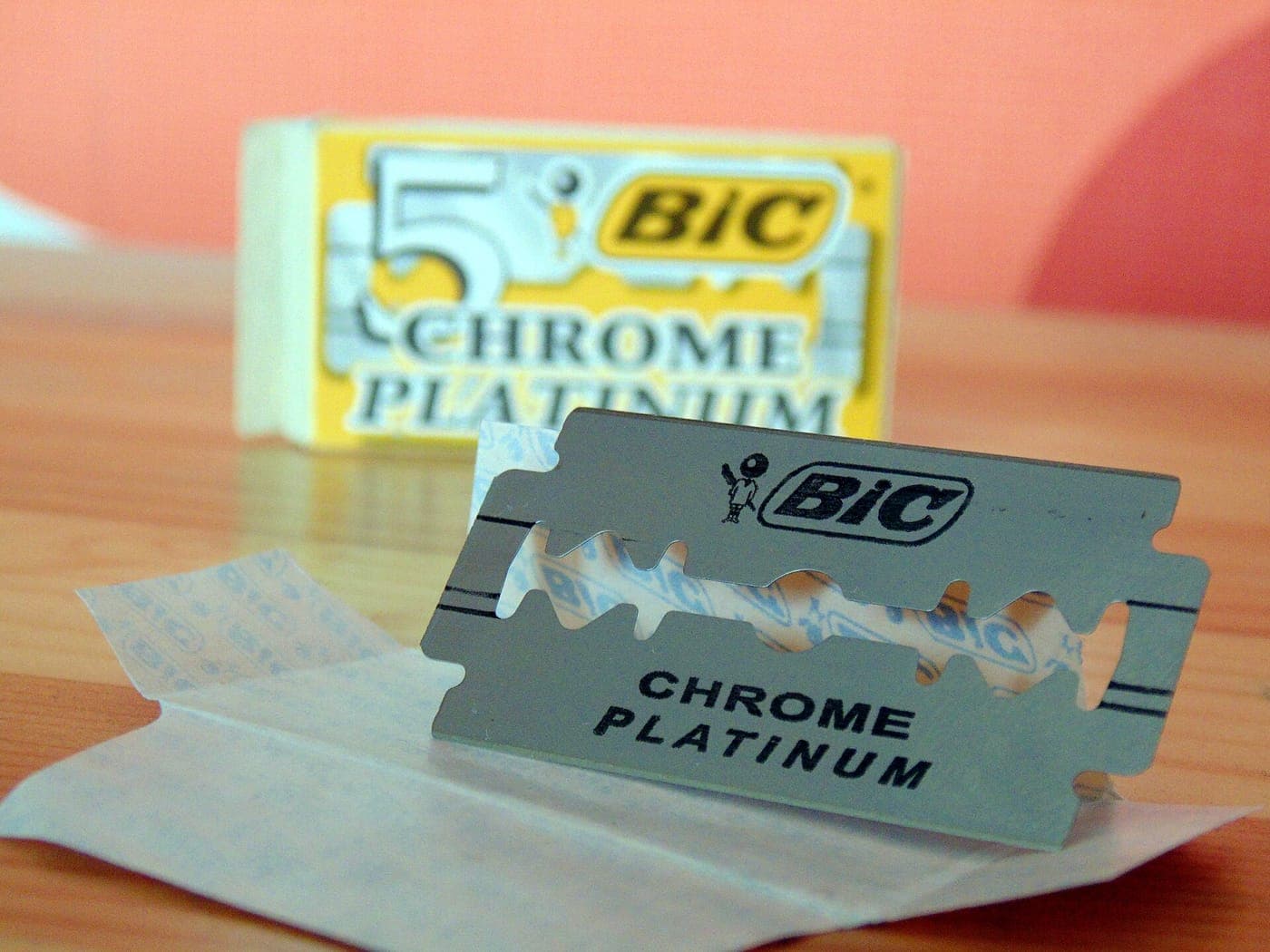
| 1 | A double-edge safety razor blade sampler Blades at a few cents each, and sharpness varies enough by brand to be worth testing. | The cheapest sharp blade | |
| 2 | A shaving brush and a puck of soap The one purchase that actually improves a cheap razor's results. | The best cheap upgrade | |
| 3 | A two-blade disposable or cartridge razor Fewer blades means less drag per stroke - often the fix for persistent irritation. | Best for sensitive skin | |
| 4 | An alum block or styptic pencil Stops nicks bleeding and tells you honestly how good your technique was. | Aftercare, and a free technique check |
We do not print prices on this site. Every button opens the live Amazon listing so you see the real price at the moment you click. See our affiliate disclosure.
1. The cheapest sharp blade
A double-edge safety razor blade sampler
Blades at a few cents each, and sharpness varies enough by brand to be worth testing.
- Fits any standard double-edge safety razor
- A few cents per blade
- Sampler packs cover several brands
- A blade typically lasts three to seven shaves
If you already own a safety razor, this is where the "cheap shave" argument becomes overwhelming - blades cost a few cents each rather than a few dollars, so changing the blade often stops being a financial decision.
Blades vary more between brands than people expect. Feather blades are notably sharp and unforgiving; Astra and Derby are milder and more tolerant of imperfect technique. A sampler pack is the cheap way to find which suits your skin and beard.
The practical point: a fresh cheap blade beats a worn expensive one, every time. Blade freshness matters more than blade brand, and more than razor price.
Store the razor somewhere dry between shaves. A blade left wet in a steamy bathroom corrodes at the edge and dulls far faster than one that dries out.
What you give up
Double-edge razors demand correct angle and no pressure - they are less forgiving than a cartridge while you learn. Loose blades also need careful handling and a sharps container for disposal.
2. The best cheap upgrade
A shaving brush and a puck of soap
The one purchase that actually improves a cheap razor's results.
- Boar or synthetic brush
- Soap puck or cream tub
- Lasts months to years
- Works with any razor, cheap or expensive
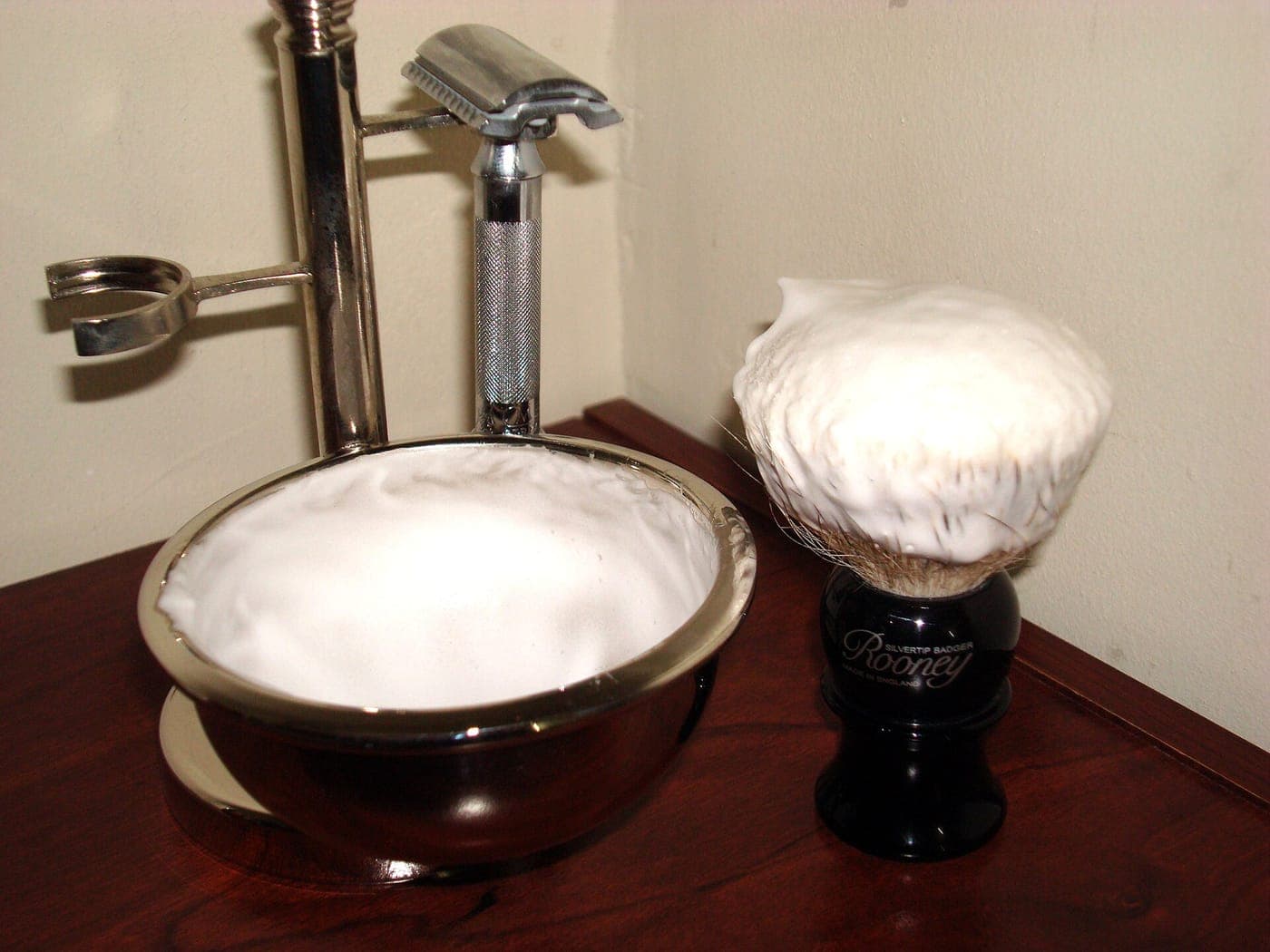
If you buy one thing from this page, buy this. Canned gel sits on top of the skin; a brush-built lather holds water against the hair and lifts it away from the face so the blade can reach it.
A synthetic brush is the sensible modern choice - it costs little, dries fast, does not shed and needs no breaking in. A boar brush is cheaper still and softens over a few weeks of use.
A puck of soap lasts months and costs less than a few cans of gel, so this upgrade pays for itself even before the comfort improvement.
The lather you want is the consistency of yoghurt, not whipped cream. If it looks airy and dry, it needs more water.
What you give up
It takes an extra minute to build a lather, which is a real cost on a weekday morning. Brushes also need to dry properly between uses - bristles down in a stand, not face-up in a puddle.
3. Best for sensitive skin
A two-blade disposable or cartridge razor
Fewer blades means less drag per stroke - often the fix for persistent irritation.
- Two blades rather than five
- Cheapest cartridge format
- Wide blade spacing clears thick stubble
- Widely available everywhere
The cheapest razors are frequently the gentlest, and this is not a coincidence. A five-blade cartridge drags five edges across a patch of skin in a single stroke; a two-blade drags two.
For anyone with persistent razor burn, ingrown hairs or a coarse curly beard, dropping blade count is the single most effective hardware change available, and it costs less rather than more.
Wider spacing between blades also means a two-blade cartridge clogs less on thick or long stubble, which matters if you shave every few days rather than daily.
What you give up
Usually needs a second pass for a truly close shave, which is more time and more blade contact. Single-use disposables are also the worst option on waste if you shave daily.
4. Aftercare, and a free technique check
An alum block or styptic pencil
Stops nicks bleeding and tells you honestly how good your technique was.
- Potassium alum block
- Antiseptic and astringent
- Lasts years
- Costs a few dollars
Rub a wet alum block over the face after rinsing. It closes small nicks, has a mild antiseptic effect, and costs a few dollars for something that lasts years.
It is also a genuinely useful diagnostic. The more it stings, the more damage you did. A shave with good prep, a sharp blade and no pressure barely registers; a stinging face means you pressed, went against the grain, or used a blade that was finished.
Rinse it off after a minute and follow with a simple unscented balm or moisturiser. Alcohol-based aftershave on freshly shaved skin is a tradition, not a treatment, and it makes irritation worse.
What you give up
It does sting, which puts some people off entirely, and it can be drying if left on. It is aftercare rather than a fix - it will not rescue a shave done with a dull blade.
The stroke: how to actually move the razor
Use short, light strokes. An inch or two at a time, not long sweeps down the whole cheek. Short strokes let you follow the contour of the face and keep the blade angle consistent.
Use no pressure at all. The weight of the razor is the correct pressure, and on a safety razor it is the only pressure you should apply. Pressing is the single most common cause of razor burn, and the instinct to press gets stronger as the blade gets duller - which is how a dull blade causes damage.
Shave with the grain. Hair does not grow uniformly downward; it typically grows down on the cheeks, sideways or upward on the neck, and in swirls under the jaw. Run a dry hand over a day's growth - the direction that feels smooth is with the grain.
Stretch the skin taut with your free hand, particularly on the neck and around the jaw. A flat surface is a surface the blade does not catch on.
Rinse the blade every two or three strokes. A blade clogged with hair and lather is effectively a blunt blade, and this is the single cheapest fix available during a shave.
Do not go over the same area repeatedly. Each pass over the same skin is more irritation for less and less return. If a patch is not smooth, re-lather it before going again - never re-shave dry skin.
If you want closer, re-lather and shave across the grain - sideways, not upward. Against the grain is where ingrown hairs come from, and for most people the small gain in closeness is not worth it.
When to change the blade
This is where almost everyone goes wrong, and it is the reason cheap razors have a bad reputation: people run blades far too long because the blade still looks fine.
Change it when it starts to tug, not when it stops cutting. The tug is the warning. A blade that pulls hairs before cutting them is already damaging the skin, and the instinct to press harder in response compounds it.
A rough guide: a double-edge blade gives three to seven shaves; a cartridge gives five to ten. Both vary enormously with beard coarseness and how well the razor dries between uses.
Dry the razor after every shave. Corrosion at the edge, not cutting, is what actually dulls most blades. Shake the water off, pat it on a towel, and keep it out of the shower. This can double blade life on its own.
Never dry a blade by wiping it against the edge - run the towel along the blade, not across it, or you will roll the edge in exactly the way you are trying to avoid.
The economics are the point: double-edge blades cost cents, so there is no excuse for running one long. Even cartridges are cheaper than a week of irritated skin.
Fixing razor burn and ingrown hairs
Razor burn - the red, hot, stinging rash right after shaving - is mechanical damage. Rinse with cool water, apply a simple unscented balm or aloe, and skip shaving that area for a day or two. Shaving over razor burn is how it becomes a chronic problem.
Then fix the cause rather than treating the symptom. In order of likelihood: the blade was too old, you pressed, you shaved against the grain, or the prep was inadequate. Change one variable at a time and the culprit becomes obvious within a week.
Ingrown hairs - the bumps that appear a day or two later - are a different problem. They happen when a hair is cut below the skin surface and grows back into the follicle, and they are strongly associated with shaving against the grain and with coarse curly hair.
The fixes: stop shaving against the grain entirely, drop to fewer blades, and exfoliate gently a few times a week to keep follicles clear. Do not dig a bump out with tweezers - that is how one bump becomes an infection and a scar.
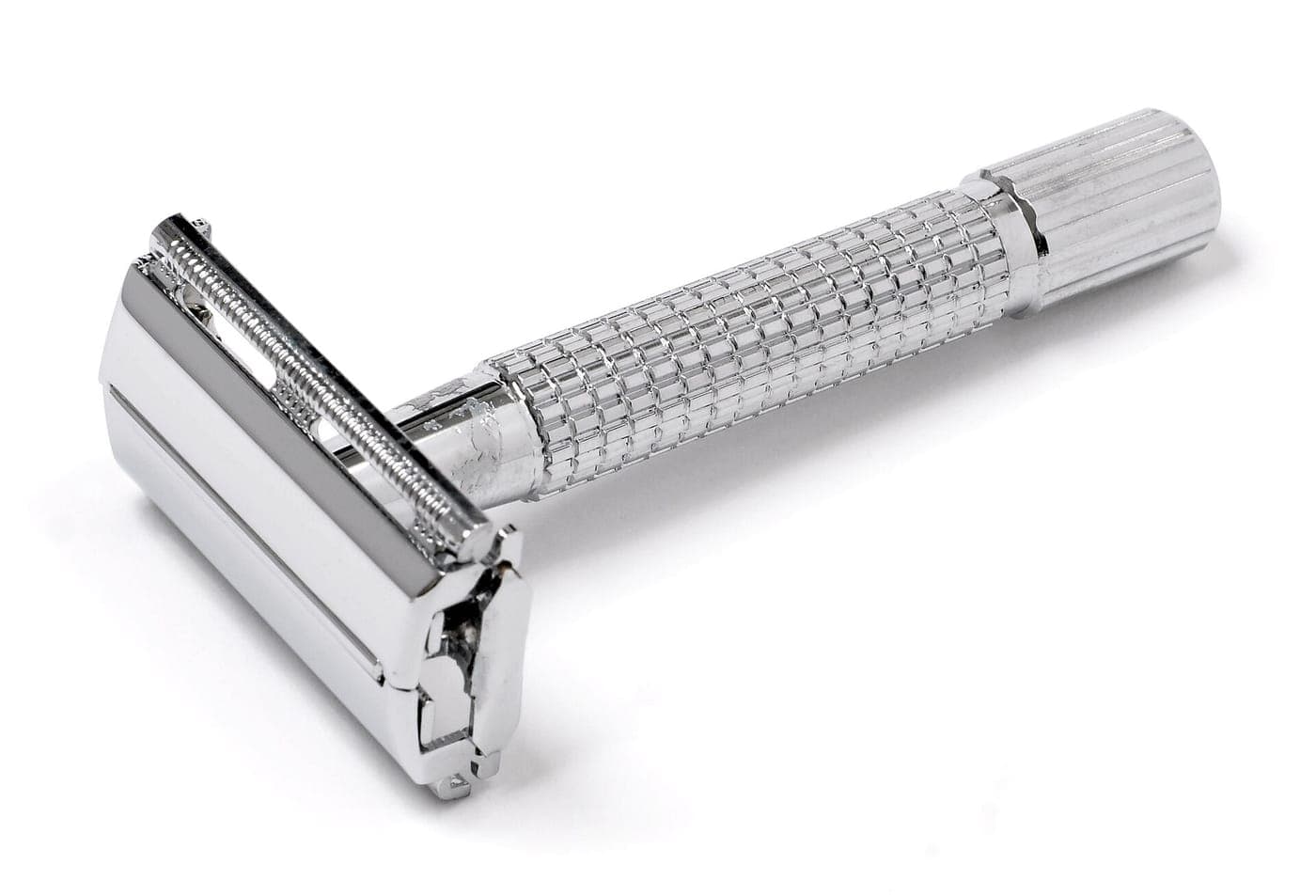
If ingrowns are persistent and severe, a single-blade safety razor shaved strictly with the grain is the standard recommendation, and it is also the cheapest option on the shelf. Our is a safety razor worth it page works through that switch, and best safety razor under $50 has the picks.
When the razor genuinely is the problem
Technique fixes most of it. These are the cases where it does not.
The handle is too light or too slippery. Very cheap disposables have almost no mass, which encourages pressing because the razor does not do any of the work itself. A heavier handle actively discourages the mistake.
The head does not pivot and your face is not flat. Around a prominent jaw or a dimpled chin, a fixed-head disposable needs real care. This is a genuine advantage of a cartridge.
Five blades on sensitive skin. If you have done everything above and still get burn, drop blade count. It is the one hardware change that reliably helps and it is cheaper.
A bent or damaged blade. Dropping a safety razor on a tiled floor can tweak the blade or the head alignment. If one side of the shave is suddenly worse than the other, check for that before blaming yourself.
You shave your head. Scalp skin is thin, mobile and curved, and the error tolerance is much lower. That is a specific case where paying for a pivoting head is justified.
Beyond that, the rest of this site's grooming coverage applies the same logic: cheap vs expensive safety razor looks at what price buys in the razor itself, and best electric shaver under $100 covers the route for anyone whose skin simply will not tolerate a blade.
Common questions
+How do you shave with a cheap razor without razor burn?
Soften the hair with two to three minutes of warm water, build a real lather with a brush rather than using gel on dry skin, shave with the grain in short light strokes with no pressure, rinse the blade every two or three strokes, and change the blade as soon as it starts to tug rather than when it stops cutting.
+Are cheap razors worse than expensive ones?
Not meaningfully, if your technique is good. What expensive cartridges buy is tolerance for error - a pivoting head and lubricating strips make it harder to shave badly. A fresh cheap blade beats a worn expensive one every time, and blade freshness matters more than either.
+How often should you change a razor blade?
When it starts to tug. As a guide, three to seven shaves from a double-edge blade and five to ten from a cartridge, varying with beard coarseness. Drying the razor properly after each shave can double blade life, because corrosion rather than cutting is what dulls most blades.
+Should you shave with or against the grain?
With the grain, always, for the first pass. Against the grain is the main cause of ingrown hairs and a large part of razor burn. If you want a closer result, re-lather and go across the grain - sideways - rather than upward.
+Why does my face sting after shaving?
Usually mechanical damage from pressing, a blade past its life, or shaving against the grain. An alum block is a useful diagnostic here: the more it stings, the worse the technique was. Alcohol aftershave on freshly shaved skin makes irritation worse rather than better - use a simple unscented balm instead.
+Do more blades give a better shave?
Closer in one pass, yes, but five blades drag five edges across the same skin in a single stroke. For sensitive skin, coarse curly hair or persistent ingrown hairs, dropping to two blades or a single-blade safety razor is usually the fix - and it is also the cheaper option.
Sources
Read next
Grooming
Is a Safety Razor Worth It?
The five-year cost math, the honest learning curve, and the three people who should stay with cartridges.
Best safety razor under $50
Best Safety Razor Under $50 (October 2026)
A $36 razor that lasts decades and drops blade costs to around ten cents a shave. Five picks and the real learning curve.
Grooming
Cheap vs Expensive Safety Razor
Same blade, same angle, same shave. A full attribute breakdown of what $200 more actually gets you.
Category
Grooming
Shavers, trimmers, razors and toothbrushes - one of the few areas where cheap can genuinely win.
Think we got a pick wrong, or spotted one that is out of stock or over its ceiling? Tell us - corrections go to the front of the queue.