Home - under $200
Best Dehumidifier Under $200 (October 2026)
Sizing is the whole decision. An undersized dehumidifier runs constantly and never wins; an oversized one short-cycles and wastes energy.
By Brijon M. - Published October 2, 2026

The short answer
Size by pints per day against your room's size and dampness: roughly 20 pints for a damp 500 square foot space, 30-35 pints for a wet one. Compressor models are more efficient above about 65F; desiccant models work better in cold rooms and garages where compressors struggle.
Disclosure: we earn commission on qualifying purchases made through the links below, at no extra cost to you. It never changes the order of our picks - here is how that works.
Compressor or desiccant - this decides everything
There are two completely different technologies sold under the same name, and picking the wrong one is the main reason people conclude dehumidifiers do not work.
Compressor dehumidifiers work like a fridge: they cool a coil below the dew point so moisture condenses out. They are efficient and cheap to run - above about 65F. Below that, the coil frosts up and the unit spends its time defrosting rather than drying. In an unheated garage or a cold cellar in winter, a compressor model is close to useless.
Desiccant dehumidifiers pass air over a moisture-absorbing wheel that is then heated to drive the water off. They work at any temperature, including near freezing, and they warm the room slightly as a side effect. They use more electricity for the same water removed, and they are generally quieter.
So: heated living space, compressor. Cold garage, cellar or conservatory, desiccant. Getting this right matters more than any brand decision.
Sizing, and the specification that lies
Dehumidifier capacity is quoted in pints per day, and the test conditions used for that figure changed in recent years - which means an older 50-pint unit and a newer 35-pint unit may remove the same amount of water. Compare units by the same standard, or compare by physical size and power draw as a rough proxy.
Practical guidance for a moderately damp room: around 20 pints per day for 500 square feet, 30 pints for 1,000 square feet. For a genuinely wet space - visible condensation, musty smell, damp walls - go up a size rather than down.
An undersized unit runs continuously and never reaches the target humidity, which costs more in electricity than the larger unit would have. An oversized unit short-cycles, which is less efficient and wears the compressor.
Target humidity is 45-55%. Below 40% is uncomfortably dry; above 60% supports mold and dust mites.
- Above 65F: compressor. Below 65F: desiccant.
- 20 pints per 500 sq ft as a starting point; size up for very damp rooms.
- A continuous drain hose option removes the daily emptying chore.
Quick picks
The short version. Tap any row to jump to the full write-up, or go straight to Amazon to check the current price.
| # | Product | Best for | Price |
|---|---|---|---|
| 1 | Frigidaire 20-35 pint compressor Reliable, efficient and with a proper continuous drain option. | Best overall for heated rooms | |
| 2 | Hisense compressor dehumidifier Same technology, lower price, slightly less refined controls. | Best value compressor | |
| 3 | Desiccant dehumidifier (cold rooms) The only type that works below about 65F. | Best for garages and cold spaces | |
| 4 | Mini Peltier dehumidifier Genuinely useful in a tiny space, useless in a room. | Best for a wardrobe or a small cupboard | |
| 5 | Midea compressor dehumidifier Fewer trips to the sink if you cannot run a drain hose. | Best large tank |
We do not print prices on this site. Every button opens the live Amazon listing so you see the real price at the moment you click. See our affiliate disclosure.
1. Best overall for heated rooms
Frigidaire 20-35 pint compressor
Reliable, efficient and with a proper continuous drain option.
- Compressor
- 20-35 pint variants
- Continuous drain port
- Auto humidistat
Frigidaire's dehumidifiers are the default recommendation for a heated living space. The humidistat is accurate enough to maintain a target rather than cycling wildly, and the auto-restart means it recovers after a power cut without intervention.
The continuous drain port is the feature that changes ownership: attach a hose to a floor drain or a sink and you never empty a bucket again. Emptying the tank daily is the main reason dehumidifiers end up switched off.
Size it by the guidance above rather than buying the largest available.
What you give up
Loud - compressor units are, and this is no exception. Performance collapses below about 65F, so it is not a garage machine.
2. Best value compressor
Hisense compressor dehumidifier
Same technology, lower price, slightly less refined controls.
- Compressor
- Continuous drain
- Humidistat
- Caster wheels
Hisense's units do the same job as the Frigidaire for less money, with a humidistat that is a little less precise and controls that are a little more basic.
Caster wheels matter more than they sound - a dehumidifier full of water is heavy, and being able to roll it between rooms is the difference between using one unit in three rooms and buying three units.
Continuous drain is supported, which is the feature to insist on.
What you give up
The humidistat is less accurate, so the room drifts further from the target before it kicks in. Build quality is plainly a step down.
3. Best for garages and cold spaces
Desiccant dehumidifier (cold rooms)
The only type that works below about 65F.
- Desiccant wheel
- Works near freezing
- Quieter
- Warms the room slightly
If the space you are drying is an unheated garage, a cellar, a conservatory in winter or a boat, a compressor dehumidifier will frost up and achieve very little. A desiccant unit works down to near freezing and is the correct tool.
They are also noticeably quieter than compressor models, which makes them a reasonable choice for a bedroom even in a warm house.
The trade is electricity: a desiccant unit uses more power per pint of water removed, because it heats the wheel to release the moisture.
What you give up
Higher running cost per pint than a compressor in a warm room, and the slight room warming is unwelcome in summer.
4. Best for a wardrobe or a small cupboard
Mini Peltier dehumidifier
Genuinely useful in a tiny space, useless in a room.
- Thermoelectric
- Very small capacity
- Silent
- Very low price
Peltier dehumidifiers use a thermoelectric element rather than a compressor. They remove a small amount of water - often under a pint a day - and they are silent.
In a wardrobe, a gun safe, a caravan or a small cupboard with a damp problem, they work. In a bedroom or a living room, they do essentially nothing, and this is the most common disappointed purchase in the category.
Buy one knowing exactly what it is for.
What you give up
Capacity is a fraction of a real dehumidifier - this will not dry a room, only a cupboard. The tank is tiny and needs frequent emptying.
5. Best large tank
Midea compressor dehumidifier
Fewer trips to the sink if you cannot run a drain hose.
- Compressor
- Large water tank
- Continuous drain option
- Auto shut-off
If you cannot route a continuous drain hose - no floor drain, no convenient sink - the tank size becomes the number that determines how annoying the dehumidifier is to live with. Midea's units have among the larger tanks in this bracket.
Auto shut-off when the tank is full is standard and essential; without it a full tank means an overflow.
Otherwise it is a conventional compressor unit and the sizing guidance above applies.
What you give up
A large tank full of water is heavy to carry to a sink. Loud in operation like all compressor models.
Fix the cause, not just the symptom
A dehumidifier manages moisture that is already in the air. It does not stop moisture arriving, and if the source is ongoing, you will be running it forever.
The common sources are worth checking first: drying laundry indoors puts liters of water into the air, a bathroom extractor fan that is not working or not run long enough, cooking without a hood, blocked airbricks or trickle vents, and in older properties rising or penetrating damp, which is a building problem rather than an appliance one.
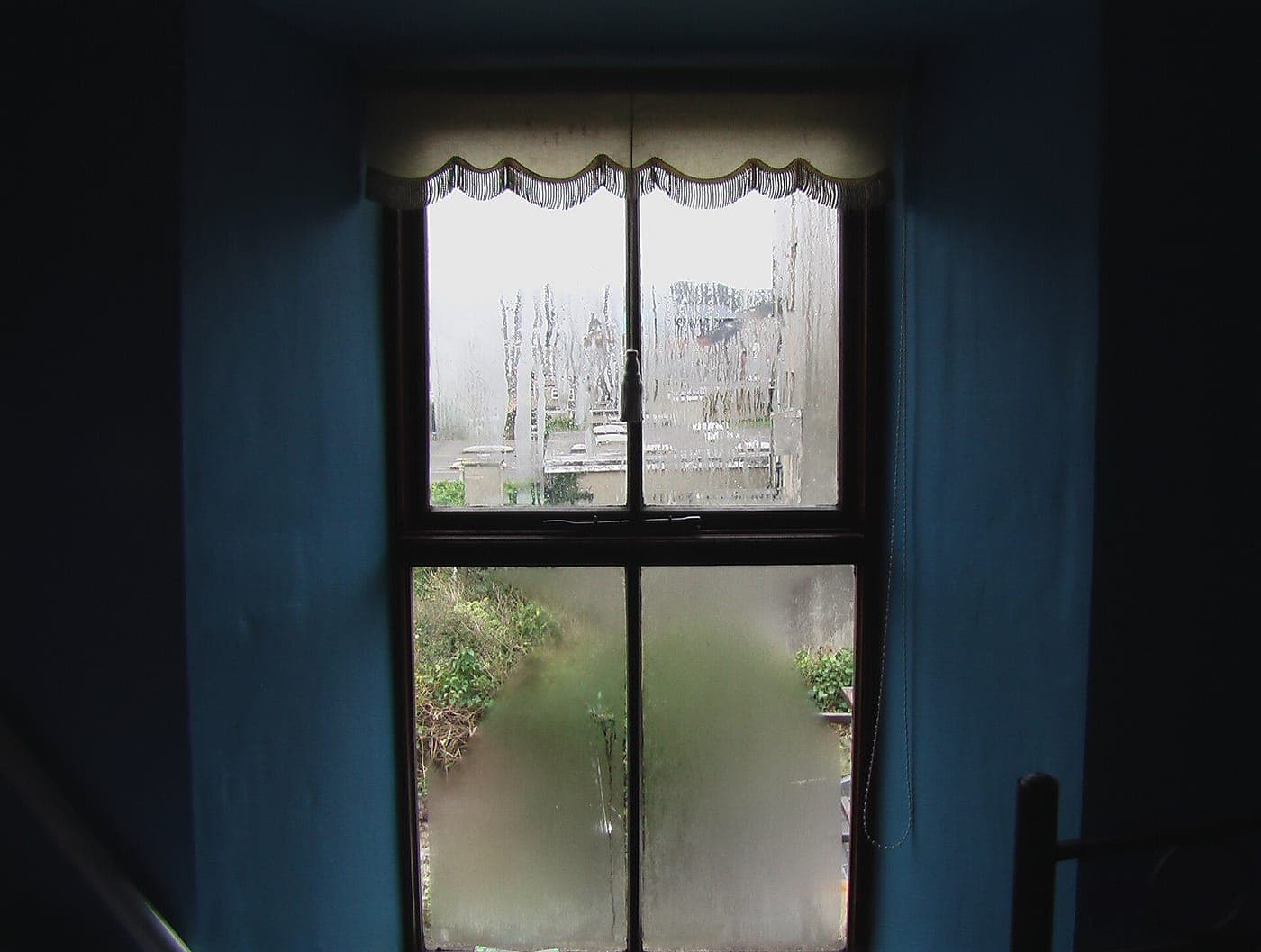
If condensation appears on windows every morning in a bedroom, ventilation is usually the cheaper fix - opening a window for ten minutes after waking, or running a trickle vent. Cheap alternatives to a dehumidifier covers the options that cost almost nothing.
When to spend more
Higher capacity for a whole house or a genuinely wet cellar, which starts above this tier. Quieter operation, which matters a great deal in a bedroom and is where premium compressor units put their engineering. And built-in pumps that push water upward to a sink, rather than relying on gravity to a floor drain.
For a damp bedroom or a condensation problem in a heated house, the units here are sufficient and sized correctly they will fix it.
How we picked
Every pick on this page is a real, currently-sold product that we could find at or under $200 at the time of the last update. Rank order is set before any link is attached.
We are research-led, not lab-led. We do not run a test lab and we do not claim to have personally used every product on this site. Picks come from manufacturer specifications, owner-reported reliability and failure patterns, expert-publication consensus, and real availability at the stated price ceiling. Read the full method.
Common questions
+What size dehumidifier do I need?
Roughly 20 pints per day for a moderately damp 500 square foot room, 30 pints for 1,000 square feet. Size up for genuinely wet spaces. An undersized unit runs constantly and never reaches target, which costs more than buying the right size.
+Will a dehumidifier work in a cold garage?
Only a desiccant one. Compressor dehumidifiers cool a coil to condense moisture, and below about 65F that coil frosts and the unit spends its time defrosting. Desiccant models work down to near freezing.
+What humidity should I aim for?
Between 45% and 55%. Below 40% feels uncomfortably dry and can affect wooden furniture; above 60% supports mold growth and dust mites. A cheap hygrometer costs about $10 and is worth having.
+Are dehumidifiers expensive to run?
A compressor unit in a warm room is reasonably efficient and mostly cycles rather than running continuously. A desiccant unit uses noticeably more electricity for the same water removed. An undersized unit of either type is the expensive scenario, because it never switches off.
+Do I need a dehumidifier or better ventilation?
If condensation appears on windows overnight in a heated house, ventilation is usually the cheaper and more effective fix. A dehumidifier is the right answer for a space that cannot be ventilated, or where the moisture source cannot be removed.
Sources
Read next
Home
Cheap Alternative to a Dehumidifier
Which cheap alternatives genuinely remove moisture, which do almost nothing, and the free fix.
Best air purifier under $100
Best Air Purifier Under $100 (October 2026)
The filter is the real cost. Five purifiers under $100 ranked with three-year filter spend included.
Shop by price
Under $200
Where the compromises start disappearing. Mostly appliances, furniture and bigger tech.
Category
Home
Vacuums, air purifiers, chairs and mattresses, judged on the two or three specs that actually matter.
Think we got a pick wrong, or spotted one that is out of stock or over its ceiling? Tell us - corrections go to the front of the queue.