Watches
Are Cheap Watches Worth It?
Short answer: yes, and more defensibly than in almost any other product category. Here is the reasoning, and where the line sits.
By Brijon M. - Published October 2, 2026
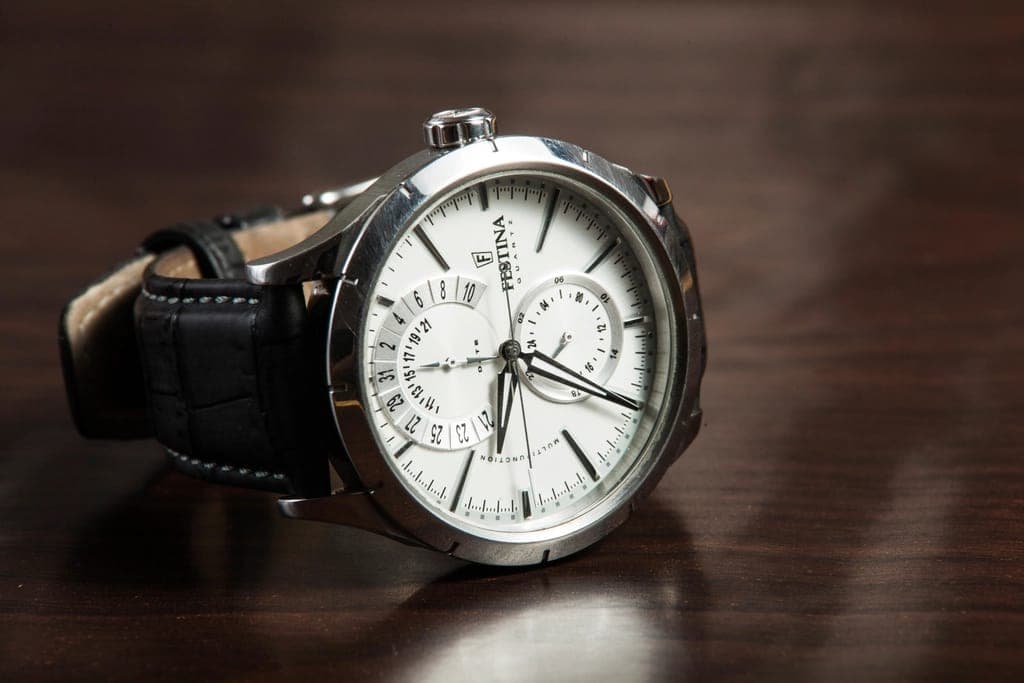
The short answer
Yes. A cheap watch tells the time exactly as well as an expensive one, and a cheap quartz watch tells it better. What you give up is crystal hardness, bracelet construction and movement finishing - real things, but not function. The quality line sits around $70-$100, below which materials start genuinely failing.
The short version
Function is not the variable. Every watch above about $20 tells the time. A $40 quartz watch is more accurate than a $40,000 mechanical one. Whatever you are paying extra for, it is not knowing what time it is.
The materials line sits around $70. Below that, plated cases wear through, acrylic crystals scratch deeply, and bracelets rattle. Above it, you can buy 316L steel and a case finish that lasts.
The satisfaction line sits around $100-$150. That is where sapphire crystals and better bracelets appear, and where a watch stops having an obvious flaw you have to excuse.
Above $500, you are buying craft and brand. Both legitimate, neither functional.
- Under $70: expect compromises you will notice within a year.
- $70-$150: the sweet spot. Steel cases, decent movements, no obvious failure.
- $150-$500: sapphire, solid bracelets, regulated movements. Genuinely good watches.
Quick picks
The short version. Tap any row to jump to the full write-up, or go straight to Amazon to check the current price.
| # | Product | Best for | Price |
|---|---|---|---|
| 1 | Seiko 5 SNK809 A real mechanical watch, correctly sized, for under $100. | The cheap watch that proves the point | |
| 2 | Casio MDV106 Duro 200m, screw-down crown and quartz accuracy for about $40. | The cheap watch with no excuses |
We do not print prices on this site. Every button opens the live Amazon listing so you see the real price at the moment you click. See our affiliate disclosure.
1. The cheap watch that proves the point
Seiko 5 SNK809
A real mechanical watch, correctly sized, for under $100.
- 7S26 automatic
- 37mm
- Exhibition back
- Steel case
If you read this page and concluded that a cheap watch is worth it, this is the one most people buy next. Steel case, real automatic movement, and a size that suits almost every wrist.
It has the compromises this page describes - Hardlex crystal, folded bracelet - and it is still a watch people keep for years.
What you give up
Crystal will scratch, bracelet rattles, 30m water resistance. All the compromises named above, in one watch.
2. The cheap watch with no excuses
Casio MDV106 Duro
200m, screw-down crown and quartz accuracy for about $40.
- 200m
- Screw-down crown
- Quartz
- Unidirectional bezel
The clearest counter-argument to the idea that cheap means compromised. It meets a functional dive specification that expensive watches do not exceed, and keeps better time than any of them.
The strap is poor. That is the entire list of complaints.
What you give up
44mm case that overwhelms a small wrist, mineral crystal, and a strap you will want to replace.
The four specifications that decide it
If you remember nothing else from this page, remember these four, because they predict whether a cheap watch will still be a watch you like in three years.
Crystal. Acrylic scratches but polishes out. Mineral scratches and does not. Sapphire effectively does not scratch. On a watch you wear daily, this is the single most visible difference between a watch that looks new and one that looks tired.
Case material. 316L stainless steel keeps its finish indefinitely. Plated base metal wears through at the edges and the clasp, typically within a year or two of daily wear, and cannot be restored. This is the clearest cheap-versus-not line in the category.
Bracelet construction. Solid milled links with a proper clasp feel dense and quiet. Folded sheet steel rattles, pinches hair and feels hollow. It is the biggest single contributor to perceived quality.
Water resistance. 30m means splashes. 100m means swimming. 200m with a screw-down crown means diving. This is widely misunderstood and is the most common way a cheap watch dies - water, not impact.
Where cheap watches genuinely fail
Being specific about this is more useful than a general caution.
Plating wear. Gold-tone and black-coated budget watches lose their finish at the high-contact points - the clasp, the case edges, the crown. It looks worse than an honest scratch and cannot be fixed.
Strap and bracelet failure. The weakest component on almost every budget watch, and the most common reason one stops being worn. Fortunately it is also the cheapest to replace.
Water ingress. Gaskets on cheap watches are less consistently seated, and the depth rating is tested less rigorously. Treat the printed rating as optimistic rather than conservative.
Lume that does not work. Many budget watches have a token luminous coating that fades within minutes. This almost never appears in a specification, and Seiko is the notable exception that genuinely excels at it.
Where cheap watches genuinely win
Accuracy, if quartz. A $40 quartz watch holds about 15 seconds a month. Nothing mechanical at any price does that.
Not caring. The most underrated property of a cheap watch is that you can wear it anywhere, lend it to anyone and not think about it. An expensive watch changes your behavior in ways people rarely anticipate.
Variety. Three $90 watches cover more situations than one $270 watch, and watches are one of the few things where having several is genuinely more useful than having one good one.
Specific standouts. Seiko's lume outperforms most luxury brands. Casio's Duro meets a dive specification that watches ten times the price do not exceed. These are not consolation prizes; they are genuine wins.
So should you buy one?
If your honest answer to 'what is this watch for' is 'telling the time and looking decent', then a $90 watch does that completely and a $900 one does not do it better. Buy the cheap one, spend $20 on a good strap, and you are finished.
If the answer involves wanting an object you will keep and have serviced, or genuinely enjoying movement finishing, then buy up - and buy it knowing that is what you are buying rather than believing the expensive watch is a better instrument.
Our best watches under $100 is where that first purchase lives. Are cheap automatic watches worth it answers the mechanical version of the same question.
Common questions
+Are cheap watches worth it?
Yes. A watch above about $70 with a steel case and a decent movement tells the time as well as any watch at any price, and a quartz one tells it better. What you give up is crystal hardness, bracelet construction and finishing - real differences, but not functional ones.
+What is the cheapest watch worth buying?
The Casio F-91W at under $20 is genuinely good at what it does and has been in production since 1989. For an analog watch, around $40 is where a Casio Duro gives you a real dive specification. Below $20 you are buying something disposable.
+How long does a cheap watch last?
A quartz one will run for decades on batteries. A cheap automatic will run for years and then need a service that costs more than the watch. The strap and the crystal usually determine how long you want to keep wearing it, not the movement.
+Will people notice I am wearing a cheap watch?
No. The budget watches most recommended - Seiko, Casio, Orient, Timex - are well regarded within the hobby precisely because they are honest. Outside the hobby, nobody is examining your crystal.
+Is it better to buy one good watch or several cheap ones?
Watches are one of the few categories where several cheap ones is genuinely defensible, because different watches suit different situations - a dive watch for the beach, a field watch for work, a dress watch for an occasion. One good watch has to compromise across all three.
Sources
Read next
Best watches under $100
Best Watches Under $100 (October 2026)
Where the watch hobby actually starts. Five picks judged on crystal, case and bracelet rather than movement specs.

Watches
Are Cheap Automatic Watches Worth It?
Yes, above about $120 - with the real numbers on accuracy, servicing cost and where the line sits.

Watches
Cheap vs Expensive Watches: What You Actually Get
Attribute by attribute: crystal, case, bracelet, movement and finishing - with a verdict on each.
Category
Watches
Mechanical, quartz and dive watches where the money goes into the movement instead of the marketing.
Think we got a pick wrong, or spotted one that is out of stock or over its ceiling? Tell us - corrections go to the front of the queue.