Watches - under $200
Best Chronograph Watches Under $200
Three different movements are sold under one word at this price, and they feel nothing alike. Pick the movement first and the watch second.
By Brijon M. - Published October 30, 2026
The short answer
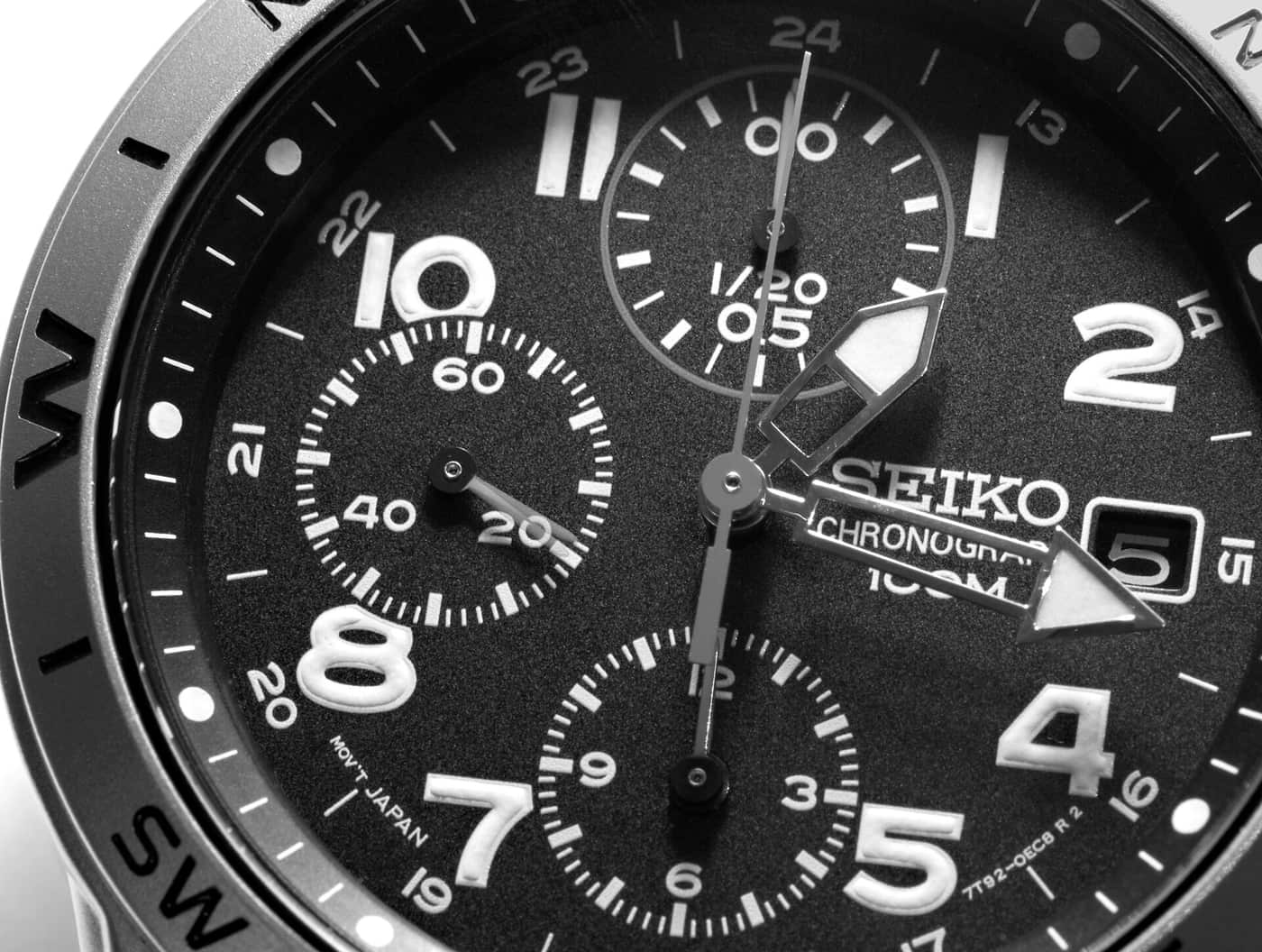
Under $200 a chronograph is quartz, solar quartz, meca-quartz or - at the very top - a hand-wound mechanical. Solar is the lowest-maintenance choice because there is no battery to replace. Meca-quartz gives you the crisp pusher snap and flyback reset of a mechanical chronograph with quartz accuracy. Expect mineral crystal and a 40-45mm case.
Disclosure: we earn commission on qualifying purchases made through the links below, at no extra cost to you. It never changes the order of our picks - here is how that works.
The movement is the decision, and there are four of them
A chronograph is a watch with a stopwatch built in: pushers to start, stop and reset an elapsed-time hand, with sub-dials counting the minutes and often the hours. At this price the word covers four completely different machines, and the difference you will actually notice day to day is not the dial - it is what happens when you press the button.
Standard quartz is the bulk of the market. A battery drives everything, the chronograph seconds hand steps once per second or in fifths, and the pushers feel soft because you are closing an electrical contact rather than releasing a mechanical lever. It is accurate to seconds a month, it is cheap, and the battery needs changing every few years.
Solar quartz - Citizen's Eco-Drive is the one most people meet first - is the same thing with a photovoltaic dial and a rechargeable cell instead of a disposable battery. No battery changes, ever, in normal use. That is the single biggest ownership difference in this entire roundup.
Meca-quartz is the enthusiast's value play: a quartz movement for timekeeping with a mechanical chronograph module bolted on top. The pushers have a proper crisp snap, the chronograph seconds hand sweeps rather than steps, and the reset is a flyback - the hand flies back to zero instantly instead of walking there. Seiko's VK-series modules are what almost every microbrand uses.
Mechanical means a hand-wound column-wheel chronograph, and at this money there is essentially one: the Chinese ST19, built on tooling descended from the Venus 175. It is a real watchmaking object with real watchmaking compromises.
- Lowest maintenance: solar quartz. No battery changes.
- Best feel for the money: meca-quartz, for the pusher snap and flyback reset.
- Most watch for the money: a hand-wound ST19, if you accept 30m water resistance.
The four specs that matter, and the two words that mislead
Water resistance is where buyers get hurt. A 30m or 50m rating means splashes and rain, not swimming - and on a chronograph it matters more than on a plain watch, because the pushers are two extra openings through the case. Anything you intend to swim in wants 100m and screw-down pushers are better still, though they are rare below $200.
Crystal is the second one. Mineral glass is standard at this price and it scratches; sapphire resists scratching and starts appearing right at the top of the bracket. Some vintage-styled models use a domed acrylic crystal, which scuffs easily but polishes out with a cloth and a little paste - a genuinely different tradeoff rather than a worse one.
Case size is the mistake almost nobody checks. Budget chronographs run 40-45mm because the extra sub-dials need dial real estate, and a 45mm case on a 6.5-inch wrist overhangs. Look at the lug-to-lug measurement rather than the diameter: a 42mm watch with 50mm lugs wears bigger than a 44mm watch with 47mm lugs.
The bracelet or strap is the biggest driver of how expensive a watch feels, and the first thing budget models cut. Folded-steel links with a stamped clasp rattle; solid links with a milled clasp do not. A $25 strap on a $120 watch is the highest-return upgrade in this entire category.
As for the misleading words: a chronograph is a stopwatch function. A chronometer is a watch certified to a precision standard - a completely unrelated claim, and nothing under $200 is one. And a tachymeter bezel only works if the chronograph has a 60-second or 60-minute scale to read it against; on many budget dials it is decoration.
Quick picks
The short version. Tap any row to jump to the full write-up, or go straight to Amazon to check the current price.
| # | Product | Best for | Price |
|---|---|---|---|
| 1 | Citizen Eco-Drive chronograph The lowest-maintenance chronograph at this price, and the one to buy if you want to stop thinking about it. | Best overall - never needs a battery | |
| 2 | Casio Edifice EF-527D A big, legible, 1/20-second sports chronograph that street-prices well under its list. | Best tachymeter on a steel bracelet | |
| 3 | Timex MK1 Steel Chronograph Military-styled, light, and the cheapest pick here by a clear margin. | Best cheap field chronograph | |
| 4 | Seagull 1963 chronograph A hand-wound column-wheel chronograph for the price of a quartz one - with the compromises that implies. | Best real mechanical chronograph | |
| 5 | Meca-quartz microbrand chronograph Quartz accuracy with a mechanical chronograph module - the pusher snap the big brands do not give you here. | Best chronograph feel for the money |
We do not print prices on this site. Every button opens the live Amazon listing so you see the real price at the moment you click. See our affiliate disclosure.
1. Best overall - never needs a battery
Citizen Eco-Drive chronograph
The lowest-maintenance chronograph at this price, and the one to buy if you want to stop thinking about it.
- Solar Eco-Drive
- No battery changes
- Date
- Steel bracelet or leather
Citizen's Eco-Drive chronographs - the AT21-series and the Chandler line are the references you will see most often - are the default recommendation here for one reason: light charges the cell, so there is no battery to replace and no dead watch in a drawer waiting for a trip to a jeweler. Over ten years that is worth more than any specification on the case back.
They are honest sports chronographs: a date window, a three-register layout, 1/5-second timing on most references, and build quality that feels a tier above the price. Market pricing on the AT2141 family sat in the mid-$160s when we checked, which leaves room under $200 even at full retail on many references.
Buy it on the steel bracelet if you can. The leather-strap versions are cheaper and the strap is the first thing you will replace.
Read the reference number before you buy - Citizen's catalog is enormous and the water resistance, crystal and case size all move between refs that look nearly identical in photos.
What you give up
The cases run large - 42-44mm is typical, which is too much watch for a slim wrist. Most references use mineral crystal rather than sapphire. And the sub-dials on the dark-dial versions are genuinely hard to read in low light.
2. Best tachymeter on a steel bracelet
Casio Edifice EF-527D
A big, legible, 1/20-second sports chronograph that street-prices well under its list.
- Quartz chronograph
- 1/20 second timing
- 100m water resistance
- Steel bracelet
The EF-527D is the Edifice that has stayed in Casio's US catalog for years, and it is the most watch-shaped watch in this roundup: a 45mm steel case, a tachymeter bezel with a chronograph that can actually drive it, a date window and 100m water resistance - the one pick here you could swim in without worrying.
Casio lists it around $210, and the street price runs well under that, which is why it belongs on an under-$200 list. The 1/20-second register is a genuine function rather than a sticker: it is one of the few budget chronographs that times to something finer than a full second.
If you want the look of a 1990s steel sports chronograph and you have the wrist for it, this is the one.
What you give up
45mm and thick - on a wrist under 7 inches it is simply too big, and no strap change fixes that. The bracelet is folded steel and the clasp is the cheapest part of the watch. Mineral crystal, so expect scratches.
3. Best cheap field chronograph
Timex MK1 Steel Chronograph
Military-styled, light, and the cheapest pick here by a clear margin.
- Quartz chronograph
- Steel case
- Field dial layout
- Fabric or leather strap
The MK1 is Timex's reissue of its military field watches, and the steel chronograph version is the one to get - the aluminum-cased original is lighter but softer. It was listed around $119 when we checked, which makes it the one watch in this roundup that leaves most of the $200 unspent.
The appeal is the dial: a clean 24-hour-marked field layout with the chronograph registers integrated rather than bolted on, in a case around 40mm that wears smaller than any other pick here. It is the right answer for a small wrist.
This is also the pick for a knockabout watch. There is no component on it expensive enough to make you careful.
Check the reference's water resistance before you commit - across the MK1 line it sits in the splash-only bracket rather than the swimming bracket.
What you give up
Splash-resistant rather than swim-capable on the references we found, so treat it as a dry-land watch. The crystal is the weak spot - domed and soft on several variants. And the pushers have the soft, spongy quartz feel with no snap to them at all.
4. Best real mechanical chronograph
Seagull 1963 chronograph
A hand-wound column-wheel chronograph for the price of a quartz one - with the compromises that implies.
- ST19 hand-wound movement
- Column wheel
- Acrylic crystal on classic refs
- 38-42mm
The 1963 is a reissue of a Chinese air force pilot's chronograph, and it runs the ST19 - a hand-wound, column-wheel chronograph movement built on tooling descended from the Venus 175. Column-wheel chronographs with any other name on the dial start in the thousands. We found the 1963 around $150.
What you get for that is the thing the quartz watches in this roundup cannot do: a mechanical chronograph you wind every morning, with a crisp, mechanical pusher action and a movement you can watch through a display caseback on most versions. For an enthusiast buying a first mechanical chronograph, nothing else at this price is close.
It is a collector's watch rather than a daily driver, and it should be bought as one.
Buy from a seller with a returns policy. The 1963 is sold through a long tail of gray-market channels and the variance between them is the main risk.
What you give up
Water resistance is 30m at best on the classic references - this is not a watch to wear in the rain without thinking. The traditional versions use an acrylic crystal that scuffs. It is hand-wound only, so it stops if you forget. And there is effectively no US service network, so a fault means shipping it or finding an independent watchmaker.
5. Best chronograph feel for the money
Meca-quartz microbrand chronograph
Quartz accuracy with a mechanical chronograph module - the pusher snap the big brands do not give you here.
- Seiko VK-series module
- Flyback reset
- Sweeping chrono hand
- Usually sapphire
This is a category rather than a single product, because the watches change faster than any roundup can track - but the movement inside them does not. A meca-quartz chronograph pairs a quartz timekeeping movement with a mechanical chronograph module, usually one of Seiko's VK-series. The result: battery-powered accuracy, a chronograph seconds hand that sweeps instead of stepping, a positive click from the pushers, and a reset that flies the hand back to zero instantly.
The microbrands that use these modules also tend to spend the saved money where it shows - sapphire crystals, solid-link bracelets and better lume are common at $150-200 from brands building two or three models rather than two hundred.
If the thing you want from a chronograph is for it to feel like a chronograph, this is the way to get that under $200. Search the movement rather than the brand, and read the specification sheet for crystal, water resistance and lug-to-lug before you buy.
What you give up
You are buying from a small company: no service network, no local warranty counter, and a real chance the brand is gone in five years. Shipping and returns are often international. And the module is still a module - a dead quartz circuit means a repair that costs a meaningful fraction of the watch.
What a chronograph is for, and whether you need one
Be honest about the function. A chronograph exists to time an interval, and your phone does that more accurately than any watch in this roundup. People buy chronographs because the dial looks better - the sub-dials, the pushers, the tachymeter - and because of the association with racing and aviation. That is a perfectly good reason, and it is worth naming so you buy for the look rather than for a function you will use twice.
Where a wrist chronograph genuinely beats a phone is anything hands-busy: parking meters, cooking, a workout interval, a work task you are billing. One press, no unlock, no app. If that is you, prioritize a running chronograph seconds hand you can read at a glance and a minute register that counts to 30 or 60, and skip the 1/20-second registers entirely.
If you are shopping more broadly rather than specifically for this complication, the best men's watches under $200 covers the three-hand and automatic options at the same ceiling, and are cheap watches worth it is the honest answer on where this category's quality floor actually sits.
Leaving it running, and the other ownership habits that matter
On a quartz chronograph, running the stopwatch continuously drains the battery faster than normal timekeeping - the pulse motor driving the sweep hand is doing real work. It will not damage anything, but the battery will come due sooner. Reset the chronograph when you are done with it.
On a mechanical chronograph it is a wear question rather than a battery question: the chronograph train is engaged and running while the stopwatch is going, so leaving it on permanently adds wear and drains the mainspring faster. The convention among owners is simple - time what you are timing, then reset.
Two more habits. Do not use the pushers underwater on any watch at this price; the pusher gaskets are the weakest seal on the case. And reset to zero before you set the time, because on some meca-quartz and mechanical layouts the hands will not align correctly otherwise - which is the single most common fault people report to sellers that is not actually a fault.
- Reset the chronograph when you are done - battery on quartz, wear on mechanical.
- Never press the pushers in water, whatever the depth rating says.
- A dead quartz battery left in the case can leak - replace it reasonably promptly.
When to spend more than $200
Three things arrive just above this bracket, in this order. Sapphire crystal as standard, which on a watch worn daily is the difference between a clear dial and a hazy one in year three. A solid bracelet with milled end links and a machined clasp, which changes how the whole watch feels more than any movement upgrade. And genuine 100m-plus water resistance with screw-down pushers, which is what makes a chronograph a swimming watch rather than a dry-land one.
The pilot case is the other place this budget runs out early: adding a chronograph to a flieger is an expensive combination, which is why the best pilot watches under $500 are mostly three-handers. If the aviation look rather than the stopwatch is what you are after, start there instead.
A mechanical chronograph from a Swiss or Japanese house is a much larger step - integrated or modular Valjoux-family and Seiko mechanical chronographs sit in the four figures, and nothing bridges the gap between the ST19 and them. If a mechanical chronograph is the goal and $200 is the budget, the Seagull is not a compromise on the way to something better; it is the whole category at this price.
For the rest of the category at each ceiling, the watch hub collects it, and cheap vs expensive watches lays out where the money goes step by step.
How we picked
Every pick on this page is a real, currently-sold product that we could find at or under $200 at the time of the last update. Rank order is set before any link is attached.
We are research-led, not lab-led. We do not run a test lab and we do not claim to have personally used every product on this site. Picks come from manufacturer specifications, owner-reported reliability and failure patterns, expert-publication consensus, and real availability at the stated price ceiling. Read the full method.
Common questions
+Is a chronograph the same thing as a chronometer?
No, and the words get used interchangeably in marketing. A chronograph is a watch with a stopwatch function. A chronometer is a watch certified to an independent precision standard. Nothing under $200 is a certified chronometer, so treat the word as decoration if you see it at this price.
+What is meca-quartz, and is it better than quartz?
Meca-quartz uses a quartz movement for timekeeping and a mechanical module for the chronograph. You get quartz accuracy plus a crisp pusher action, a sweeping chronograph hand and an instant flyback reset. It feels substantially better to use than standard quartz and costs a little more.
+Can I swim with a chronograph under $200?
Only if it is rated 100m or better, and even then do not press the pushers underwater - the pusher gaskets are the weakest seal on the case. A 30m or 50m rating means rain and handwashing, not swimming, whatever the word waterproof implies.
+Why are mechanical chronographs so much more expensive than quartz ones?
A mechanical chronograph is one of the more complicated movements in regular production - dozens of extra parts, a clutch and either a cam or a column wheel, all assembled and regulated by hand. The Chinese ST19 is the one exception near this price because it runs on long-amortized tooling.
+Does leaving the chronograph running damage the watch?
It does not damage it, but it costs you something. On quartz it drains the battery faster because the sweep motor is working. On a mechanical movement it adds wear to the chronograph train and drains the mainspring faster. Reset it when you are finished timing.
+What size chronograph should I buy for a small wrist?
Look for 40mm or under and check the lug-to-lug measurement rather than the diameter - a shorter lug-to-lug wears smaller even at the same case width. Most budget chronographs run 42-45mm because the sub-dials need space, which is why the smaller field-style options matter at this price.
Sources
Read next
Best men's watches under $200
Best Men's Watches Under $200 (October 2026)
Where sapphire and solid bracelets become standard. Five picks and what the extra $100 actually buys.
Best pilot watch under $500
Best Pilot Watches Under $500
Type A or Type B, and mind the case size. Five pilot watches under $500, honestly assessed.
Watches
Cheap vs Expensive Watches: What You Actually Get
Attribute by attribute: crystal, case, bracelet, movement and finishing - with a verdict on each.
Shop by price
Under $200
Where the compromises start disappearing. Mostly appliances, furniture and bigger tech.
Category
Watches
Mechanical, quartz and dive watches where the money goes into the movement instead of the marketing.
Think we got a pick wrong, or spotted one that is out of stock or over its ceiling? Tell us - corrections go to the front of the queue.