Fitness
What Can You Substitute for a Kettlebell?
A loaded backpack covers most of it. The swing is the exception, and understanding why tells you exactly when a substitute will work.
By Brijon M. - Published October 5, 2026
The short answer
For presses, squats, lunges, rows and carries, a **dumbbell or a loaded backpack** substitutes for a kettlebell almost perfectly. For **swings, cleans and snatches** it does not, because those movements need a handle offset from the weight. Swap in dumbbell swings, Romanian deadlifts or hip thrusts for those instead.
What a kettlebell actually does differently
A kettlebell is not simply a dumbbell with a different handle. One design feature produces all the differences, and knowing it tells you instantly whether a given substitute will work.
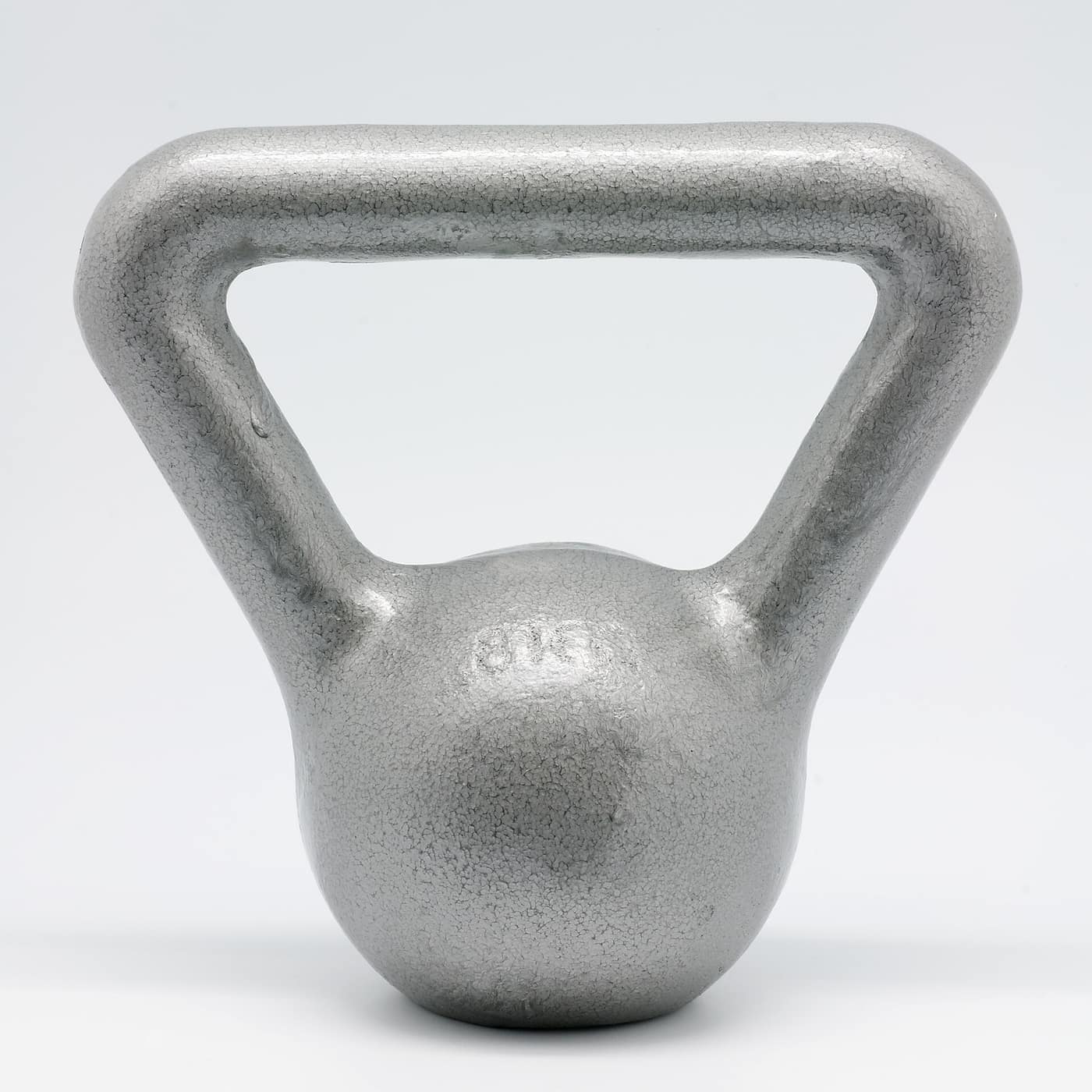
The center of mass sits several inches below and outside the handle. On a dumbbell, the weight is in line with your hand. On a kettlebell, it hangs away from it. That offset creates a lever arm, which means the weight wants to rotate around your grip - and controlling that rotation is what loads the grip, forearms and shoulder stabilizers differently.
It also means the weight can swing and flip predictably. A kettlebell rotates around the hand on a clean or a snatch, landing on the back of the forearm in the rack position. A dumbbell cannot do that, and attempting it is how people hurt their wrists.
The practical rule follows directly: if the exercise involves the weight hanging, swinging or rotating, the kettlebell shape matters. If it involves holding or pressing the weight, it does not.
Exercises that substitute perfectly
For these, a dumbbell, a loaded backpack, a sandbag or even a water jug is a genuine like-for-like swap. The load is the stimulus, not the shape.
Goblet squats. Hold any compact weight at chest height. A dumbbell held vertically by one end is almost identical; a backpack clutched to the chest works fine.
Overhead and floor presses. A dumbbell is arguably better here, because the kettlebell's offset mass is a complication rather than a benefit for most people.
Rows, lunges, step-ups, Russian twists. All about load and position. Anything of the right weight does the job.
Farmer's carries and suitcase carries. A kettlebell is convenient, but a heavy bag in one hand produces the same anti-lateral-flexion challenge, which is the whole point.
Turkish get-ups. These do transfer to a dumbbell, with one caveat: the dumbbell is less stable overhead because there is no offset mass to settle. Go lighter than you would with a bell.
- Loaded backpack: books, water bottles, canned goods. Free, and surprisingly effective.
- Water or milk jug: water for lighter loads, rice or dried beans for heavier.
- Gym bag with a strap: the closest free approximation of a sandbag.
The swing, and what to do instead
Kettlebell swings are the exercise people most want to replicate, and the one that substitutes worst. The swing is a hip hinge driving a pendulum - the bell's offset mass and the handle's shape are what let it travel safely and let you grip it through the arc.
A dumbbell swing is the closest version and it does work, held vertically by one end with both hands. Use less weight than you would with a kettlebell: the grip is more awkward, the shape is less forgiving, and the dumbbell's narrow handle fatigues the hands faster.
If you want the same training effect rather than the same movement, these are better substitutes, and all of them load the hip hinge:
Romanian deadlifts with any weight, for the same posterior-chain loading with more control. Hip thrusts with a weight across the hips, for more direct glute work. Banded pull-throughs, which mimic the hinge pattern with horizontal resistance. Broad jumps or kettlebell-free hinge jumps, for the explosive component. Sumo deadlifts and good mornings for heavier hinge work.
Most people doing swings want the explosive hip extension and the conditioning. Romanian deadlifts plus broad jumps delivers both without a kettlebell in the room.
Quick picks
The short version. Tap any row to jump to the full write-up, or go straight to Amazon to check the current price.
| # | Product | Best for | Price |
|---|---|---|---|
| 1 | Yes4All cast iron kettlebell One bell costs less than most substitutes and does everything they cannot. | Just buy the kettlebell | |
| 2 | Adjustable dumbbells Covers everything except the swinging movements, across a range of weights. | Best all-round substitute | |
| 3 | Yes4All workout sandbag Shifting, awkward load that trains stability in a way fixed weights do not. | Closest feel for carries and cleans | |
| 4 | Yes4All slam ball Replaces the conditioning half of kettlebell training, and you can throw it. | Best for the explosive work |
We do not print prices on this site. Every button opens the live Amazon listing so you see the real price at the moment you click. See our affiliate disclosure.
1. Just buy the kettlebell
Yes4All cast iron kettlebell
One bell costs less than most substitutes and does everything they cannot.
- Solid cast iron
- Wide smooth handle
- Flat base
- 5 to 30lb and up
Worth saying plainly before the alternatives: a single kettlebell is one of the cheapest pieces of fitness equipment there is, and if the only reason you are looking for substitutes is price, this closes the question.
The cast iron construction is one solid piece with no seams or welds, the handle is wide and smooth enough for two hands, and the flat base means it sits still for renegade rows and push-ups.
One bell at the right weight covers swings, goblet squats, presses, carries and get-ups. Most home training needs one, not a set.
What you give up
The powder coating on the base can chip and flake over time, particularly if you drop it. A single weight eventually becomes too light for lower-body work and too heavy for pressing.
2. Best all-round substitute
Adjustable dumbbells
Covers everything except the swinging movements, across a range of weights.
- Multiple weights in one pair
- Compact storage
- Spin-lock or selector designs
- Pairs available
If you are buying one thing to replace a kettlebell rack, this is it. A pair of adjustable dumbbells covers presses, rows, squats, lunges, carries and get-ups across every weight you are likely to need, in roughly the space of a single kettlebell.
The limitation is the one described above: you can swing a dumbbell, but it is a compromise, and cleans and snatches do not transfer at all.
For general strength work at home, dumbbells are more versatile than kettlebells. For conditioning and ballistic work, they are less so.
What you give up
Spin-lock models take time to change weight, which kills a circuit. Selector models are faster but cost more and are bulkier, and neither likes being dropped.
3. Closest feel for carries and cleans
Yes4All workout sandbag
Shifting, awkward load that trains stability in a way fixed weights do not.
- Adjustable filler weight
- Multiple handles
- Soft - safe to drop
- Packs away flat
A sandbag is the substitute that gets closest to the kettlebell's awkwardness, and for cleans, carries and squats that awkwardness is the training effect. The sand shifts as you move, so the stabilizers work continuously rather than at a fixed point.
Multiple handles mean several grip positions, and because it is soft you can drop it without damaging a floor - something no kettlebell or dumbbell allows in an apartment.
It also stores flat and empties, which makes it the most apartment-friendly load on this page.
What you give up
Filling and adjusting it is messy and not something you do mid-session. It cannot be used for precise pressing work, and the shifting load makes progress hard to measure.
4. Best for the explosive work
Yes4All slam ball
Replaces the conditioning half of kettlebell training, and you can throw it.
- 10 to 40lb options
- Textured PVC shell
- Sand filled, minimal bounce
- Drop and slam safe
If what you want from kettlebell swings is the explosive, breathless conditioning rather than the specific hinge pattern, a slam ball delivers it more directly. Slams, throws and ball-over-shoulder work are brutal cardio and require no technique coaching.
The textured shell is grippable with sweaty hands and the sand filling means it lands dead rather than bouncing back at you.
It also works as a weight for squats, Russian twists and loaded sit-ups, so it is not a single-exercise purchase.
What you give up
No handle, so pressing and carrying work is limited and grip-dependent. Repeated slamming on a hard floor is loud and eventually splits cheap shells at the seam.
Free substitutes that actually work
If the point is to train today without buying anything, these are the ones that hold up.
A loaded backpack is the best of them. Fill it with books, canned goods or water bottles, cinch the straps so the load does not shift, and you have an adjustable weight you can hold at the chest, press overhead, squat with or wear for lunges and step-ups. A hiking pack with a hip belt handles heavier loads comfortably.
Water jugs. A gallon of water is a little over 8lb. For heavier, fill with dried rice or beans - denser, and it does not slosh. The handle makes them usable for carries and single-arm work.
A gym bag or duffel loaded with books is the poor man's sandbag, and the shifting contents produce the same stabilizer demand.
The honest limit on all of these is progression. You can add a few books, but you cannot add five pounds precisely, and at some point the bag is full and you are no longer getting stronger. They are an excellent start and a poor long-term plan.
What weight should you substitute with?
If you are translating a kettlebell workout to a dumbbell, do not match the number. Two adjustments matter.
For swings, go lighter. A dumbbell swing with the same weight as your kettlebell swing is harder on the grip and less stable in the hands. Drop roughly 20 to 30% and build back up.
For presses, you can usually go the same or slightly heavier. The dumbbell's in-line mass is easier to press than a kettlebell's offset load, so the same weight will feel marginally lighter.
For get-ups, go substantially lighter. The kettlebell settles into a stable position on the forearm overhead; a dumbbell does not, and balancing it through a full get-up is a different and harder task.
If you are building a home setup from scratch, our adjustable dumbbells vs fixed dumbbells comparison covers which route makes sense, and best adjustable dumbbells under $200 covers the picks.
Common questions
+Can I use a dumbbell instead of a kettlebell?
For presses, squats, rows, lunges and carries, yes - almost identically. For swings it works but is less comfortable and needs less weight. For cleans and snatches, no: those depend on the bell rotating around your hand, which a dumbbell cannot safely do.
+What household item can replace a kettlebell?
A loaded backpack is the best option - adjustable, comfortable against the body, and usable for squats, presses, lunges and carries. A water or rice-filled jug works for single-arm and carry work because it has a handle.
+What can I do instead of kettlebell swings?
Romanian deadlifts for the hinge pattern under load, hip thrusts for direct glute work, banded pull-throughs for the same movement with horizontal resistance, and broad jumps for the explosive element. A dumbbell swing is the closest direct copy, with lighter weight.
+Is a kettlebell better than dumbbells?
Neither is better overall - they overlap heavily and differ at the edges. Kettlebells are better for ballistic and conditioning work; dumbbells are better for controlled strength work and come in pairs. If you can only own one type for general strength training at home, dumbbells are more versatile.
+What weight kettlebell should I start with?
Commonly 8kg (around 18lb) for most women and 12 to 16kg (26 to 35lb) for most men as a first bell for swings - lighter than people expect for pressing, heavier than they expect for hinging. If you are buying only one, favor the weight that lets you swing properly.
Sources
Read next
Best adjustable dumbbells under $200
Best Adjustable Dumbbells Under $200 (October 2026)
Spin-lock beats cheap selectorized at this price, and the reason is a plate landing on your foot. Five picks with the safety case made plainly.
Fitness
Adjustable vs Fixed Dumbbells
The cost-per-pound math, the space math, and the one training style where fixed dumbbells genuinely win.

Best yoga mat under $50
Best Yoga Mat Under $50 (October 2026)
Grip, thickness, length. Five mats under $50 and the sweat problem that decides between PVC and rubber.

Category
Fitness
Trackers, dumbbells, shoes and treadmills, with the honest line on where budget gear stops being safe.
Think we got a pick wrong, or spotted one that is out of stock or over its ceiling? Tell us - corrections go to the front of the queue.