Kitchen - under $200
Best Stand Mixer Under $200 (October 2026)
Cake batter is easy and every mixer here does it. Stiff bread dough is where the cheap ones walk across the counter.
By Brijon M. - Published October 11, 2026
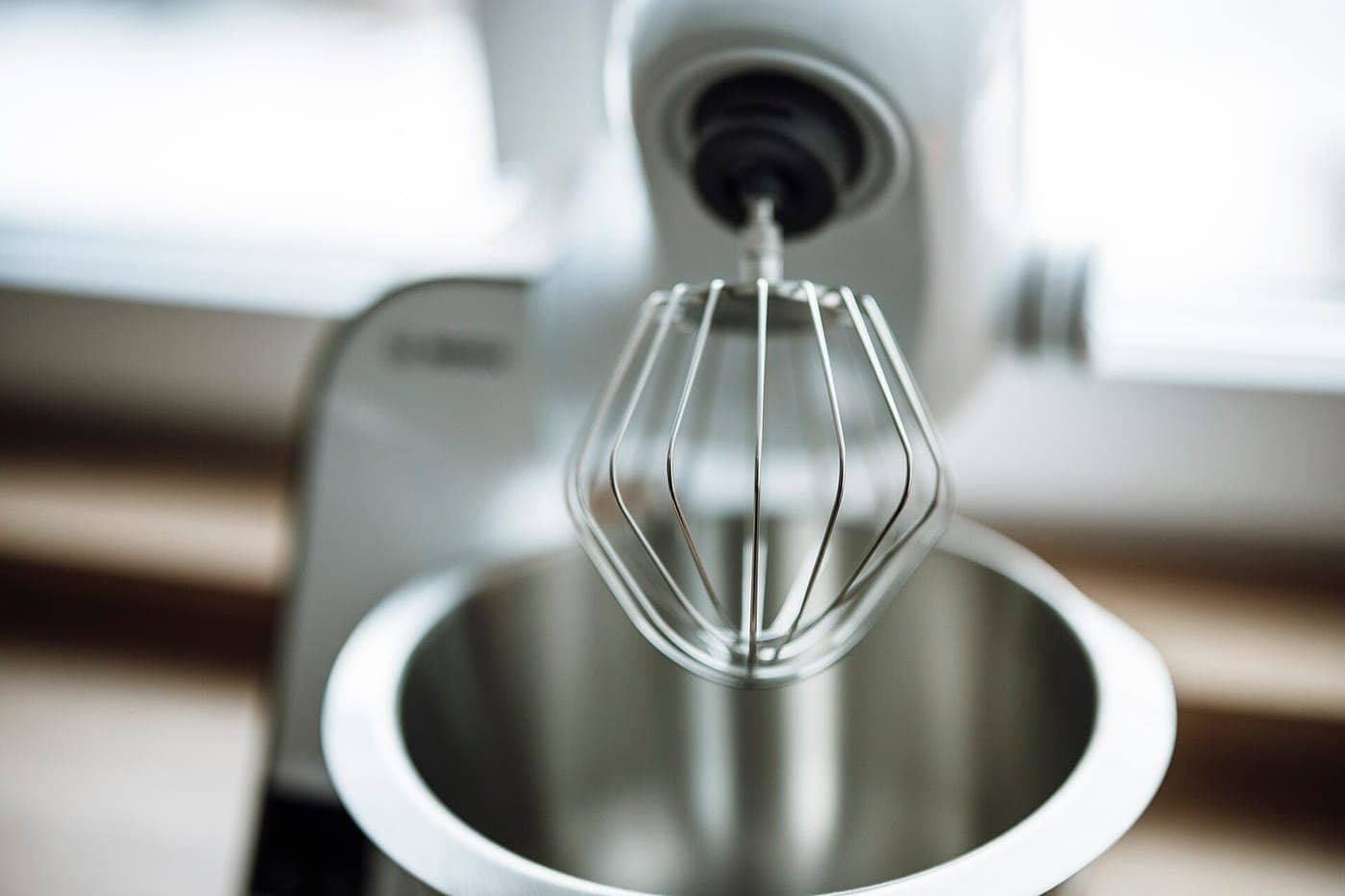
The short answer
Under $200 the pick for most kitchens is the KitchenAid Classic, because the all-metal gearbox and the enormous attachment ecosystem outlast everything else at this price. If you knead bread regularly, buy on motor torque and bowl capacity instead - the Cuisinart Precision Master's larger bowl and higher wattage handle stiff dough with less complaint.
Disclosure: we earn commission on qualifying purchases made through the links below, at no extra cost to you. It never changes the order of our picks - here is how that works.
Planetary action, and the one spec that is not on the box
Every mixer worth owning uses planetary action: the beater spins on its own axis while that axis orbits the bowl, so the whole bowl gets worked without you scraping it down every ninety seconds. If a listing does not describe planetary or orbital mixing, it is a bowl-lift novelty and you should move on.
The specification that actually separates mixers at this price is not on the box at all: what the gearbox is made of. A mixer transmits motor power to the beater through a gear train, and that train is either metal or nylon. Nylon gears are quiet and cheap and strip when you push stiff dough through them. Metal gears do not.
This is why wattage is a poor guide. A 500-watt motor driving nylon gears is not more capable than a 275-watt motor driving metal ones - it is just better at destroying itself. Torque at the beater and the durability of the path to it are what matter.
The second underrated specification is weight. A heavy mixer stays put. A light one travels across the worktop when the dough hook hits a stiff batch, and that is both annoying and a genuine hazard near the edge of a counter.
Decide what you will actually make
This is the question that determines which mixer is right, and the categories need different machines.
Cakes, cookies, whipped cream, frosting, meringue. Every mixer in this list does these well. Nothing here will disappoint you, and you should buy on bowl size, color and price.
Bread dough - occasional, one loaf at a time. Any of these will manage, but go for the higher-capacity bowls and expect to work in a single modest batch rather than filling the bowl.
Bread dough - regularly, or stiff doughs like bagels and pizza. This is where cheap mixers fail, and they fail by overheating, by walking across the counter, or by stripping gears. If this is your use, prioritize bowl capacity, weight and metal gearing above everything else, and consider that hand-kneading or a cheap food processor is genuinely competitive.
Shredding chicken, mashing potatoes, mixing meatloaf. All fine on anything here. The paddle does this well and it is one of the most underrated uses of a stand mixer.
- Planetary action - non-negotiable.
- Metal gearbox over high wattage, every time.
- Bowl capacity of 4.5 quarts minimum; 5.5 quarts if you bake bread.
- Weight - a light mixer walks when the dough gets stiff.
Quick picks
The short version. Tap any row to jump to the full write-up, or go straight to Amazon to check the current price.
| # | Product | Best for | Price |
|---|---|---|---|
| 1 | KitchenAid Classic Series All-metal construction and an attachment ecosystem nothing else can match. | Best overall | |
| 2 | Cuisinart Precision Master SM-50 A bigger bowl and a stronger motor than the KitchenAid Classic, for less money. | Best for bread dough | |
| 3 | Hamilton Beach 4-quart planetary mixer Real planetary action at roughly a third of the premium price. | Best cheap pick | |
| 4 | Beautiful 5.3-quart stand mixer A 5.3-quart bowl and a touch-control panel at the bottom of the price range. | Best capacity for the price | |
| 5 | A good hand mixer plus a kitchen scale If you bake a few times a year, this does 90% of the job for under $60 total. | The honest alternative |
We do not print prices on this site. Every button opens the live Amazon listing so you see the real price at the moment you click. See our affiliate disclosure.
1. Best overall
KitchenAid Classic Series
All-metal construction and an attachment ecosystem nothing else can match.
- 4.5-quart stainless bowl
- 275-watt motor, 10 speeds
- All-metal gearbox and housing
- Standard power hub for attachments
The Classic is the entry point to KitchenAid's tilt-head line and the mixer we would buy for a general-purpose kitchen. The motor rating is modest on paper and that is not the point: the gearing is metal, the body is metal, the machine is heavy, and these mixers routinely run for decades.
The power hub on the front is the second argument. It accepts the same attachments as every other KitchenAid - pasta rollers, meat grinder, spiralizer, ice cream bowl - and that ecosystem is deep, widely available second-hand, and a genuine reason the machine stays useful as your cooking changes.
Parts and service are also realistically available, which over a fifteen-year life matters more than a spec sheet.
It is the pick for cakes, cookies, frostings and the occasional loaf.
What you give up
The smallest bowl here at 4.5 quarts, and the lowest wattage - it will complain on large batches of stiff bread dough, and the tilt head has less clearance than a bowl-lift design. Usually sits at the very top of this budget.
2. Best for bread dough
Cuisinart Precision Master SM-50
A bigger bowl and a stronger motor than the KitchenAid Classic, for less money.
- 5.5-quart stainless bowl
- 500-watt motor, 12 speeds
- Splash guard with pour spout
- Includes whisk, paddle and dough hook
On the numbers this is the most capable mixer in the list: a full extra quart of bowl capacity and nearly twice the motor rating of the KitchenAid Classic, usually at a lower price. For bread specifically, that capacity is what lets you make a two-loaf batch without the dough climbing the hook.
Twelve speeds is more useful than it sounds, because the lowest speed on a mixer is what stops flour from being thrown out of the bowl, and more low-end granularity helps.
The splash guard with a pour spout is a small thing that you use constantly - adding flour to a running mixer without a cloud.
This is the pick if bread is the reason you are buying.
What you give up
The attachment ecosystem is tiny next to KitchenAid's, so the machine stays a mixer rather than becoming a platform. Build feels lighter in the hand and long-term durability has less of a track record behind it.
3. Best cheap pick
Hamilton Beach 4-quart planetary mixer
Real planetary action at roughly a third of the premium price.
- 4-quart bowl
- 7 speeds with fold setting
- Planetary mixing action
- Tilt-up head, light weight
If the mixer will come out six times a year for birthday cakes and Christmas baking, this is a sensible purchase rather than a compromise. It mixes batter properly, whips cream and egg whites properly, and costs little enough that the decision is easy.
The dedicated fold setting is genuinely useful for anyone who makes mousse or folds whipped egg whites into a batter, and it is a feature the more expensive mixers do not always have.
Light enough to lift into a cupboard one-handed, which for a small kitchen is the difference between a mixer that gets used and one that lives in the garage.
Buy this and spend the difference on better flour and a decent scale.
What you give up
Light enough that it moves on the counter with a stiff dough, 4 quarts is tight for bread, and the gearing is not built for regular heavy work. Treat bread dough as occasional and modest in size.
4. Best capacity for the price
Beautiful 5.3-quart stand mixer
A 5.3-quart bowl and a touch-control panel at the bottom of the price range.
- 5.3-quart bowl
- Touch-activated controls
- Tilt-head with included guard
- Several colorways
This line exists to compete with KitchenAid on looks and capacity at a much lower price, and on both of those counts it succeeds. The bowl is large, the finish is genuinely attractive on a counter, and Consumer Reports' 2026 affordable-mixer testing ranked it among the better-scoring budget models.
The touch controls are a real convenience when your hands are covered in dough, and the bowl size handles a double batch of cookie dough comfortably.
If the mixer is going to live on the worktop rather than in a cupboard, appearance is a legitimate factor, and this is the best-looking machine in the list.
A reasonable choice for general baking at high capacity.
What you give up
No meaningful attachment ecosystem, and electronic touch controls are a failure point that a mechanical lever is not. Long-term durability data is thinner than for the established brands here.
5. The honest alternative
A good hand mixer plus a kitchen scale
If you bake a few times a year, this does 90% of the job for under $60 total.
- Hand mixer with beaters and dough hooks
- Digital scale in grams
- Stores in a drawer
- Combined cost well under $100
A stand mixer earns its counter space through frequency. If you bake occasionally, a decent hand mixer whips cream, beats butter and sugar, makes meringue and mixes cake batter perfectly well - it just requires you to hold it.
The scale is the part that actually improves your baking. Volume measurement of flour varies by up to twenty percent depending on how you scoop, and that variance is the single most common reason a recipe fails. Weighing removes it. No mixer compensates for mismeasured flour.
For bread specifically, hand-kneading is a legitimate technique rather than a hardship, and no-knead methods using long fermentation produce excellent loaves with no machine at all.
We would rather tell you this than sell you a mixer you will store and resent.
What you give up
You hold it, so long whipping jobs are tiring, and a hand mixer cannot knead a stiff dough or run unattended while you do something else. No attachment platform and no bowl.
Tilt-head or bowl-lift?
Under $200 this is almost always decided for you - nearly everything in this bracket is a tilt-head - but it is worth understanding what you are getting.
Tilt-head mixers hinge backwards so you lift the head away from the bowl. They are lighter, cheaper, easier to scrape, and easier to fit under a wall cabinet because they are shorter. The hinge is a mechanical compromise: there is a little more flex under load, and clearance above the bowl is limited.
Bowl-lift mixers keep the head fixed and raise the bowl on a lever. The frame is more rigid, so they handle stiff dough better and in larger quantities, and this is the configuration commercial kitchens use. They are heavier, taller, more expensive, and genuinely may not fit under a standard upper cabinet.
For home baking under $200, tilt-head is the right answer. If you are making four loaves a week, you are shopping above this price bracket and should be looking at bowl-lift.
What to spend the saved money on
A $150 mixer with good flour, a scale and a decent bowl scraper out-bakes a $400 mixer used carelessly. The machine is rarely the limiting factor in home baking.
A digital scale is the highest-return purchase in any kitchen, for the reason given above - flour measured by volume varies enormously.
An extra bowl for your mixer, if one is available cheaply. Making a cake that needs whipped whites separately means either washing mid-recipe or owning two bowls.
A flexible-edge paddle that scrapes the bowl wall as it turns. It is the single best accessory for any stand mixer and it removes most of the scraping down a recipe asks for.
If your cookware is the actual bottleneck, the best cookware set under $200 covers that decision, and the best blender under $100 handles the jobs a mixer cannot.
Still deciding whether you need a stand mixer at all? Stand mixer vs hand mixer sets out the three jobs that actually separate them, and which kitchens only need the cheaper machine.
How we picked
We limited the list to planetary-action mixers currently sold in the US under a $200 street price, then ranked them on gearbox construction, bowl capacity, machine weight and the depth of the attachment ecosystem - the four factors that determine both capability and how long the machine stays useful.
We have not run these mixers through a dough-fatigue test and do not claim to. The characterisations above come from manufacturer specifications and published independent testing, including Consumer Reports' 2026 affordable stand mixer evaluation, cited in sources.
The fifth entry is deliberately not a stand mixer, because for a meaningful share of households a hand mixer and a scale is the better purchase. Our full method is on how we pick.
How we picked
Every pick on this page is a real, currently-sold product that we could find at or under $200 at the time of the last update. Rank order is set before any link is attached.
We are research-led, not lab-led. We do not run a test lab and we do not claim to have personally used every product on this site. Picks come from manufacturer specifications, owner-reported reliability and failure patterns, expert-publication consensus, and real availability at the stated price ceiling. Read the full method.
Common questions
+Is a stand mixer under $200 good enough for bread?
For one loaf at a time, yes. For regular bread baking or stiff doughs like bagels and pizza, buy the largest bowl and heaviest machine you can at this price, and expect to work in modest batches - cheap mixers overheat, walk across the counter, or strip nylon gears on stiff dough.
+Does stand mixer wattage matter?
Less than people think. Torque at the beater and the material of the gear train matter more. A 275-watt mixer with metal gears handles dough better and far longer than a 500-watt one driving nylon gears.
+What size stand mixer bowl do I need?
4.5 quarts handles a standard cake, a batch of cookies and most everyday baking. Go to 5.5 quarts or larger if you bake bread, double recipes, or bake for a crowd - the extra capacity is what stops dough climbing the hook.
+Is a hand mixer enough instead of a stand mixer?
For occasional baking, yes. A hand mixer whips, creams and mixes batter perfectly well; what it cannot do is knead stiff dough or run unattended. If you bake a few times a year, a hand mixer plus a kitchen scale is the better use of the money.
+Tilt-head or bowl-lift stand mixer?
Tilt-head under $200 - it is lighter, shorter, cheaper and easier to scrape, and almost everything at this price is tilt-head anyway. Bowl-lift is more rigid and better for heavy dough, but it costs more and often will not fit under a wall cabinet.
Sources
Read next
Kitchen
Stand Mixer vs Hand Mixer
Three jobs separate the two machines, and none of them is mixing a cake. Which one your kitchen actually needs, itemized.
Best cookware set under $200
Best Cookware Set Under $200 (October 2026)
Tri-ply clad stainless or hard-anodized nonstick - pick a lane. Five sets under $200 and what each one gives up.
Best blender under $100
Best Blender Under $100 (October 2026)
Jar shape beats wattage, and the drive coupling is what fails. Five blenders under $100.

Kitchen
Affordable Knife Set Buying Guide
Which three knives you need, how piece counts are padded, and why sharpening beats spending.

Shop by price
Under $200
Where the compromises start disappearing. Mostly appliances, furniture and bigger tech.
Category
Kitchen
Air fryers, blenders, knives and coffee gear - the categories where spending more buys the least.
Think we got a pick wrong, or spotted one that is out of stock or over its ceiling? Tell us - corrections go to the front of the queue.