Kitchen - under $200
Best Cookware Set Under $200 (October 2026)
Two hundred dollars is enough for genuinely good cookware, as long as you pick a lane. The sets that try to be everything are the ones that disappoint.
By Brijon M. - Published October 9, 2026
The short answer
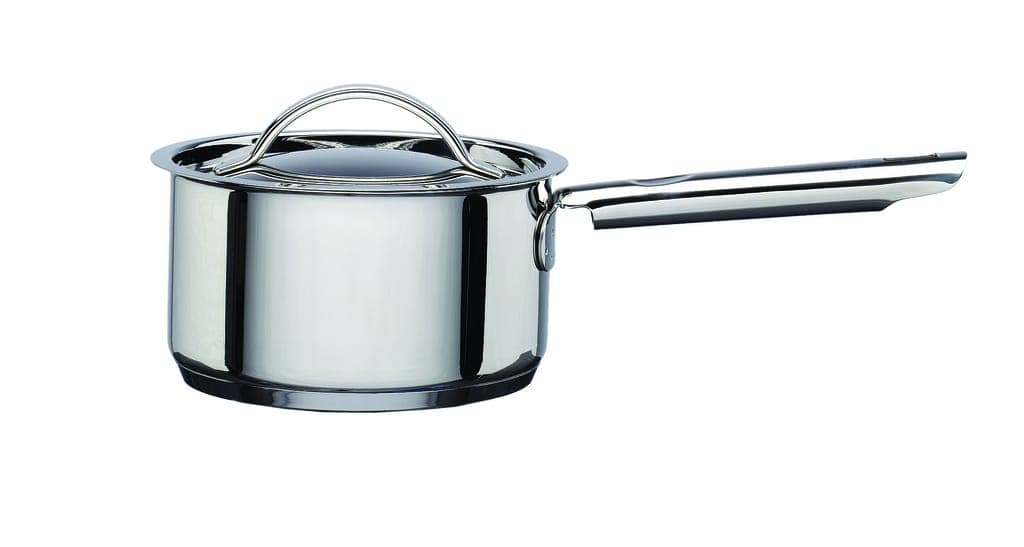
Under $200 the decision is construction, not piece count. Tri-ply clad stainless - an aluminum core bonded between two layers of steel, running the full height of the pan - is the durable choice and the one worth the money. Hard-anodized nonstick is easier to live with and will need replacing in a few years. A 12-piece set from either camp is reachable at this price; a set promising both is padding the box.
Disclosure: we earn commission on qualifying purchases made through the links below, at no extra cost to you. It never changes the order of our picks - here is how that works.
Piece count is marketing. Construction is the product
Cookware sets are sold on a number - 12-piece, 14-piece, 17-piece - and that number is the least useful thing on the box. Lids count as pieces. So do nylon spoons, a steamer insert and occasionally a measuring cup. A 17-piece set can contain fewer actual pans than a 10-piece one, and the brands that lean hardest on the headline count are usually the ones with the least to say about what the pans are made of.
What decides whether a set is still in your kitchen in ten years is how the metal is put together. There are three constructions at this price and they are not interchangeable.
Fully clad (tri-ply or five-ply). A layer of aluminum sandwiched between stainless steel, bonded across the base *and up the walls*. Heat moves sideways through the aluminum instead of sitting in a hot ring under the burner, so a sauce in the corner of the pan behaves the same as a sauce in the middle. This is the construction premium cookware is famous for, and it is reachable under $200.
Disc-bottom (impact-bonded). A thick aluminum or copper disc welded to the base of a stainless pan, with thin single-ply steel walls above it. Cheaper to make, and genuinely fine for boiling water or simmering a stew. The walls heat unevenly, and on anything that reduces or scorches you will notice.
Hard-anodized aluminum with a nonstick coating. Aluminum treated electrochemically so the surface is harder and non-reactive, then coated. Heats fast and evenly because it is aluminum all the way through, and it releases eggs with no fat. The coating is a consumable, and no coating lasts forever.
Everything below is one of those three. The rest of the spec sheet - mirror polish, riveted handles, a heat indicator in the pan base - matters far less than which of the three you bought.
How we picked
We do not run a test lab and we have not cooked on every set here. What we did instead was read the construction against the price, check the oven and cooktop ratings on each manufacturer's own specification, read what owners report after a few years rather than a few weeks, and confirm each set is a current product you can buy today rather than a model name that survives only in old review roundups. The full method is at how we pick.
Three things got a set excluded. A coating claim with no construction behind it - "diamond-infused", "granite", "titanium-reinforced" over an unspecified thin aluminum body. Oven ratings under 350F, which rule out finishing a pan sauce or a frittata under the broiler and quietly limit what the set can do. And a warranty you cannot use, meaning one that covers manufacturing defects for a year and nothing after.
Prices move constantly in this category, and the same set routinely sells for a third less at a warehouse club than on the manufacturer's own site. We do not print prices for that reason - every link goes to the live listing so you see the real number rather than one we wrote down last month.
- Fully clad stainless if you want cookware that outlives the kitchen it is in.
- Hard-anodized nonstick if you cook eggs and fish daily and accept replacing it.
- Oven-safe to 500F is the practical floor for a set you want to cook seriously in.
- Induction compatible if there is any chance of a glass induction cooktop in your future - a clad or magnetic-base set is, a plain aluminum one is not.
Quick picks
The short version. Tap any row to jump to the full write-up, or go straight to Amazon to check the current price.
| # | Product | Best for | Price |
|---|---|---|---|
| 1 | MultiClad Pro MCP-12N 12-Piece Real tri-ply clad stainless, a complete pan lineup, and a price that lands in this bracket. | Best overall | |
| 2 | Tri-Ply Clad 12-Piece Stainless Steel Set The same full-clad construction as the premium brands, NSF certified, with a lifetime warranty. | Best value in clad stainless | |
| 3 | C561SC Nonstick 12-Piece Set The easiest set here to cook on, at roughly half the price of the stainless options. | Best traditional nonstick | |
| 4 | Chef's Classic Stainless 11-Piece Stainless durability and a lifetime warranty for well under half the clad price. | Best cheap stainless | |
| 5 | Three pans bought separately, not a set A cast iron skillet, one clad saucepan and one nonstick pan beats any 12-piece box at this budget. | Best use of $200 for most people |
We do not print prices on this site. Every button opens the live Amazon listing so you see the real price at the moment you click. See our affiliate disclosure.
1. Best overall
MultiClad Pro MCP-12N 12-Piece
Real tri-ply clad stainless, a complete pan lineup, and a price that lands in this bracket.
- Tri-ply clad stainless
- 12 pieces incl. steamer insert
- Induction compatible
- Oven-safe to 500F
This is the set that gets named best-in-class in budget cookware testing again and again, and the reason is simply that it is fully clad at a price where most competitors are disc-bottomed. Reviewed's budget cookware test picked it as best overall. The lineup covers 1.5 and 3 quart saucepans, an 8 quart stockpot, a 3.5 quart saute pan, 8 and 10 inch skillets, a steamer insert and lids.
Cladding up the walls is what you are paying for. Risotto does not catch in the corners, a reduction behaves predictably, and the pan recovers quickly when cold food hits it. Stainless is also close to indestructible in daily use - metal utensils, a scouring pad and a 500F oven are all fine.
One note on price: this set straddles the $200 line depending on where you buy it, and Reviewed recorded it near $191 at Amazon and close to $300 at a big-box retailer in the same roundup. Check the live listing before you commit, and if it is sitting above $200 that day, the Tramontina below is the same construction for less.
What you give up
Nothing sticks less than nonstick, and stainless does not pretend otherwise - eggs and delicate fish need fat and a properly preheated pan or they weld on. The lids are glass rather than steel, so they are the part most likely to break, and the set contains no nonstick skillet at all.
2. Best value in clad stainless
Tri-Ply Clad 12-Piece Stainless Steel Set
The same full-clad construction as the premium brands, NSF certified, with a lifetime warranty.
- 18/10 tri-ply clad, aluminum to the rim
- NSF certified
- Oven-safe to 500F
- Lifetime warranty
Tramontina's own specification is unusually specific for this price: an 18/10 stainless interior, a magnetic stainless exterior, and an aluminum core that extends up the sides to the top of the pan rather than stopping at the base. That last detail is the whole argument for clad cookware, and plenty of sets costing more do not do it.
It is also NSF certified, which is a commercial-kitchen sanitation standard rather than a performance one - but it does mean the pans are built without crevices that trap food and are expected to survive institutional washing. The warranty is lifetime. The set covers 8 and 10 inch saute pans, a 3 quart covered deep saute, 1.5 / 2 / 3 quart covered saucepans, a 5 quart covered Dutch oven and an 8 quart covered stockpot, which is a more useful spread of sizes than most 12-piece boxes.
Watch the retailer carefully on this one. Tramontina's own site lists it close to $400, and Costco's warehouse price for the same set has been recorded around half that. It belongs on this list at the warehouse price and nowhere near the list price, so treat the live number as the deciding factor.
What you give up
Price volatility is the real catch - buy it on the wrong day and you have paid premium-brand money for a value-brand set. The handles are plain riveted stainless and get hot on the stovetop, and like every stainless set it needs preheating technique that a nonstick pan does not.
3. Best traditional nonstick
C561SC Nonstick 12-Piece Set
The easiest set here to cook on, at roughly half the price of the stainless options.
- Hard-anodized aluminum
- 12 pieces incl. utensils and glass lids
- Heat indicator in pan base
- Dishwasher safe
If what you cook is eggs, pancakes, fish, stir-fries and reheated leftovers, this is the honest answer and the cheapest set on the page - Reviewed logged it around $129 and named it their best traditional nonstick. Hard-anodized aluminum heats fast and evenly, the nonstick release means you can cook with almost no fat, and cleanup is a rinse.
The spread is 12 pieces including skillets, saucepans, a stockpot, a saute pan, nylon utensils and glass lids, so it genuinely furnishes a kitchen from nothing. T-fal's heat indicator in the pan base - a pattern that turns solid when the pan reaches temperature - sounds like a gimmick and is actually the most useful feature here for anyone who habitually puts food into a cold pan.
Buying this instead of stainless is a legitimate choice rather than a compromise, provided you go in knowing it is a consumable. Treat it as a five-year purchase, use wooden or silicone tools, never heat it empty, and hand-wash it despite the dishwasher rating.
What you give up
It cannot sear. Nonstick coatings are not built for the heat that browns a steak or develops a fond for pan sauce, and using them that way destroys the coating fast. The coating has a finite life no matter how carefully you treat it, so this set will need replacing while the stainless sets above are still going.
4. Best cheap stainless
Chef's Classic Stainless 11-Piece
Stainless durability and a lifetime warranty for well under half the clad price.
- Stainless with encapsulated aluminum base
- 11 pieces
- Induction compatible
- Lifetime warranty
This is the disc-bottom option, and it earns a place because for a large share of real cooking the disc is enough. Boiling pasta, simmering a stew, blanching vegetables, making stock - all of that happens in liquid, and liquid distributes heat regardless of what the pan walls are doing.
You get the things stainless is good for: no coating to wear out, no reaction with tomatoes or wine, metal utensils fine, oven fine. The lifetime warranty is the same one Cuisinart puts on the MultiClad Pro. And it costs a fraction of a clad set, which makes it the right pick if the budget is really $100 rather than $200.
Buy it understanding what single-ply walls mean. Thin batters, caramel, reductions and anything you stir constantly will show a hot ring where the burner is and cooler walls above it.
What you give up
Uneven wall heating is the whole compromise, and it is why this is not the overall pick - anything that scorches will scorch here first. The lighter-gauge walls dent more easily than clad ones, and the hollow stainless handles get hot.
5. Best use of $200 for most people
Three pans bought separately, not a set
A cast iron skillet, one clad saucepan and one nonstick pan beats any 12-piece box at this budget.
- 12 inch cast iron skillet
- 3 quart clad saucepan
- 10 inch nonstick skillet
- Roughly $100 total
The uncomfortable truth about cookware sets is that most kitchens use three pans and store nine. Buy a set and the 1.5 quart saucepan and the steamer insert go to the back of the cupboard in month two and never come out again.
Bought individually, roughly $100 gets a 12 inch cast iron skillet that sears better than anything else on this page and will outlive you, a 3 quart fully clad saucepan for sauces and grains, and a 10 inch hard-anodized nonstick pan for eggs. That is a better-performing kitchen than any $200 box, with money left for a decent knife - see best chef's knife under $50.
The case for buying a set anyway is real but narrow: you are furnishing an empty kitchen in one go, you want matching lids that interchange between pans, or the set is a gift. If none of those apply, buy three pans.
Cast iron is the piece people hesitate over. Our cheap vs expensive cast iron skillet comparison is blunt about it - the cheap pan and the expensive pan cook the same, and the difference is surface finish.
What you give up
No matching lids, no coherent look on the shelf, and three separate purchases to research instead of one. Cast iron is heavy, needs seasoning rather than scrubbing, and is wrong for long-simmered acidic sauces, so this route asks slightly more of the cook.
What $200 does not buy
Three things are genuinely out of reach at this ceiling, and it is better to know now than to discover it after the box is open.
Five-ply construction and thick-gauge clad. Weight and the number of bonded layers are where premium stainless spends its money, and they do change how a pan behaves on low heat. Under $200 you get tri-ply at a modest gauge - a real version of the same idea rather than a watered-down one, but not the same pan.
A long-lived premium ceramic nonstick. The better ceramic sets, the ones pairing a hard-anodized body with an extended-life coating, sit around $240 and up, which puts them just outside this page. If ceramic specifically is what you want, that is the one case here where waiting and spending more is the right call.
Sealed, welded handles. Riveted handles on a budget set are a maintenance point. Rivets loosen over years, and the inside of a rivet head is the hardest part of any pan to clean properly.
None of that makes a $200 set a bad buy. It means the money is best spent on construction rather than on features, which is what this whole page comes down to.
Induction, and why it decides the shortlist
If your cooktop is induction, or might be within a few years, this stops being a preference and becomes a filter. Induction heats the pan by inducing a current in it, so the pan itself has to be magnetic. Plain aluminum and plain 18/10 stainless are not.
Clad sets solve this with a magnetic stainless exterior layer, which is exactly why Tramontina specifies magnetic stainless on the outside and 18/10 on the inside. Disc-bottom sets usually solve it with a magnetic disc. Hard-anodized aluminum sets often do not solve it at all, unless the manufacturer has bonded a steel plate to the base and says so in the listing.
The test is free and takes a second: a fridge magnet should grip the base of the pan firmly. If a listing does not state induction compatibility explicitly, assume it is not compatible.
Gas and standard electric owners can ignore all of this, which widens the shortlist considerably and makes the nonstick route more attractive.
Making a cheap set last
Most cookware does not wear out. It gets damaged, and nearly always in one of four ways.
Empty pan on high heat. This is what destroys nonstick coatings and warps thin bases. A pan should never sit over a burner with nothing in it for more than a few seconds.
Thermal shock. Taking a hot pan to a cold sink warps bases, and a warped base on a glass or induction cooktop is the end of the pan's usefulness. Let it cool first.
The dishwasher - on stainless as much as nonstick. Dishwasher detergent is aggressive. Repeated cycles dull the polish, attack coatings and work on the rivets. Dishwasher-safe means the pan survives, not that the pan is unaffected.
Metal on coatings. A single metal spatula stroke on nonstick does visible damage. Wood or silicone, always.
On stainless specifically, two habits remove most of the frustration. Preheat the empty pan over medium for a couple of minutes, then add fat and wait for it to shimmer - food added at that point releases instead of sticking. And when something does stick, deglaze with water while the pan is hot rather than scrubbing it cold. Stuck-on protein is the beginning of a pan sauce, not a cleaning problem.
Where this fits in a budget kitchen
Cookware is the second thing to buy for a kitchen, not the first. A sharp knife changes more meals than a better saucepan does, and it costs less - best knife set under $100 covers that, and our affordable knife set buying guide explains why most sets in that bracket are padded with knives you will never use.
If you are weighing a clad set against a single excellent pan, cheap vs expensive stainless steel pan walks through exactly where the money goes in stainless, and cast iron skillet substitutes covers what else does the searing job if cast iron does not appeal.
The rest of this price tier is worth a look too. The under $200 picks collect everything on this site at this ceiling, and best vacuum under $200 is the other household purchase where $200 is the point at which the product stops being a compromise. If a full set is more than you need right now, best air fryer under $100 is the single appliance that displaces the most pans.
At the same ceiling, the best stand mixers under $200 is the other $200 kitchen purchase where the money goes into metal rather than features.
If the reason you keep overcooking steak and chicken breast is doneness rather than the pan, that is a different purchase - is a sous vide worth it gives the honest answer, including the cheap way to test the technique before buying anything.
How we picked
Every pick on this page is a real, currently-sold product that we could find at or under $200 at the time of the last update. Rank order is set before any link is attached.
We are research-led, not lab-led. We do not run a test lab and we do not claim to have personally used every product on this site. Picks come from manufacturer specifications, owner-reported reliability and failure patterns, expert-publication consensus, and real availability at the stated price ceiling. Read the full method.
Common questions
+Is a cookware set under $200 worth buying, or should I buy pans individually?
Individually, for most people. Three good pans - a cast iron skillet, a clad saucepan and a nonstick skillet - cost around $100 and cover almost all home cooking. A set makes sense if you are furnishing an empty kitchen at once, want interchangeable lids, or are buying it as a gift.
+What does tri-ply clad actually mean?
An aluminum core bonded between two layers of stainless steel, running up the walls of the pan rather than stopping at the base. Aluminum spreads heat sideways, so the whole pan heats evenly instead of forming a hot ring over the burner. It is the single most important specification at this price.
+Stainless or nonstick for a first set?
Nonstick if you mostly cook eggs, fish, pancakes and quick weeknight food and want the easiest experience. Stainless if you sear, make pan sauces, or want cookware that is still good in fifteen years. Nonstick is a consumable; stainless is not.
+How long does a cheap nonstick set last?
Owners typically report three to five years before release noticeably degrades, and the biggest variables are heat and utensils rather than price. Never heating the pan empty, keeping it off high heat, using silicone or wood, and hand-washing all extend it considerably.
+Do I need all 12 pieces?
No, and the count is partly marketing - lids, utensils and steamer inserts are all counted as pieces. Look at the pan sizes instead. A 10 inch skillet, a 3 quart saucepan and a stockpot of 6 quarts or more cover the large majority of home cooking.
+Will a cheap set work on an induction cooktop?
Only if the base is magnetic. Clad stainless sets and disc-bottom sets usually are; plain hard-anodized aluminum sets usually are not. Hold a fridge magnet against the base - if it does not grip firmly, induction will not heat it.
Sources
Read next
Kitchen
Cheap vs Expensive Stainless Steel Pan: Where the Money Goes
Fully clad versus disc-bottom, what each one changes on the stove, and the one budget pan that gives you the expensive construction.
Best knife set under $100
Best Knife Set Under $100 (October 2026)
Three knives beat a fifteen-piece block. Five sets under $100, and how to spot a padded piece count.
Kitchen
Cast Iron Skillet Substitutes
Carbon steel, stainless, enamelled or oven-safe nonstick - and which recipes genuinely need cast iron.
Best vacuum under $200
Best Vacuum Under $200 (October 2026)
Corded versus cordless at $200, sealed filtration, and the duty-cycle problem nobody mentions.

Shop by price
Under $200
Where the compromises start disappearing. Mostly appliances, furniture and bigger tech.
Category
Kitchen
Air fryers, blenders, knives and coffee gear - the categories where spending more buys the least.
Think we got a pick wrong, or spotted one that is out of stock or over its ceiling? Tell us - corrections go to the front of the queue.