Kitchen
Cheap vs Expensive Rice Cooker
A $35 cooker and a $250 cooker make nearly identical white rice. The difference shows up in everything else.
By Brijon M. - Published October 2, 2026

The short answer
For plain white rice, a basic switch-mechanism cooker matches an expensive fuzzy-logic one, because the simple mechanism is physically self-correcting. Fuzzy logic genuinely improves brown rice, porridge and sushi rice by varying the heating profile - so the question is which of those you actually cook.
Disclosure: we earn commission on qualifying purchases made through the links below, at no extra cost to you. It never changes the order of our picks - here is how that works.
How each one works
A basic cooker has a heating plate and a magnetic thermostat. Water boils at 212F and stays there while liquid remains. When the rice has absorbed all the water, the pot temperature climbs past 212F and the thermostat trips to warm. It is self-correcting - it does not time anything, it responds to physics.
A fuzzy-logic cooker adds a microprocessor and temperature sensors, and runs a program: soak the rice at a low temperature, ramp up, hold a boil, steam, then rest. It adjusts in real time based on what the sensors read.
For white rice, the simple mechanism is already right, which is why the comparison below has so many rows marked no.
Quick picks
The short version. Tap any row to jump to the full write-up, or go straight to Amazon to check the current price.
| # | Product | Best for | Price |
|---|---|---|---|
| 1 | Aroma Housewares 8-cup The simple mechanism, done properly, for about $35. | Best cheap side | |
| 2 | Zojirushi conventional Expensive-brand build with the cheap mechanism. | The middle ground |
We do not print prices on this site. Every button opens the live Amazon listing so you see the real price at the moment you click. See our affiliate disclosure.
1. Best cheap side
Aroma Housewares 8-cup
The simple mechanism, done properly, for about $35.
- 8 cups cooked
- One switch
- Steamer tray
- Keep-warm
If white rice is what you cook, this makes it as well as anything. The mechanism is the same physics the expensive machines are built on top of.
The steamer tray is a genuine bonus - vegetables above the rice, one appliance, one wash.
What you give up
Thin inner pot coating, no brown rice program, and keep-warm dries the surface after a few hours.
2. The middle ground
Zojirushi conventional
Expensive-brand build with the cheap mechanism.
- Conventional switch
- Thicker inner pot
- Simple controls
- Long-lived
This is the sensible resolution of the whole comparison for a lot of people: the durable pot and build quality of the premium brand, without paying for a microprocessor you may not need.
If you cook white rice and want a cooker that lasts a decade, this is the answer rather than either extreme.
What you give up
Sits at the top of the budget tier, and has no brown rice or porridge programs.
Side by side
Buy cheap if...
You mostly cook white, jasmine or basmati rice. You eat it soon after cooking rather than holding it warm all day. You want to spend the money elsewhere in the kitchen.
This covers the large majority of rice cooker use, which is why rice cookers under $50 is a genuinely satisfying category rather than a compromise.
Buy expensive if...
You eat brown rice regularly. This is the single strongest argument, because brown rice genuinely needs a soak and a gentler ramp that the simple mechanism cannot provide, and results from a basic cooker are inconsistent.
Or if you make porridge or congee, where the cooker needs to hold a low temperature rather than boil until dry. Or if you cook rice once and eat it over twelve hours, where the better keep-warm genuinely preserves texture.
Or - a practical one that gets overlooked - if you want the cooker to last fifteen years, because the thicker inner pot and better coating are a real durability difference.
The free improvements that beat both
Rinse the rice until the water runs mostly clear. Surface starch is what makes rice gluey, and three or four rinses removes it. This changes the result more than the cooker does.
Measure by the cup supplied, not a standard cup. Rice cooker cups are about 180ml, not 240ml, and using the wrong one is the most common reason rice comes out wrong.
Let it rest for ten minutes after the cooker switches to warm, with the lid closed. The steam redistributes and the texture improves noticeably.
Common questions
+Is a fuzzy-logic rice cooker worth it?
If you eat brown rice, porridge or congee regularly, yes - those genuinely need the varied heating profile a microprocessor provides. For plain white rice, a $35 cooker matches a $250 one because the simple mechanism is self-correcting.
+Why does a basic rice cooker work so well?
Because it uses physics rather than timing. Water stays at 212F while any remains, and the thermostat trips when the temperature rises past that - which happens exactly when the rice has absorbed the water, regardless of quantity.
+Can a cheap cooker do brown rice?
With more water and often a second cycle, yes, but inconsistently. Brown rice benefits from a soak that the simple mechanism cannot provide, so results vary batch to batch. It is the clearest reason to spend more.
+Does the inner pot thickness matter?
For evenness slightly, and for durability considerably. The nonstick coating on the inner pot is the component that fails on every rice cooker, and thicker, better-coated pots last years longer.
+What makes the biggest difference to rice quality?
Rinsing. Washing surface starch off before cooking affects texture more than the cooker does. Using the correct measuring cup - rice cooker cups are about 180ml, not 240ml - is the second biggest factor.
Sources
Read next
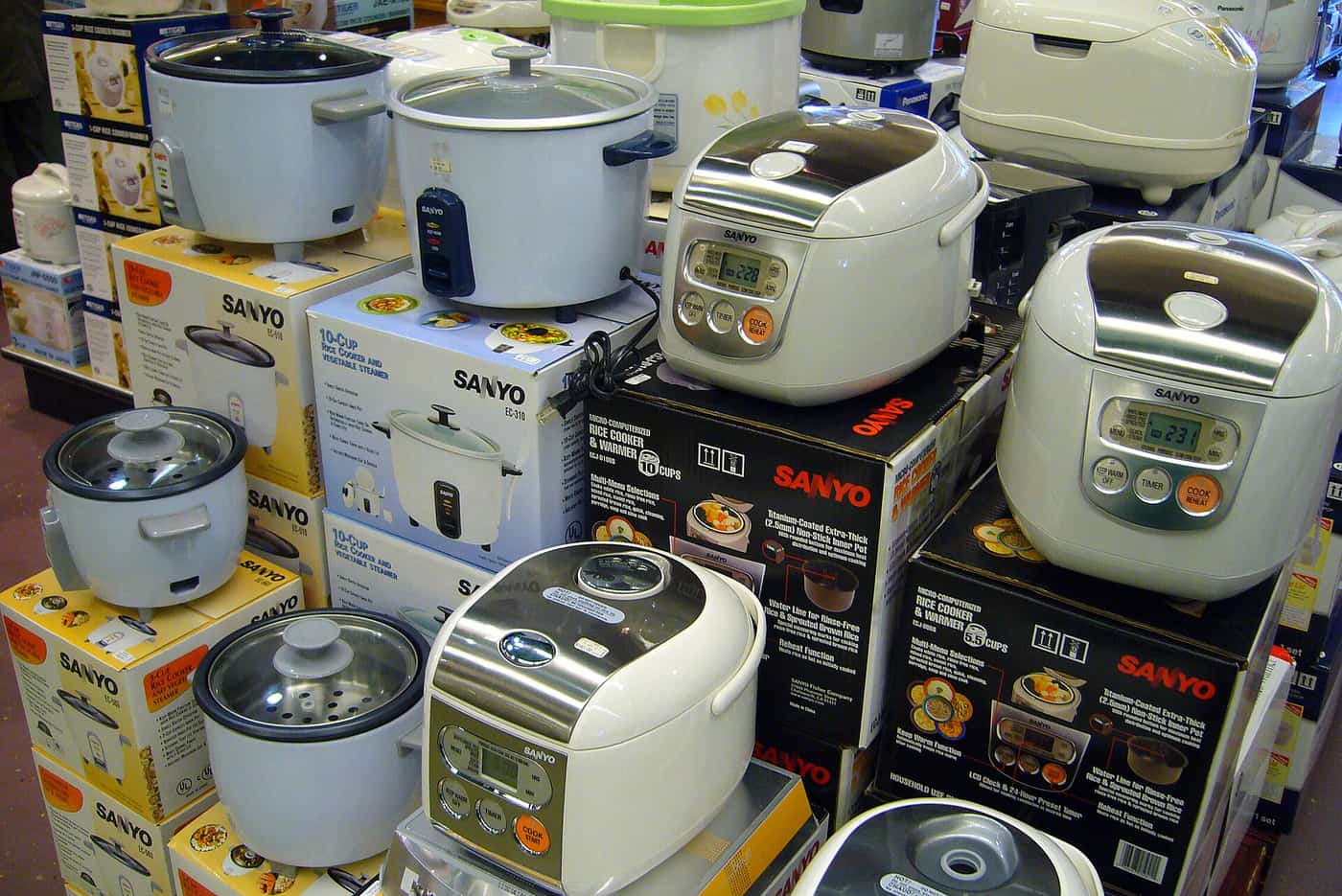
Best rice cooker under $50
Best Rice Cooker Under $50 (October 2026)
A thermostat and a switch, and it works. Five rice cookers under $50 and what fuzzy logic really adds.
Guide
Cheap vs Expensive: Where Spending More Actually Pays
The four questions that predict whether a category rewards spending more - and the full map across all seven we cover.
Category
Kitchen
Air fryers, blenders, knives and coffee gear - the categories where spending more buys the least.

Shop by price
Under $50
The impulse tier. Some categories are genuinely solved at $50; others are a false economy, and we say which.
Think we got a pick wrong, or spotted one that is out of stock or over its ceiling? Tell us - corrections go to the front of the queue.