Kitchen - under $50
Best Rice Cooker Under $50 (October 2026)
A rice cooker is a thermostat and a switch. That design has worked for sixty years and still does.
By Brijon M. - Published October 2, 2026
The short answer
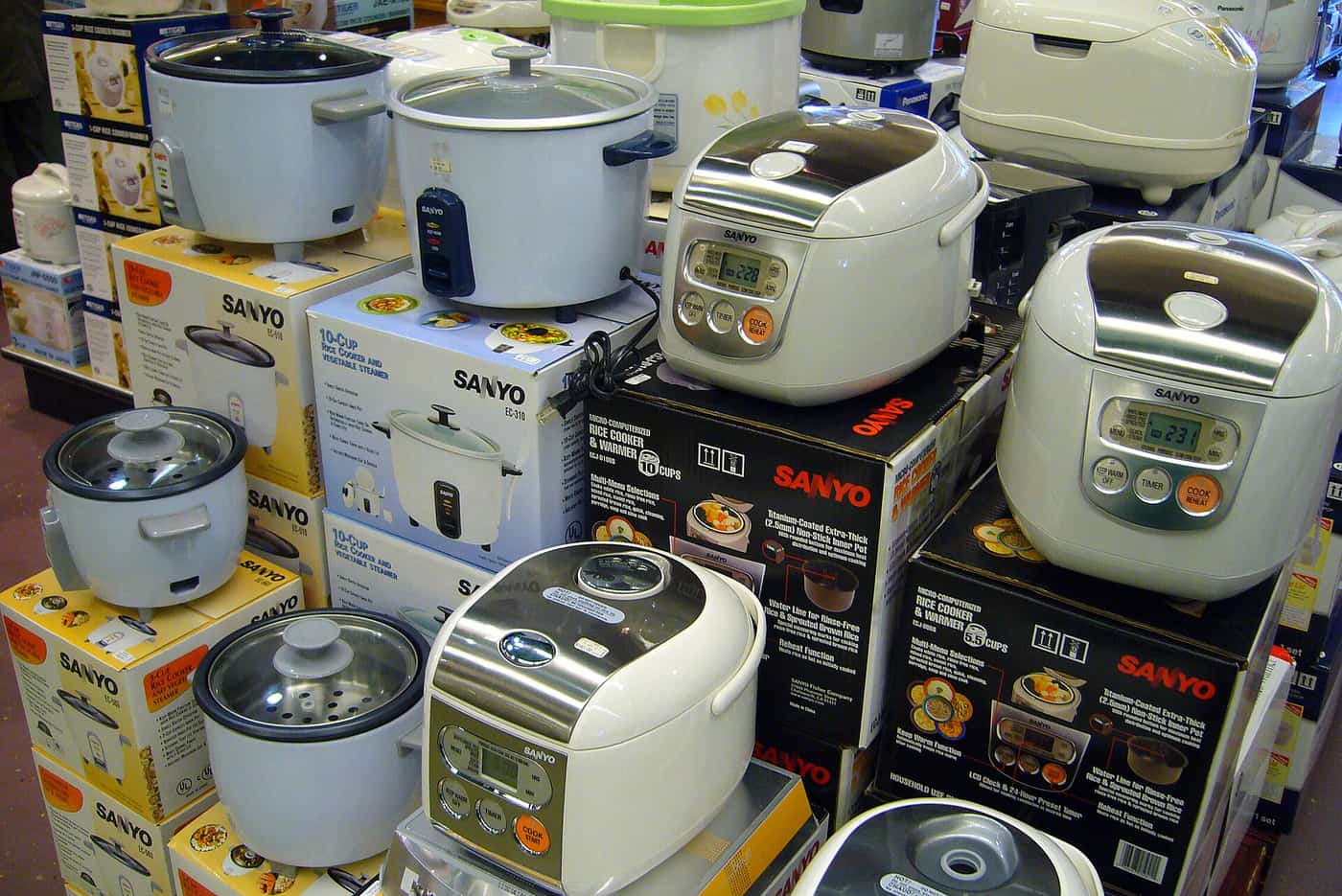
A simple one-switch rice cooker under $50 makes excellent white rice, because the mechanism - heat until the water is gone, then switch to warm - is physically self-correcting. Fuzzy-logic machines at $150+ are better at brown rice and porridge, not at the thing most people use a rice cooker for.
Disclosure: we earn commission on qualifying purchases made through the links below, at no extra cost to you. It never changes the order of our picks - here is how that works.
Why the cheap mechanism actually works
A basic rice cooker contains a heating plate, a pot and a magnetic thermostat. Water boils at 212F and stays there while any liquid remains. Once the rice has absorbed all the water, the temperature of the pot rises past 212F, the thermostat trips, and the cooker switches to warm.
That is a self-correcting mechanism that uses physics rather than timing, which is why it works regardless of how much rice you put in, how cold the water was, or whether you measured precisely. It has been the design since the 1950s and it has not been improved on for white rice because it does not need to be.
Fuzzy-logic cookers add a microprocessor and temperature sensors that adjust the heating profile over time - soaking, rising, steaming, resting. That genuinely helps with brown rice, which needs a longer soak, and with porridge and sushi rice where texture control matters. For plain white rice, the difference is small.
So the question is not whether a cheap rice cooker works. It is whether you cook the things fuzzy logic helps with.
The one thing to check: the inner pot
Almost every rice cooker complaint traces to the nonstick coating on the inner pot flaking after a year or two. It is the only component that wears.
Two things extend it enormously, and both are free: use the plastic paddle supplied rather than a metal spoon, and hand-wash the pot rather than putting it in the dishwasher. Detergent and high heat degrade nonstick far faster than rice does.
If the manufacturer sells a replacement inner pot, that is worth knowing before you buy - a $15 pot turns a dead cooker into a working one.
Quick picks
The short version. Tap any row to jump to the full write-up, or go straight to Amazon to check the current price.
| # | Product | Best for | Price |
|---|---|---|---|
| 1 | Aroma Housewares 8-cup The simple mechanism done properly, with a steamer basket included. | Best overall | |
| 2 | Zojirushi conventional (NHS series) Zojirushi's reputation, at the bottom of its range. | Best build quality | |
| 3 | Dash Mini Rice Cooker Tiny, cheap, and the right size for a single person. | Best for one or two | |
| 4 | BLACK+DECKER 6-cup The cheapest cooker here that still does the job properly. | Best value | |
| 5 | Tiger conventional rice cooker The other Japanese specialist, at a similar standard. | Best alternative to Zojirushi |
We do not print prices on this site. Every button opens the live Amazon listing so you see the real price at the moment you click. See our affiliate disclosure.
1. Best overall
Aroma Housewares 8-cup
The simple mechanism done properly, with a steamer basket included.
- 8 cups cooked
- One-switch operation
- Steamer tray included
- Keep-warm
Aroma's basic cookers are the default recommendation at this price. The switch mechanism works exactly as described above, the keep-warm function holds rice at a safe temperature for hours without drying it, and the included steamer tray lets you cook vegetables above the rice simultaneously.
Eight cups cooked is enough for a family meal with leftovers. Smaller and larger sizes exist at nearby prices.
There is nothing clever here, which is the whole point.
What you give up
Standard nonstick inner pot that will degrade in two to three years. No brown rice setting, so brown rice needs extra water and a second cycle.
2. Best build quality
Zojirushi conventional (NHS series)
Zojirushi's reputation, at the bottom of its range.
- Conventional switch mechanism
- Thicker inner pot
- Simple controls
- Long-term reliability
Zojirushi is the name people associate with expensive fuzzy-logic rice cookers, and its conventional switch-mechanism models sit inside this tier. You get the company's build quality and a notably thicker inner pot without paying for the microprocessor.
The thicker pot matters more than it sounds: it distributes heat more evenly, which produces more consistent rice, and the heavier coating lasts longer.
If you want one rice cooker that will still be working in ten years, this is the pick.
What you give up
Sits at the top of the $50 tier and sometimes above. No brown rice or porridge programs - it is a white rice machine.
3. Best for one or two
Dash Mini Rice Cooker
Tiny, cheap, and the right size for a single person.
- 2 cups cooked
- Very small footprint
- One switch
- Low price
A full-size rice cooker cooking one portion is wasteful of counter space and energy. A two-cup cooker is the correct appliance for a single person, a dorm or an office, and it costs very little.
The mechanism is identical to the larger models - the physics does not change with scale.
It also doubles as a small steamer and, with some patience, cooks oatmeal.
What you give up
Genuinely two portions maximum, and the light plastic body feels disposable. Thin nonstick coating.
4. Best value
BLACK+DECKER 6-cup
The cheapest cooker here that still does the job properly.
- 6 cups cooked
- One switch
- Removable pot
- Keep-warm
There is a price floor below which rice cookers start producing unevenly cooked rice because the heating plate contacts the pot poorly. BLACK+DECKER sits comfortably above it while costing very little.
Six cups cooked suits a couple or a small family. The keep-warm function works properly.
For a first rice cooker, or for finding out whether you will use one, it is the sensible amount to spend.
What you give up
The thinnest inner pot here and the shortest expected coating life. Lid does not lock, so it steams more aggressively onto a cupboard above.
5. Best alternative to Zojirushi
Tiger conventional rice cooker
The other Japanese specialist, at a similar standard.
- Conventional mechanism
- Thick inner pot
- Keep-warm
- Steamer basket on some
Tiger is Zojirushi's long-standing competitor in Japan and makes conventional cookers to a comparable standard. Availability varies more in the US, which is the main reason it is listed second.
The inner pots are thick and well coated, and the mechanism is the same physics-based design.
If you find one at a good price, it is as good a purchase as the Zojirushi.
What you give up
US availability is inconsistent and prices fluctuate. No programs beyond cook and warm.
When to spend more
Fuzzy-logic cookers at $120-$200 genuinely do three things better, and whether they are worth it depends entirely on whether you do those things.
Brown rice. Brown rice needs a long soak and a gentler heating curve, and a fuzzy-logic cooker handles it automatically. A basic cooker can do brown rice with more water and a second cycle, but inconsistently.
Porridge and congee. These need sustained low heat rather than a boil-until-dry cycle, which a basic cooker cannot do.
Sushi rice and precise texture. If you care about the specific stickiness of sushi rice, the extra control matters.
For plain white and jasmine rice cooked a few times a week, the difference is small enough that we would spend the money elsewhere - an air fryer under $50 or a chef's knife under $50 will change more meals.
Rinse the rice
Free advice that improves the result more than spending more does: rinse white rice until the water runs mostly clear, usually three or four changes of water. Surface starch is what makes rice gluey, and rinsing removes it.
Then use slightly less water than the pot markings suggest for the first batch and adjust. Markings assume unrinsed rice, so rinsed rice often needs a touch less.
How we picked
Every pick on this page is a real, currently-sold product that we could find at or under $50 at the time of the last update. Rank order is set before any link is attached.
We are research-led, not lab-led. We do not run a test lab and we do not claim to have personally used every product on this site. Picks come from manufacturer specifications, owner-reported reliability and failure patterns, expert-publication consensus, and real availability at the stated price ceiling. Read the full method.
Common questions
+Is a cheap rice cooker any good?
For white rice, genuinely yes. The mechanism is self-correcting - it heats until the water is gone and then switches to warm - which is why the design has barely changed in sixty years. A $35 cooker makes the same white rice as a $200 one.
+What is the difference between a cheap and a fuzzy-logic rice cooker?
Fuzzy logic adds a microprocessor that varies the heating profile over time - soaking, rising, steaming, resting. It genuinely improves brown rice, porridge and sushi rice. For plain white rice the difference is small.
+Can a basic rice cooker do brown rice?
Yes, with more water and often a second cycle, but the results are less consistent because brown rice benefits from a soak the simple mechanism cannot provide. If you eat brown rice regularly, that is the main argument for a fuzzy-logic machine.
+Why does the nonstick pot flake?
Metal utensils and dishwashers. Use the plastic paddle supplied and hand-wash the pot, and the coating lasts years longer. If the manufacturer sells replacement pots, a flaked pot does not have to end the cooker.
+Do I need a rice cooker if I have a pot?
You do not need one, but it removes the one thing that goes wrong with stovetop rice - attention. The cooker switches itself off at exactly the right moment and holds the rice warm, which for anyone cooking rice more than once a week is worth $35.
Sources
Read next

Kitchen
Cheap vs Expensive Rice Cooker
Nearly identical white rice. The difference shows up in brown rice, porridge and texture control.

Best air fryer under $50
Best Air Fryer Under $50 (October 2026)
$50 genuinely works here. Four picks, and a straight account of what you give up against the $100 tier.

Shop by price
Under $50
The impulse tier. Some categories are genuinely solved at $50; others are a false economy, and we say which.
Category
Kitchen
Air fryers, blenders, knives and coffee gear - the categories where spending more buys the least.
Think we got a pick wrong, or spotted one that is out of stock or over its ceiling? Tell us - corrections go to the front of the queue.