Watches
Pilot Watch vs Field Watch
Both are matte-dialed, highly legible, military-derived tool watches. Then you put them on, and they are nothing alike.
By Brijon M. - Published November 6, 2026
The short answer
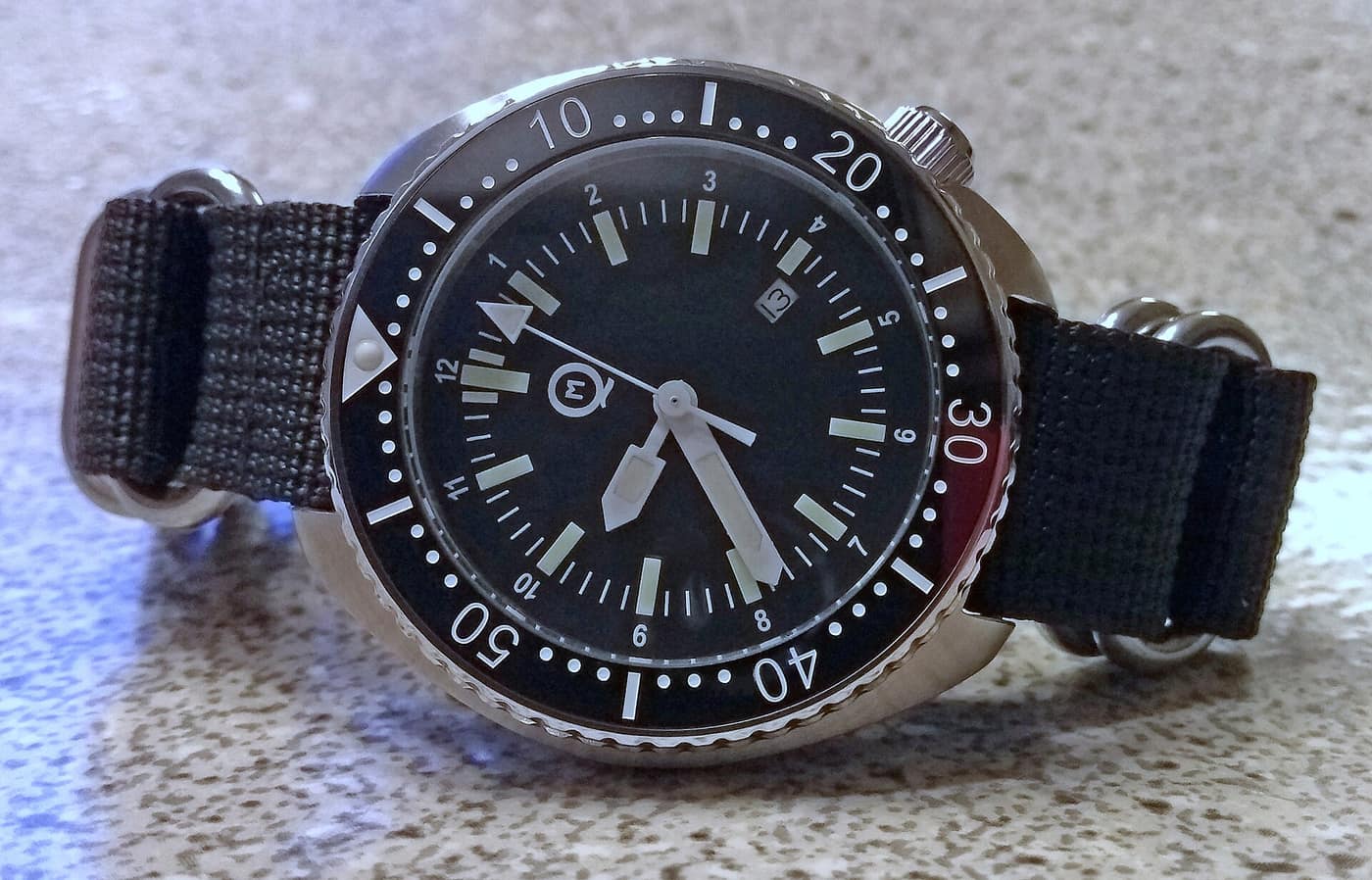
A field watch is small, light and designed to disappear on the wrist - typically 36-40mm, worn by soldiers on foot. A pilot watch is large and designed to be read instantly - typically 42-45mm, with an oversized crown for gloved hands. If your wrist is under 7 inches or you want one watch for everything, start with the field watch.
Disclosure: we earn commission on qualifying purchases made through the links below, at no extra cost to you. It never changes the order of our picks - here is how that works.
They solved two different problems
Both categories come out of the same era and the same requirement - a legible, durable, unglamorous watch issued to someone with a job to do. The difference is who was wearing it and what was going to go wrong.
The field watch was for a soldier on foot. It had to survive being knocked against things, it had to not catch on a sleeve or equipment, it had to be read at a glance without being conspicuous, and above all it had to be small and light, because it was worn for weeks at a time by someone carrying everything else they owned. Hence 36mm to 40mm cases, flat crowns, cloth straps and a dial with no decoration whatsoever.
The pilot watch was for a navigator in an unpressurized cockpit. It had to be read instantly and unambiguously in poor light, through vibration, while wearing gloves. Size was not a constraint - the original German B-Uhren were 55mm and worn over a flight jacket - so the design spent everything on legibility: enormous numerals, a triangle at twelve for orientation, and an oversized crown you could operate without taking a glove off.
Both answers are correct. They are answers to different questions, and the question you are actually asking is which of those two priorities matters on your wrist.
The decision, in one paragraph
If your wrist is under about 7 inches, if you want one watch that works with a suit and a t-shirt, or if you want to spend under $150, the field watch is the answer. It is the more versatile object and it is the cheaper category - this site's field watch roundup caps at $100 and does not feel constrained there.
If you want a watch that is unmistakably a watch - something with presence that you can read across a room without focusing - and you have the wrist for 42mm or more, the pilot watch is the answer. It is also the more interesting category to collect, because the Type A and Type B dial layouts give it genuine internal variety.
The budgets differ for a structural reason, and it is worth naming: the field watch tops out early because there is not much to spend money on, while the pilot category keeps going because of its German heritage houses and its chronographs. That makes the field watch the better value category and the pilot watch the more rewarding one to go deeper into. The best pilot watches under $500 is where that bracket actually delivers.
- Small wrist, small budget, one-watch collection: field.
- Presence, legibility at distance, room to collect: pilot.
- Both: matte dial, strong lume, no pretension. You cannot pick badly.
Quick picks
The short version. Tap any row to jump to the full write-up, or go straight to Amazon to check the current price.
| # | Product | Best for | Price |
|---|---|---|---|
| 1 | Seiko 5 SNK809 A real automatic field watch at 37mm for under a hundred dollars. | The field watch argument, made cheaply | |
| 2 | Timex Expedition Scout Quartz, light, Indiglo, and frequently under fifty dollars. | Cheapest way to test the field case | |
| 3 | Seiko 5 Sports Flieger SRPH29 A flieger dial on an automatic, at around 39-40mm - the bridge between the two categories. | The pilot watch argument, at a field watch price | |
| 4 | Citizen Promaster Nighthawk Solar, 200m, slide-rule bezel - everything a field watch deliberately is not. | The pilot watch at full size |
We do not print prices on this site. Every button opens the live Amazon listing so you see the real price at the moment you click. See our affiliate disclosure.
1. The field watch argument, made cheaply
Seiko 5 SNK809
A real automatic field watch at 37mm for under a hundred dollars.
- Automatic
- About 37mm
- Exhibition caseback
- Nylon strap
If the field case is making your decision, this is what the category looks like at its best value: a genuine mechanical movement you can watch through the back, a 37mm case that fits essentially every wrist, and a dial with nothing on it that does not need to be there.
It is the watch most people in this hobby point at when asked where to start, and it has been for years.
What you give up
Hardlex crystal that will scratch, no hand-winding or hacking on the 7S26 movement, and a service that would cost more than the watch. The stock nylon strap is thin.
2. Cheapest way to test the field case
Timex Expedition Scout
Quartz, light, Indiglo, and frequently under fifty dollars.
- Quartz
- Indiglo backlight
- Fabric or leather strap
- Date
The Expedition Scout is the field watch as a commodity: accurate quartz, a legible dial, an Indiglo backlight that is more useful in practice than most lume, and a price that makes it a non-decision. We have seen it discounted well under its usual $50.
Buy it to find out whether a small, plain watch is what you actually want before committing to anything.
What you give up
Acrylic crystal that scuffs, a case that feels as cheap as it costs, and water resistance in the splash bracket. The strap is the first thing to go.
3. The pilot watch argument, at a field watch price
Seiko 5 Sports Flieger SRPH29
A flieger dial on an automatic, at around 39-40mm - the bridge between the two categories.
- Automatic
- About 39-40mm
- 100m water resistance
- Flieger dial
This is the watch that complicates the comparison, in a useful way. It carries the flieger dial and the pilot-watch presence, but in a case small enough to pass for a field watch - and with 100m water resistance, which most traditional fliegers do not have.
If you have read this page and want both answers, it is the closest thing to both. It is also the top pick in our pilot watches under $500 roundup.
What you give up
Hardlex rather than sapphire, loose out-of-box accuracy, and a supplied strap most owners replace. The 5 Sports movement does not hand-wind on some references.
4. The pilot watch at full size
Citizen Promaster Nighthawk
Solar, 200m, slide-rule bezel - everything a field watch deliberately is not.
- Eco-Drive solar
- 200m
- Slide-rule bezel
- Dual time
If you want to feel the actual difference between the two categories, put this next to the SNK809. It is bigger, heavier, busier and more capable, it never needs a battery, and it will be read across a room.
It is also the one in this comparison that will not work under a dress shirt cuff, which is the trade the pilot category asks you to accept.
What you give up
The slide-rule bezel is small, low-contrast and almost nobody uses it. At 42mm it wears larger than the number suggests, and the busy dial works against the legibility the category is supposed to be about.
Side by side
The third option nobody mentions: buy the cheap one first
These are two of the least expensive categories in watches, which creates an option that does not exist with dive watches or dress watches: you can buy an entry example of each for less than one mid-range watch and find out which you actually reach for.
A Timex Expedition Scout and a Citizen Avion together cost less than a single Swiss field watch, and after a month you will know - not from a specification sheet but from the wrist - whether you want something that disappears or something with presence. For a lot of people the answer is the opposite of what they expected from photographs, because the thing photographs cannot show you is scale.
The reason this works in this category specifically is that neither type has a quality floor problem. A $50 field watch and a $200 field watch do the same job; the difference is materials and finishing rather than function. Are cheap watches worth it goes through where that stops being true.
What they share, and why neither is a bad buy
Strip away the sizing argument and the two categories agree on everything that matters. Matte, non-reflective dials. Arabic numerals rather than markers. Lume that is specified to work rather than to look nice in a product photo. Straps instead of bracelets, which is why both are so easy to personalize cheaply. And a design logic that treats decoration as a fault.
That shared honesty is why both categories are unusually friendly to a budget buyer. There is no expensive finishing to miss, no polished bracelet to feel cheap, no complication that half-works at a low price. A $90 field watch and a $190 flieger are both complete objects rather than compromised versions of something better.
If the broader question is how far up the watch market you need to go before it stops being about looks, cheap vs expensive watches lays out the whole curve, and the best men's watches under $200 is where most of this site's watch buyers end up.
- Both: matte dials, numerals, real lume, straps you can swap for $25.
- Neither has a quality floor problem at this site's price ceilings.
- The real question is scale, and photographs cannot show you scale.
Common questions
+Which is better for a small wrist, a pilot watch or a field watch?
A field watch, almost always. The category sits at 36-40mm by design, while pilot watches typically run 42-45mm with an oversized crown that digs in on a smaller wrist. If you want the flieger look on a small wrist, a 39-40mm option like the Seiko 5 Flieger is the exception.
+Can a pilot watch be worn with a suit?
Smart-casual, yes. Under a dress shirt cuff, not really - a 42-45mm case with a thick leather strap will not sit flat and will catch. A field watch handles both ends of that range far better, which is why it is the stronger choice for a one-watch collection.
+Is a field watch cheaper than a pilot watch?
Generally yes, and for a structural reason: there is less to spend money on. Field watches top out in value terms around $100-150, while the pilot category keeps climbing because of its German heritage makers and chronograph variants. That makes field the better value and pilot the better category to collect.
+Do pilot watches have better lume than field watches?
Usually, though both are specified for it. Legibility in poor light is the entire design brief of a pilot watch, so weak lume on a flieger is a genuine fault rather than a cosmetic one. Good field watches are not far behind, and Timex's Indiglo backlight is arguably more useful than either.
+Which one has better water resistance?
It depends on the reference rather than the category. Traditional fliegers are often 50m, while Japanese pilot-styled watches from Seiko and Citizen reach 100m and 200m. Field watches commonly sit at 30-50m. Check the individual watch before assuming either is swim-capable.
+Can I just buy one of each?
At this site's price ceilings, yes - that is the honest recommendation if you are torn. An entry field watch and an entry pilot watch together cost less than one mid-range watch, and a month of wearing both tells you more than any comparison can, because scale is the thing photographs cannot convey.
Sources
Read next
Best pilot watch under $500
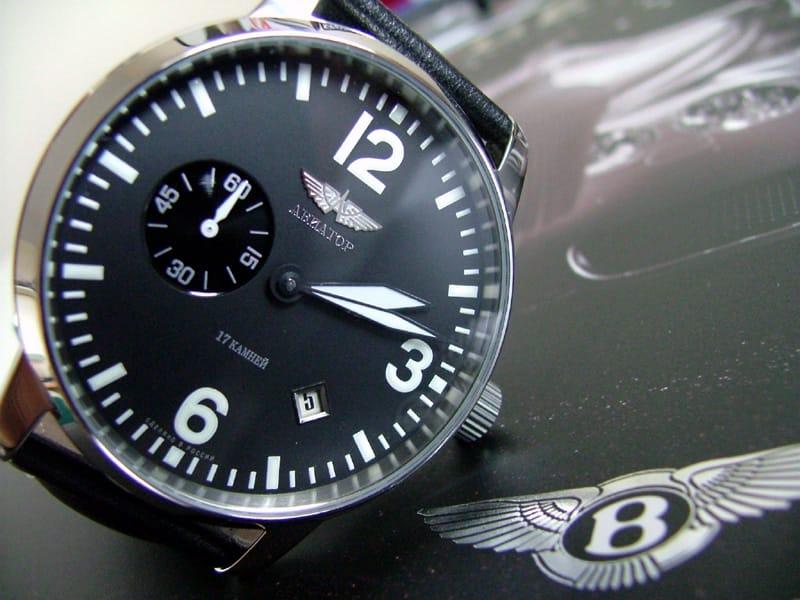
Best Pilot Watches Under $500
Type A or Type B, and mind the case size. Five pilot watches under $500, honestly assessed.
Best field watches under $100
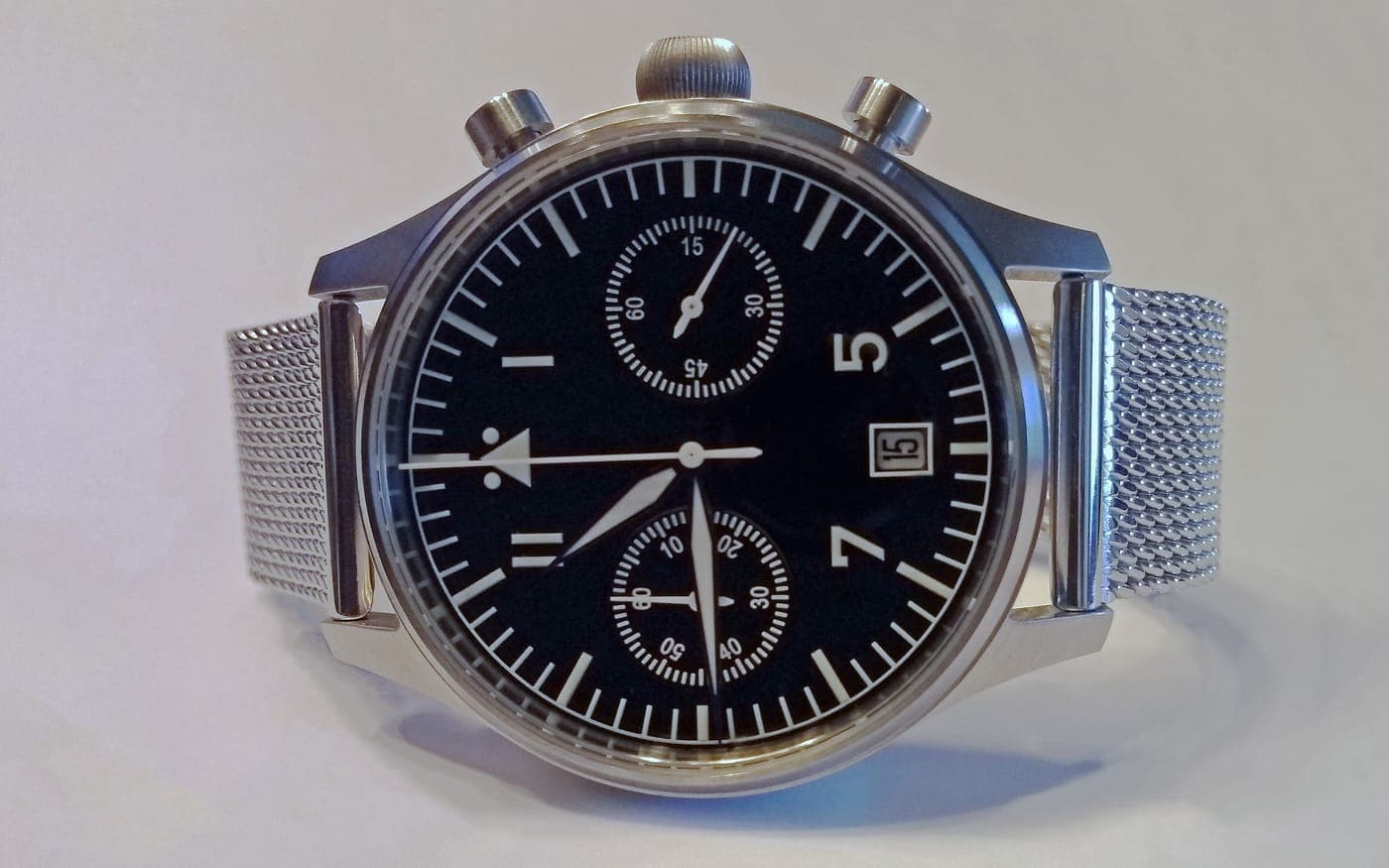
Best Field Watches Under $100 (October 2026)
The purest watch design, and the one that suits a budget best. Five field watches under $100.
Best men's watches under $200
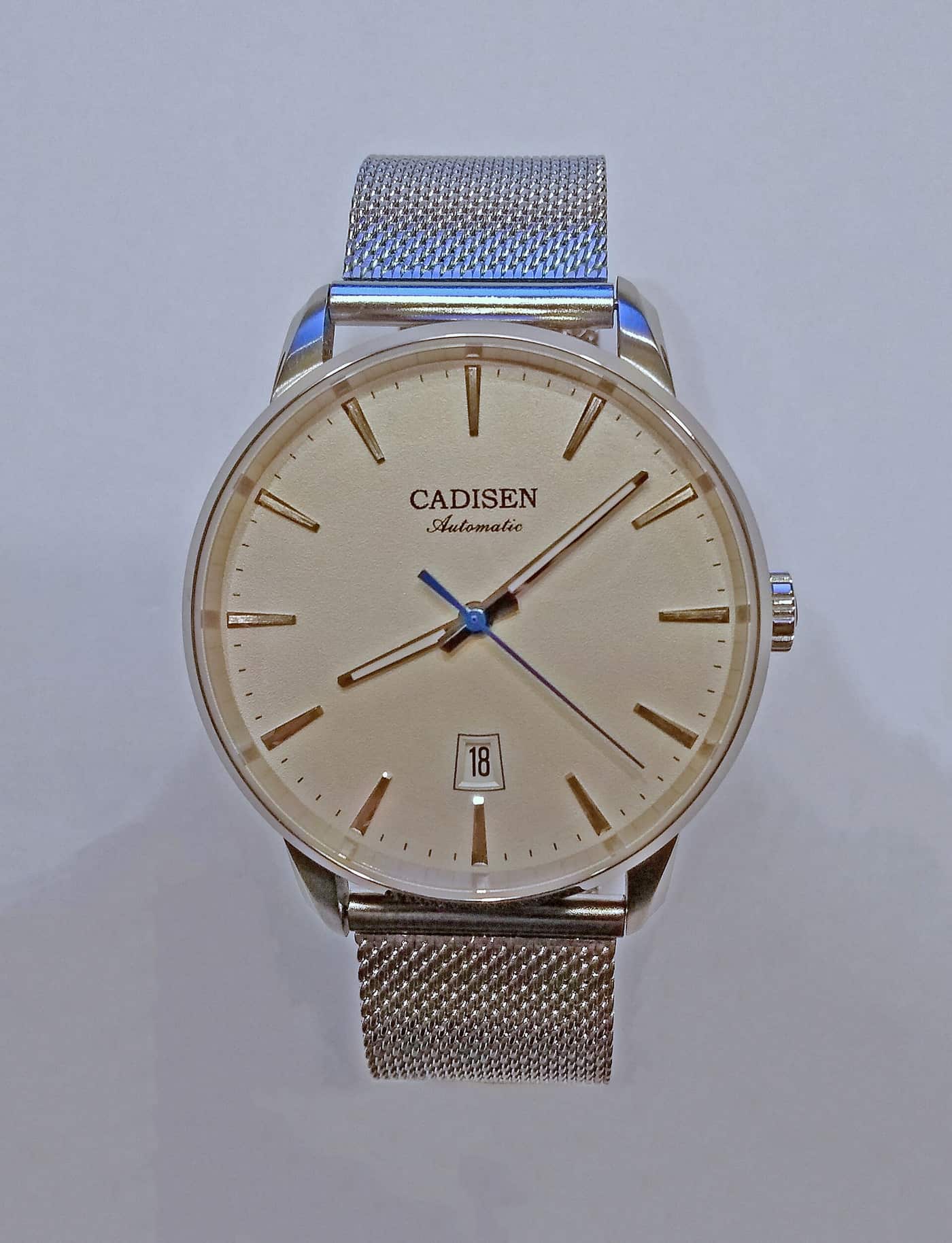
Best Men's Watches Under $200 (October 2026)
Where sapphire and solid bracelets become standard. Five picks and what the extra $100 actually buys.
Category
Watches
Mechanical, quartz and dive watches where the money goes into the movement instead of the marketing.
Think we got a pick wrong, or spotted one that is out of stock or over its ceiling? Tell us - corrections go to the front of the queue.