Fitness
Resistance Bands vs Dumbbells
The research says the muscle does not care much. Your floor, your wallet and your ability to progress all do.
By Brijon M. - Published October 17, 2026
The short answer
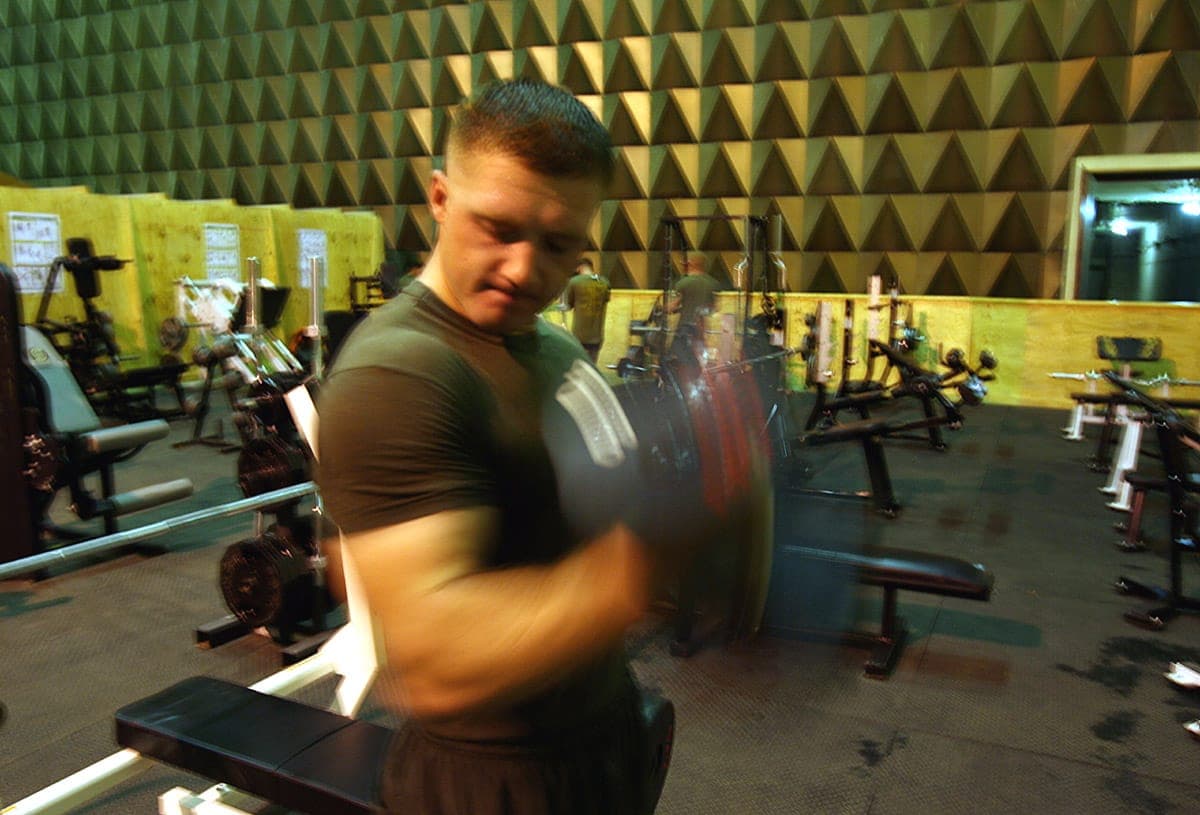
For building muscle, the evidence shows bands and dumbbells produce similar strength and lean-mass gains when effort is matched. Buy bands first if space, money or travel are your constraints; buy adjustable dumbbells first if you want precise, measurable progression and plan to train seriously for years.
Disclosure: we earn commission on qualifying purchases made through the links below, at no extra cost to you. It never changes the order of our picks - here is how that works.
What the research actually says
This is the rare fitness argument with real evidence behind it, and the evidence is less exciting than either camp would like.
A 2019 meta-analysis of randomised trials found no significant difference in strength gains between elastic-resistance training and conventional weight training when effort was matched. Brazilian researchers reviewing the literature reached the same conclusion across different populations and protocols.
A study in the Journal of Strength and Conditioning Research followed previously sedentary women training for ten weeks with either bands or weights and found similar improvements in muscular endurance and similar increases in lean body mass in both groups.
The mechanism is not mysterious. Muscle grows in response to mechanical tension taken close to failure. A band that is genuinely hard produces that; a dumbbell that is genuinely hard produces that. The tool is a delivery mechanism.
The limit on this evidence matters. No trial has followed band-only training in experienced lifters beyond a few months, so statements about long-term ceilings - in either direction - are extrapolation, not findings. If you have been lifting for five years, treat bands as a supplement.
- Matched effort, matched results, in the trials that exist.
- Bands provide variable resistance - hardest at the end of the range.
- Dumbbells provide constant load and precise, countable progression.
- Neither is the "real" version. They fail differently, not in quality.
How the resistance curves differ, and why it matters
This is the one genuine technical difference, and it explains most of the practical consequences.
A dumbbell's load is constant. Gravity pulls down with the same force at the bottom of a curl as at the top. What changes is leverage - which is why a curl feels hardest in the middle and easy at the very top.
A band's load rises as it stretches. Tension is lowest at the start of the movement and highest at the end. That makes bands excellent for movements where you are strongest at the end - a hip thrust, a pull-apart, a triceps pushdown - and weaker for movements where you need the most load at the bottom, like the stretched position of a chest press.
The practical result is that bands and dumbbells are better at different exercises rather than better overall. A band is excellent for lateral raises, face pulls, hip abduction and rows. A dumbbell is better for anything where the hard part is the bottom of the range.
This is also the honest answer to "which is more effective": for a given exercise, the one whose resistance curve matches where that exercise is hard.
Quick picks
The short version. Tap any row to jump to the full write-up, or go straight to Amazon to check the current price.
| # | Product | Best for | Price |
|---|---|---|---|
| 1 | Bodylastics tube band set Stackable resistance, a door anchor and anti-snap cords in every tube. | Best band option | |
| 2 | A pair of adjustable dumbbells Twenty pairs of dumbbells in two handles, with countable progression. | Best weight option | |
| 3 | Fit Simplify loop band set Five dollars of latex that covers everything dumbbells are clumsy at. | The best companion to dumbbells |
We do not print prices on this site. Every button opens the live Amazon listing so you see the real price at the moment you click. See our affiliate disclosure.
1. Best band option
Bodylastics tube band set
Stackable resistance, a door anchor and anti-snap cords in every tube.
- Clip-together stackable tubes
- Internal anti-snap safety cord
- Door anchor, handles and ankle straps
- Stacks well past 100 lbs on larger sets
If bands are going to be your main training tool rather than an accessory, this is the format: a door anchor turns a doorway into a cable station, and stacking lets you add resistance rather than being stuck with five fixed steps.
The internal safety cord is the feature that addresses the one real hazard - a tube failing under tension with a handle attached.
Stackability also partly answers the progression criticism. You are not limited to the increments the set shipped with; you combine them.
What you give up
Still coarser progression than a 5 lb dumbbell jump, and resistance ratings are approximate rather than measured. A bag of handles, clips and straps is more to lose than two dumbbells.
2. Best weight option
A pair of adjustable dumbbells
Twenty pairs of dumbbells in two handles, with countable progression.
- Typically 5-50 lbs per hand
- Dial or selector adjustment
- Replaces a full dumbbell rack
- Footprint of two shoeboxes
The reason to buy weights over bands comes down to one word: countable. Last week was 25 lbs for eight reps; this week is 30 for six. That ledger is what drives progress over years, and bands do not give it to you cleanly.
Adjustable dumbbells also solve the storage objection that used to make weights impractical in an apartment - two handles replace an entire rack.
They hold their value, too. A cast-iron dumbbell is worth roughly what you paid for it in five years; a band set is worth nothing.
Our best adjustable dumbbells under $200 roundup covers the models, and adjustable dumbbells vs fixed dumbbells covers the format choice within weights.
What you give up
Ten times the cost of a band set, permanently occupies floor space, and the dial mechanisms on cheap adjustable dumbbells are the part that breaks. They also cannot be dropped, which rules out some training styles.
3. The best companion to dumbbells
Fit Simplify loop band set
Five dollars of latex that covers everything dumbbells are clumsy at.
- Five graded latex loops
- Natural latex
- Carry bag included
- Weighs a few ounces
The honest answer to "bands or dumbbells" is frequently "dumbbells, plus a loop set", because they cover each other's weak spots almost exactly.
Hip abduction, glute activation, face pulls, shoulder external rotation and warm-ups are all awkward or impossible with dumbbells and trivial with a loop.
At this price the question of whether to also own bands is not really a question - it costs less than a protein tub.
What you give up
Loops alone will not train your whole body, and latex rolls up bare thighs during heavy glute work. They also degrade with age whether or not you use them.
Side by side
Which to buy first, by situation
Small apartment, tight budget, starting from zero: bands. Fifteen to fifty dollars gets you training this week, and the evidence says a beginner training hard with bands gets beginner results.
You travel for work regularly: bands, and it is not close. Nothing else packs.
You already train and want to progress for years: dumbbells. The measurable increment is the thing that keeps you adding load when motivation is average, and that is what actually builds muscle over time.
You are rehabbing an injury, or coming back from one: bands, and ideally the flat TheraBand type your physio specified. Low tension at the stretched position is exactly what a recovering joint wants.
Lower-body strength is your main goal: dumbbells, moving to a barbell. Legs are strong enough that band tension runs out quickly.
You have about $250 and want the best home setup: adjustable dumbbells plus a $15 loop set. That combination covers more exercises than either does alone, and the bands cost almost nothing.
The progression problem, solved as well as it can be
Bands' real weakness is not stimulus, it is bookkeeping. Here is how to work around it if bands are what you have.
Count reps and control tempo. With a fixed band, more reps and slower eccentrics are your progression. Three seconds down on every rep makes a band meaningfully harder without changing equipment.
Change the anchor point. Standing further from a door anchor pre-stretches the band and raises the tension through the whole range. This is a continuous, fine-grained adjustment - arguably finer than a 5 lb dumbbell jump.
Stack bands. On a clip-based set, combining a light band with a medium one gives you intermediate steps the set does not advertise.
Change leverage. A single-leg or single-arm version of a movement roughly doubles the relative load with no equipment change.
Log it anyway. Band colour, anchor distance, reps, tempo. It is less tidy than a weight in pounds, but written down it still tells you whether you are progressing.
What we would actually do
Start with bands if you are starting. They are cheap enough that a failed experiment costs less than a month of a gym membership, and the trial evidence says a beginner training hard with them will not be held back in the first months.
Add adjustable dumbbells when one of two things happens: the bands stop being hard on your main lifts, or you find you want to know the number. Both are signals that you have gone past what the tool gives you cleanly.
Keep the bands either way. They cost nothing, they travel, and the accessory work they make easy is the work most home trainers skip.
If you are building the home gym out further, best weight bench under $200 is the purchase that most expands what dumbbells can do, and kettlebell substitutes covers filling gaps without buying more equipment.
Common questions
+Are resistance bands as good as dumbbells for building muscle?
The published trials say yes, when effort is matched - a 2019 meta-analysis found no significant difference in strength gains, and a ten-week trial in previously sedentary women found similar increases in lean body mass from both. The caveat is that no study has followed band-only training in experienced lifters beyond a few months.
+Should I buy resistance bands or dumbbells first?
Bands, if budget, space or travel are your constraints - $15 to $50 gets you training immediately. Dumbbells, if you want precise countable progression and plan to train seriously for years. With about $250, buy adjustable dumbbells plus a cheap loop set and you have both.
+Why do resistance bands feel easier than weights?
Because the resistance curve is different. A band is lightest at the start of the movement and hardest at the end, while a dumbbell's load is constant. That makes bands feel easy in the stretched position of a press and genuinely hard at lockout - it is a different curve, not less resistance.
+Can you build legs with resistance bands?
Up to a point. Legs are strong enough that band tension runs out quickly on squats and deadlifts, so bands work well for glute and hip accessory work and poorly as the main lower-body load. This is the clearest place where weights pull ahead.
+Do resistance bands wear out?
Yes - latex degrades with heat, sunlight, ozone and oil whether or not you use it. Expect six to twelve months from cheap bands in daily use and three to five years from quality layered-latex bands stored properly. Dumbbells do not expire, which is a real long-term cost difference.
+Are resistance bands safer than dumbbells?
Different hazards, similar magnitude. A band that snaps under tension travels fast, which is why tube sets with internal safety cords are worth the money and why you inspect for nicks before use. A dropped dumbbell is the equivalent risk on the other side. Bands are genuinely gentler on joints in the stretched position, which is why physios use them.
Sources
- Cathe - are resistance bands as effective as dumbbells for building strength (summarises the 2019 meta-analysis and the JSCR trial)
- Fit&Well - are resistance bands actually better than dumbbells for building muscle
- Journal of Human Kinetics - muscle activity in upper-body single-joint exercises with elastic bands vs free weights
Read next
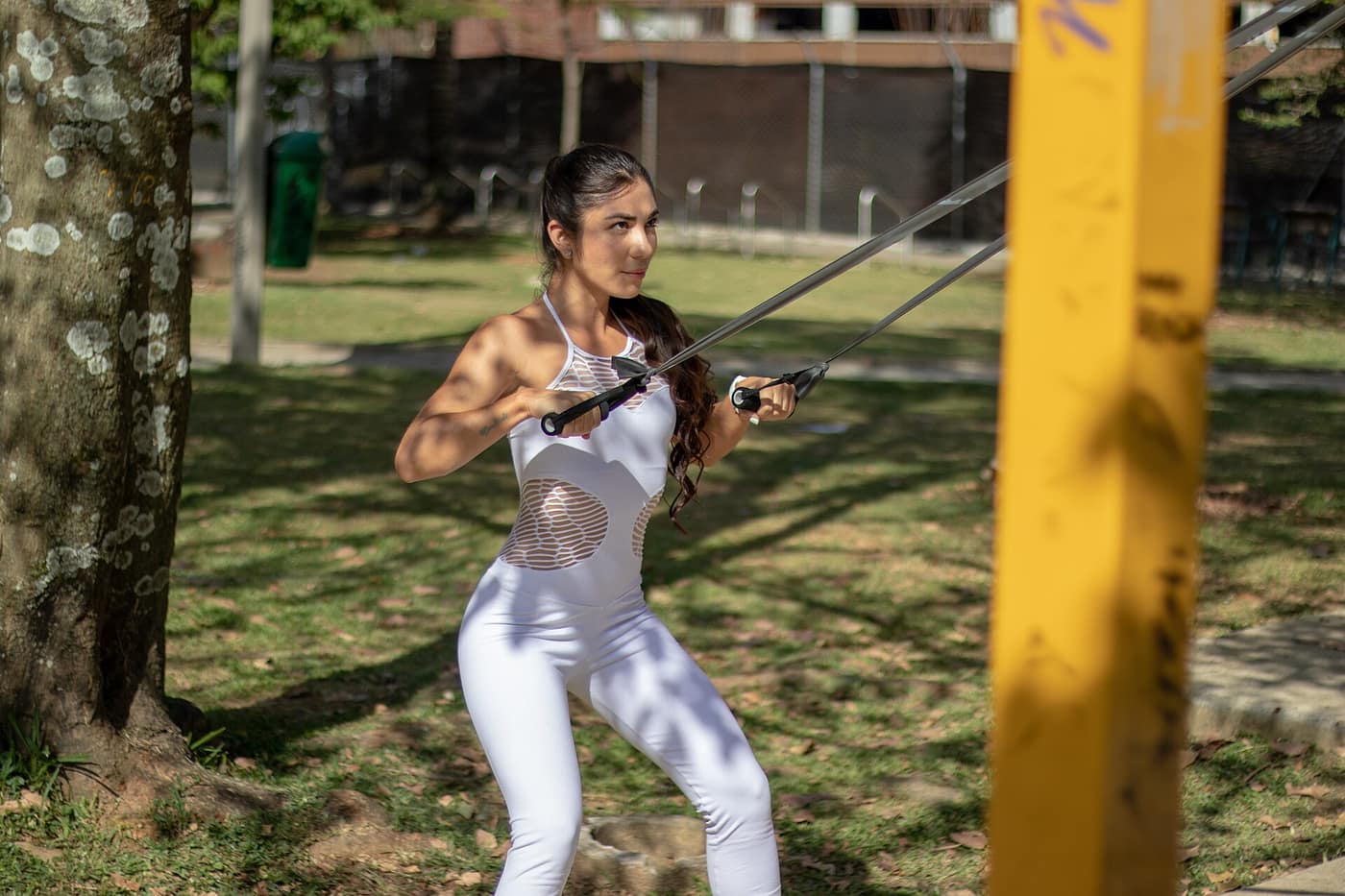
Resistance band pick
Best Resistance Bands Under $50
Loop, tube or pull-up band - three different products, three different jobs. Five sets under $50 and how to stop them snapping.
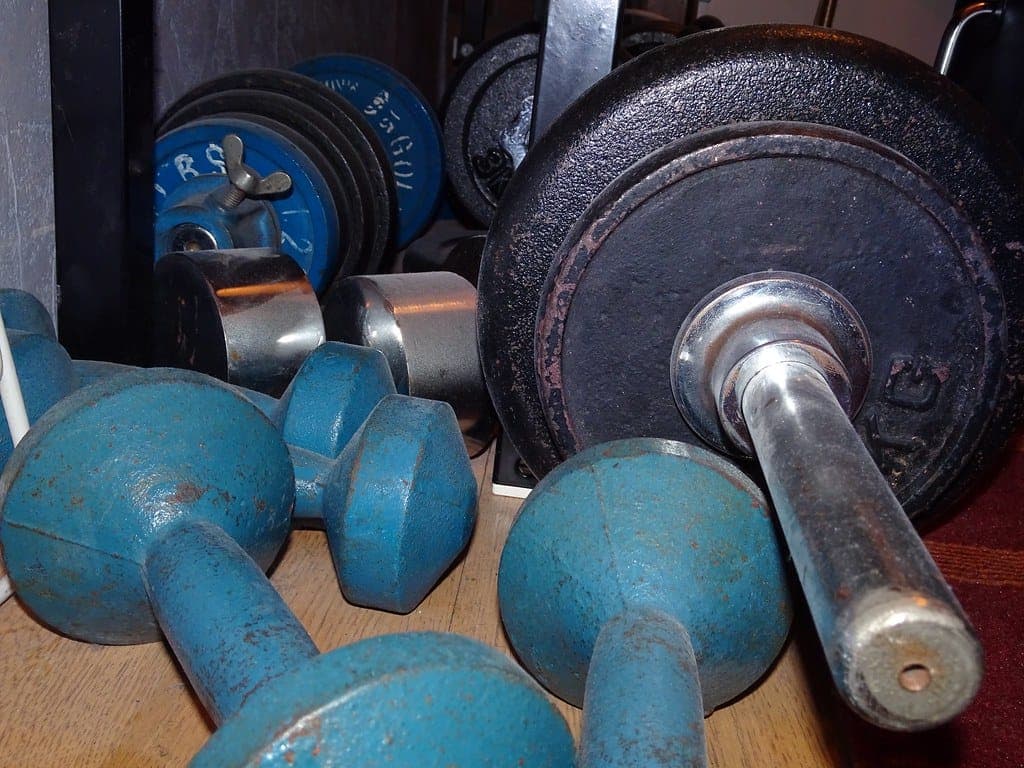
Best adjustable dumbbells under $200
Best Adjustable Dumbbells Under $200 (October 2026)
Spin-lock beats cheap selectorized at this price, and the reason is a plate landing on your foot. Five picks with the safety case made plainly.
Fitness
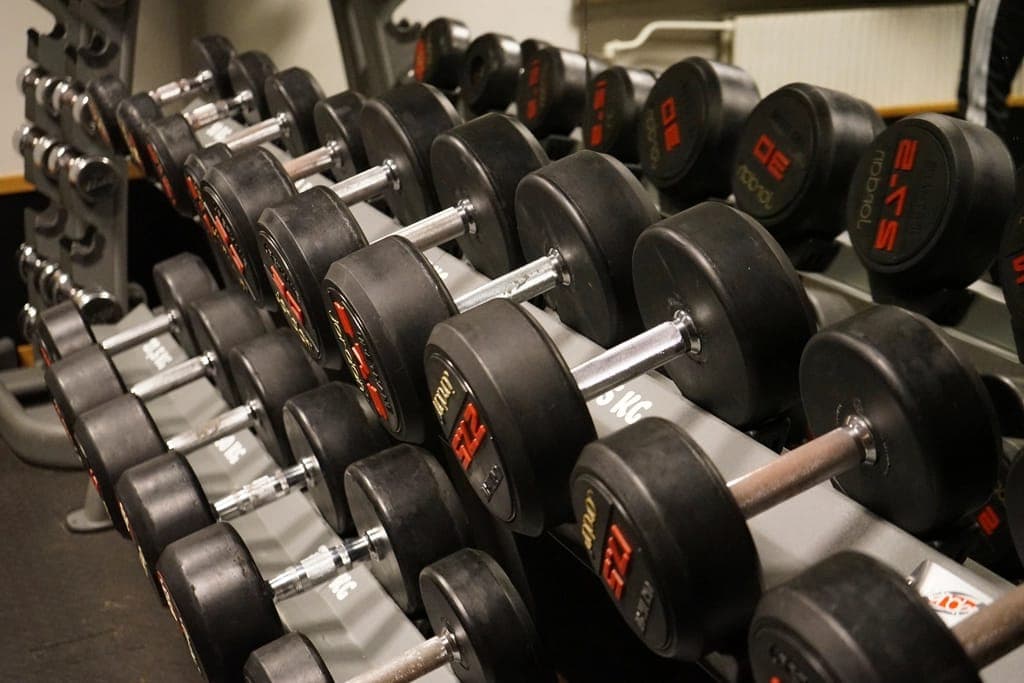
Adjustable vs Fixed Dumbbells
The cost-per-pound math, the space math, and the one training style where fixed dumbbells genuinely win.
Category
Fitness
Trackers, dumbbells, shoes and treadmills, with the honest line on where budget gear stops being safe.
Think we got a pick wrong, or spotted one that is out of stock or over its ceiling? Tell us - corrections go to the front of the queue.