Home - under $50
Best Bed Sheets Under $50 (October 2026)
Sheets are the rare category where the cheap option genuinely competes - as long as you buy on fiber and weave instead of on a thread-count number.
By Brijon M. - Published October 9, 2026
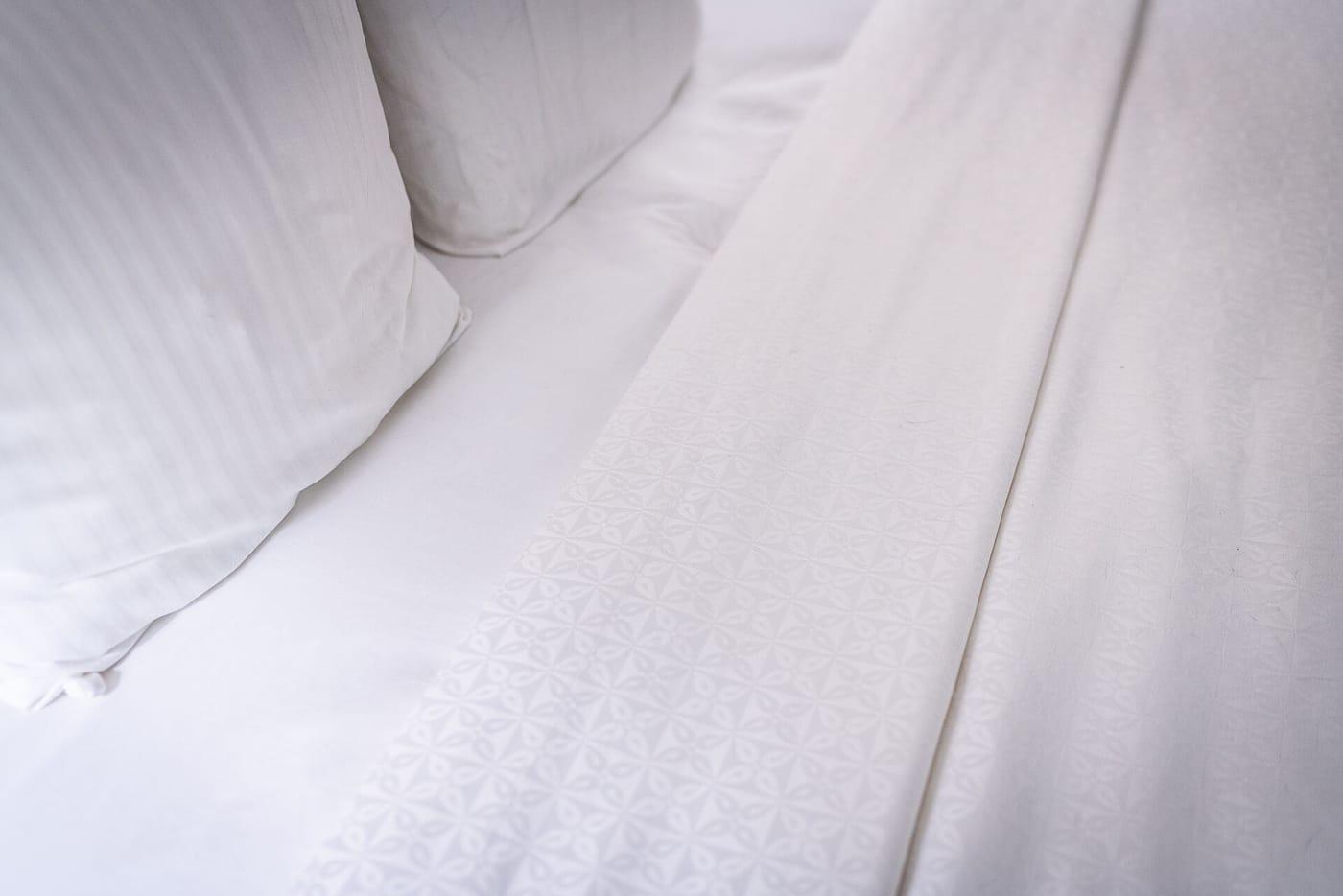
The short answer
Under $50 you are choosing between brushed microfiber, which is the softest and the warmest, and real cotton in a percale or sateen weave, which breathes far better and lasts longer. Thread count is close to meaningless at this price because it is routinely inflated. Fiber, weave and the fitted sheet's pocket depth decide whether a $35 set is excellent or useless.
Disclosure: we earn commission on qualifying purchases made through the links below, at no extra cost to you. It never changes the order of our picks - here is how that works.
Thread count is the wrong number
Thread count is the headline figure on almost every cheap sheet listing and it is the least reliable thing in the category. The count is threads per square inch, which sounds objective until you learn that manufacturers can twist several thin plies into one yarn and count each ply separately. A genuine 300 thread count single-ply cotton sheet and an advertised "1800 thread count" sheet can be the same fabric, and the second one is usually not even cotton.
Worse, past a certain density more threads make a sheet less pleasant, not more. Packing yarn in tightly reduces airflow, which is why a 1000 count sateen sleeps warmer than a 300 count percale made from better cotton.
Three specifications actually predict how a sheet set will feel and how long it will survive:
Fiber. Brushed microfiber is finely spun polyester. It is soft immediately, cheap, wrinkle-resistant and holds heat. Cotton breathes, gets softer across dozens of washes rather than pilling, and costs more. Long-staple cotton - described as long-staple, Supima or Egyptian - uses longer fibers, which means fewer loose ends and less pilling.
Weave. *Percale* is a simple one-over-one-under weave: matte, crisp, cool, the hotel-sheet feel. *Sateen* floats more yarn on the surface: smoother, slightly shiny, warmer, drapes better. Neither is better in general; percale is the right answer for a hot sleeper and sateen for someone who wants softness.
Pocket depth. The single most common cause of a returned sheet set. Measure your mattress including any topper, then buy a fitted sheet rated deeper than that measurement. A 10 inch pocket on a 14 inch mattress will pop off every night and no amount of fabric quality fixes it.
How we picked
This is a category where we lean on fiber content, construction claims a manufacturer is prepared to put in writing, textile certifications, and long-run owner reports - the kind that say what a sheet looks like after thirty washes, which is the only timescale that matters here. We do not run a test lab and we have not slept on every set listed. Our method is at how we pick.
Certifications are worth more than marketing at this price because they are verified by somebody else. OEKO-TEX Standard 100 means the finished fabric was tested for harmful substances, and OEKO-TEX MADE IN GREEN adds an audited production facility. GOTS certifies organic cotton through the supply chain. None of them promise softness, but all of them indicate a manufacturer willing to be checked.
A set got excluded for any of three reasons: a thread count over roughly 800 on a sub-$50 listing, which signals ply-counting rather than quality; fiber content described only as "luxury" or "silky" with no actual fiber named; or a single pocket depth offered across all mattress sizes with no number given.
- Hot sleeper: cotton percale. Do not buy microfiber, whatever the reviews say about softness.
- Cold sleeper, or a cold room: brushed microfiber is genuinely the better buy and the cheaper one.
- Measure the mattress first, topper included, then buy deeper than that.
- Buy two sets rather than one expensive one if the budget is tight - rotation is what makes sheets last.
Quick picks
The short version. Tap any row to jump to the full write-up, or go straight to Amazon to check the current price.
| # | Product | Best for | Price |
|---|---|---|---|
| 1 | Iconic Collection 4-Piece Microfiber Sheet Set The default recommendation at this price for good reason: soft out of the bag, and it survives washing. | Best overall | |
| 2 | 400 Thread Count 100% Cotton Sheet Set Real long-staple cotton, award-tested, and it lands just inside $50 in most sizes. | Best cotton | |
| 3 | Organic Cotton Percale Sheet Set GOTS-certified organic cotton in a percale weave, which is the coolest fabric on this page. | Best for hot sleepers | |
| 4 | Microfiber Sheet Set Under $30 for a full set, with deeper pockets than most sheets twice the price. | Cheapest set that is actually fine | |
| 5 | Lightweight Microfiber Sheet Set Certified, cheap, and available in enough colors to match any room you are not precious about. | Best for a guest room or a kid's bed |
We do not print prices on this site. Every button opens the live Amazon listing so you see the real price at the moment you click. See our affiliate disclosure.
1. Best overall
Iconic Collection 4-Piece Microfiber Sheet Set
The default recommendation at this price for good reason: soft out of the bag, and it survives washing.
- 100% brushed microfiber
- 4-piece set
- Deep-pocket fitted sheet
- Dozens of colors and sizes
Mellanni's Iconic microfiber set is the most-recommended cheap sheet set in the US market and the one most reviewers end up endorsing after being skeptical of it. Mellanni's own storefront lists the Iconic microfiber sets in 4-piece and 6-piece configurations across a long color range, typically in the mid-$30s to low-$40s.
What it gets right is consistency. Brushed microfiber is soft the first night, with none of the break-in period cotton needs, and the reason this set has held its reputation is that it keeps that softness through repeated washing instead of pilling into a rough surface after a month.
It is also forgiving in the laundry - wrinkle-resistant enough to go from dryer to bed without looking slept-in, and it does not shrink out of fit the way a cheap cotton sheet can.
If you are not sure what you want and the room is not hot, this is the set to buy.
What you give up
It is polyester, and polyester holds heat and moisture. If you sleep hot, sweat at night, or live somewhere without air conditioning, you will notice it, and no amount of softness compensates. It also builds static in dry winter air.
2. Best cotton
400 Thread Count 100% Cotton Sheet Set
Real long-staple cotton, award-tested, and it lands just inside $50 in most sizes.
- 100% long-staple cotton
- 400 thread count sateen
- Fits 8-16 inch mattresses
- OEKO-TEX Standard 100
This is the set to buy if you want actual cotton rather than polyester, and it is the reason the $50 ceiling is interesting at all. The specification is a 400 thread count sateen weave in 100% long-staple cotton - a believable number rather than an inflated one - with an all-around elastic fitted sheet rated for mattresses from 8 to 16 inches.
It also carries outside validation that most sub-$50 sheets do not: it was a winner in Good Housekeeping's 2026 bedding awards, tested by the Good Housekeeping Institute. For a set that routinely sells in the high $40s for a queen, that is unusual company.
Cotton behaves differently from microfiber over time, and in the right direction. It starts slightly crisp, softens over the first dozen washes, and keeps breathing. Owners consistently report it as the set that replaced sheets costing three times as much.
The sateen weave is smooth and has a slight sheen. If you want the flat, crisp hotel feel instead, buy percale - the Lane Linen set below.
What you give up
Cotton wrinkles and this set will look creased straight out of the dryer unless you pull it out promptly. It is also the most expensive thing here, pushing or crossing $50 in king sizes, and a sateen weave sleeps slightly warmer than percale.
3. Best for hot sleepers
Organic Cotton Percale Sheet Set
GOTS-certified organic cotton in a percale weave, which is the coolest fabric on this page.
- GOTS-certified organic cotton
- Percale weave
- Breathable, matte finish
- Around $40
Percale is the answer for anyone who wakes up too warm, and it is hard to find in real cotton under $50. The one-over-one-under weave leaves air space between yarns, which is the physical reason percale sleeps cooler than sateen and dramatically cooler than microfiber.
Lane Linen's organic percale sets are GOTS certified, which audits the organic claim through the supply chain rather than leaving it as marketing, and they land around $40 depending on size and color.
The feel is crisp rather than silky - closer to a good hotel sheet than to a soft brushed one - and it is a feel people either love immediately or need a few nights to adjust to. It softens with washing without losing the structure.
If the problem you are solving is heat rather than budget, buy this and stop reading.
What you give up
Percale feels cool and slightly stiff, which some people read as scratchy on the first night. It wrinkles more visibly than anything else here, and a cool-sleeping sheet is the wrong choice in an unheated bedroom in winter.
4. Cheapest set that is actually fine
Microfiber Sheet Set
Under $30 for a full set, with deeper pockets than most sheets twice the price.
- Double-brushed microfiber
- 15 inch pocket depth
- All-around elastic
- Typically under $30
If the budget is genuinely tight, or you need sheets for a guest room, a kid's bed or a dorm, this is where to spend the money. Utopia's microfiber sets sell for under $30 in most sizes and carry more than a hundred thousand five-star ratings, which at minimum establishes that they arrive as described.
Two things make it the better cheap choice rather than just the cheapest. The microfiber is brushed on both sides rather than one, which is the difference between soft and slick. And the fitted sheet has a stated 15 inch pocket with all-around elastic - deeper than many sets at double the price, and the specification most likely to make a cheap sheet stay on the bed.
Shrink and fade resistance is where polyester quietly beats budget cotton. These come out of the wash the same size and the same color, every time.
This is also the right answer for a spare set. Two cheap sets rotated outlast one better set used continuously.
What you give up
It is the warmest fabric in the roundup and the least breathable - a bad match for a hot sleeper or a warm room. The flat sheet is sized generously rather than precisely, and the fabric has the faint synthetic slickness that microfiber never fully loses.
5. Best for a guest room or a kid's bed
Lightweight Microfiber Sheet Set
Certified, cheap, and available in enough colors to match any room you are not precious about.
- 85 GSM brushed microfiber
- OEKO-TEX MADE IN GREEN certified
- 14 inch pockets
- 100+ colors and patterns
The specification here is more transparent than most budget sheets manage: 85 GSM brushed microfiber, 100% polyester, 14 inch deep pockets, and OEKO-TEX MADE IN GREEN certification, which covers both harmful-substance testing and an audited facility.
85 GSM is a light fabric, and that is the point. It is the thinnest, fastest-drying, least heat-trapping microfiber on this page, which makes it the most tolerable synthetic option if you run warm but still want the price. Lighter fabric also means it is less durable under heavy use - a reasonable trade for a bed that gets slept in a few weeks a year.
The color and pattern range is the practical advantage. For a kid's room or a guest bed, being able to buy two matching sets in a specific color for under $60 together is worth more than fabric nuance.
Buy this for beds other people sleep in. Buy one of the sets above for your own.
What you give up
Light fabric wears faster, and owners report thinning at stress points sooner than with heavier microfiber. It is still polyester, so hot sleepers should look at the cotton options instead, and the thin weave shows a mattress pattern through it on a bare mattress.
Microfiber or cotton: the only decision that matters
Everything else on this page is detail. This is the fork in the road, and it is decided by how you sleep rather than by which fabric is better.
Microfiber wins on price, immediate softness, wrinkle resistance, color retention and shrink resistance. A $30 microfiber set feels nicer on night one than a $45 cotton set does, and it will still be the same size and color in two years.
Cotton wins on breathability, how it ages, and what it does with moisture. Cotton absorbs sweat and releases it; polyester holds it against you. Over a year of use, cotton gets softer while microfiber slowly goes slick and then pills.
The decision rule is simple. If you ever kick the covers off, wake up damp, or sleep next to someone who runs hot, buy cotton percale and accept the wrinkles. If your bedroom is cold, you like the duvet pulled up, or you are buying for a guest room, buy microfiber and save the money.
Bamboo viscose sits between the two and is worth mentioning only to say that almost nothing sold as bamboo under $50 is what it claims. Real bamboo viscose sheeting costs more than this page's ceiling.
Pocket depth, and the measurement people skip
More cheap sheet sets get returned over fit than over fabric. The failure is always the same: the fitted sheet does not have enough depth for the mattress, so the corners creep off during the night.
Measure before you buy. Put a tape measure vertically against the side of the mattress, from the top surface to the bottom edge, and include any mattress topper or protector that lives on the bed permanently. That number is your minimum.
Standard mattresses run roughly 9 to 12 inches. Pillow-top and hybrid mattresses run 13 to 16. Add a two inch topper and a 14 inch mattress needs a 16 inch pocket.
Then buy with headroom. A pocket deeper than the mattress is a minor annoyance - excess fabric gathers under the corner - while a pocket shallower than the mattress is unusable. The sets above state 14, 15 and 16 inch depths precisely so you can match them.
One more fix worth knowing: a set of sheet suspenders or elastic corner straps costs a few dollars and will hold a marginal fitted sheet in place indefinitely. It is a far cheaper answer than replacing sheets that are otherwise fine.
Making cheap sheets last
Sheets fail from laundry habits far more often than from fabric quality, and the fixes are free.
Wash cool and dry low. Hot water and high dryer heat are what break down elastic in the fitted sheet and what set permanent wrinkles in cotton. Cold or warm wash, low tumble, out of the dryer promptly.
Skip the fabric softener. On cotton it coats the fibers and reduces absorbency, which is the whole reason you bought cotton. On microfiber it leaves residue that makes the fabric feel waxy. Half a cup of white vinegar in the rinse does the softening job without the coating.
Do not overload the drum. Sheets need room to move or the detergent does not rinse out, and residual detergent is a common cause of a fabric feeling rough when it is actually clean.
Rotate two sets. This is the single biggest durability factor and it is why buying two $30 sets beats buying one $60 set. Every fabric recovers between uses, and halving the number of wash cycles any one set goes through roughly doubles how long it lasts.
Trim pills rather than ignoring them. On microfiber, a fabric shaver run over the surface once a year genuinely resets how the sheet feels.
And if a cat has decided your bed is its bed, rotating two cheap sets is the only workable answer - or give it somewhere better, which is what best cat tree under $100 is about.
Where sheets sit in a budget bedroom
Bedding is the cheapest meaningful upgrade in a bedroom, and it is worth getting the order of spending right. Sheets first, because they touch you all night and cost under $50. Then a pillow, because the wrong pillow is a neck problem rather than a comfort problem - best pillow under $50 covers that at the same price point.
The mattress is the expensive decision and the one worth researching hardest. Best mattress under $500 and how to get a cheap mattress cover where the compromises stop being cosmetic, and both are blunt about the trial period mattering more than the specification.
If your bedroom is the room that gets too warm or too stuffy, the sheets are only part of it - best air purifier under $100 and the under $50 picks are the other two places to look. For a cheap cooling fix elsewhere in the house, best space heater under $50 is the winter counterpart, and best fitness tracker under $100 is worth a look if you want to know whether you are actually sleeping badly or just think you are.
How we picked
Every pick on this page is a real, currently-sold product that we could find at or under $50 at the time of the last update. Rank order is set before any link is attached.
We are research-led, not lab-led. We do not run a test lab and we do not claim to have personally used every product on this site. Picks come from manufacturer specifications, owner-reported reliability and failure patterns, expert-publication consensus, and real availability at the stated price ceiling. Read the full method.
Common questions
+Are cheap bed sheets any good?
In this category, genuinely yes. Sheets are simple woven fabric, and the manufacturing is not where the money goes at the premium end - branding, organic certification and long-staple cotton are. A $35 microfiber set or a $48 real-cotton set performs close to sets costing three times as much.
+Does thread count matter?
Barely, and not at all above about 400. Manufacturers inflate the number by counting individual plies in a twisted yarn, so an advertised 1800 thread count sheet is usually polyester with marketing. Fiber content and weave tell you far more than the count does.
+Is microfiber or cotton better for sheets?
Cotton if you sleep hot or sweat at night, because it breathes and moves moisture away. Microfiber if your room is cool, you want maximum softness per dollar, or you hate ironing. Microfiber is softer on night one; cotton is better after a year.
+Percale or sateen?
Percale is a plain weave - matte, crisp and cool, the classic hotel feel - and it is the right choice for a hot sleeper. Sateen floats more yarn on the surface for a smoother, slightly shiny, warmer sheet that drapes better. Same cotton, different feel.
+What pocket depth do I need?
Measure the mattress from top surface to bottom edge, including any topper you leave on permanently, then buy a fitted sheet rated deeper than that. Standard mattresses are 9 to 12 inches; pillow-tops and hybrids are 13 to 16. Too deep is a minor annoyance, too shallow is unusable.
+How often should sheets be washed and replaced?
Washed weekly, or every few days in hot weather. Replacement depends on rotation more than price - a single set used continuously thins in about two years, while two sets rotated commonly last four or more. Buying two cheap sets beats buying one expensive one.
Sources
Read next
Best pillow under $50
Best Pillow Under $50 (October 2026)
Fill type and loft beat price entirely. Five pillows under $50, chosen by how you sleep.
Best mattress under $500
Best Mattress Under $500 (October 2026)
Trial length matters more than any spec. Five mattresses under $500 and the foam density floor.
Home
How to Get a Cheap Mattress
When to buy, what density to insist on, how to read a trial period, and the free options.
Best air fryer under $50
Best Air Fryer Under $50 (October 2026)
$50 genuinely works here. Four picks, and a straight account of what you give up against the $100 tier.

Shop by price
Under $50
The impulse tier. Some categories are genuinely solved at $50; others are a false economy, and we say which.
Category
Home
Vacuums, air purifiers, chairs and mattresses, judged on the two or three specs that actually matter.
Think we got a pick wrong, or spotted one that is out of stock or over its ceiling? Tell us - corrections go to the front of the queue.