Pet - under $100
Best Cat Tree Under $100 (October 2026)
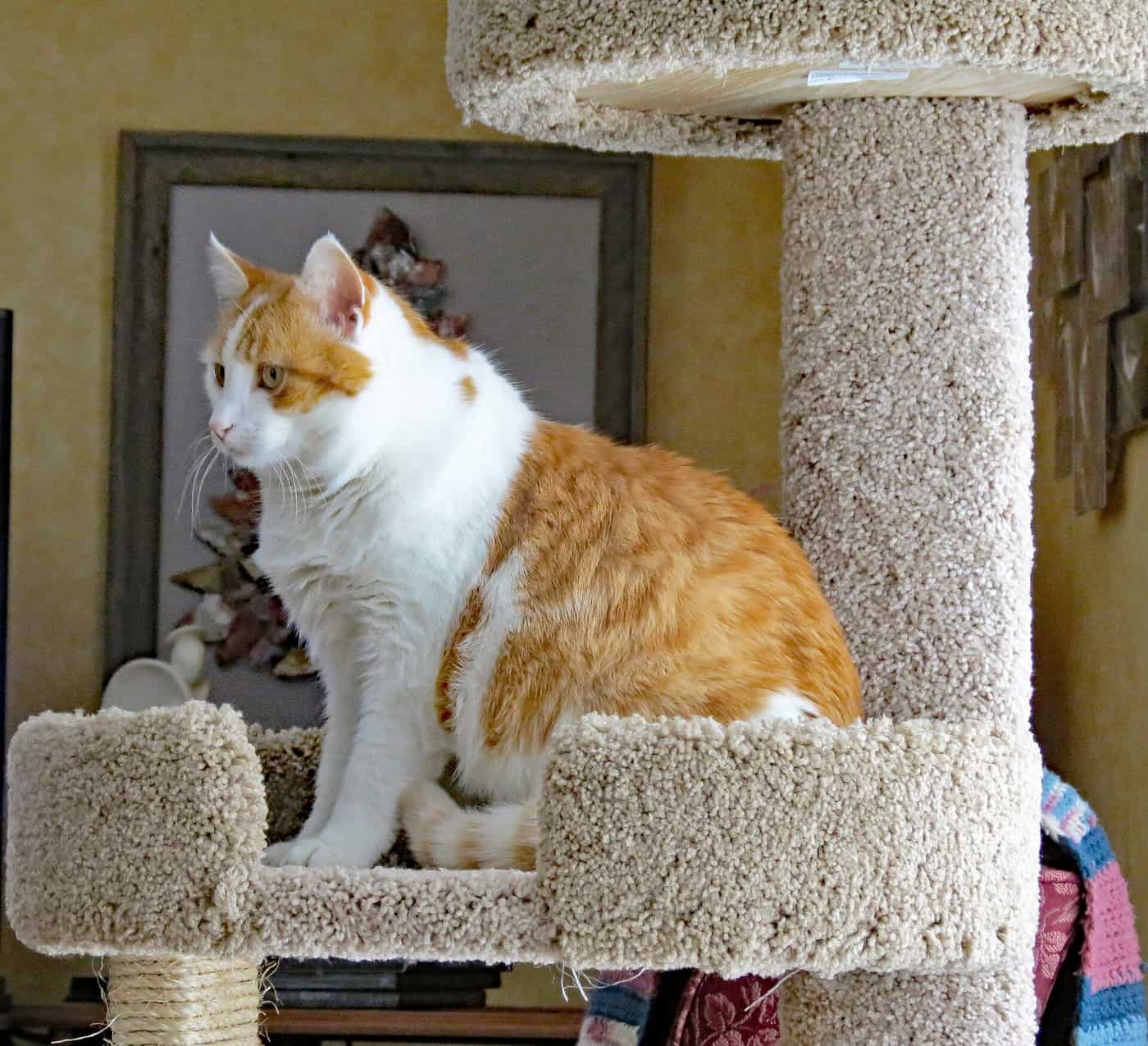
Cats abandon cat trees for one reason, and it is almost never the height. It is that the thing moved when they jumped on it.
By Brijon M. - Published October 9, 2026
The short answer
A cat tree under $100 lives or dies on stability. A wide, heavy base, an anti-tip strap that anchors it to the wall, and sisal rather than carpet on the posts are what separate a tower a cat uses daily from one that wobbles once and is ignored forever. Published weight limits matter more than height, and most sub-$100 trees are rated for cats under about 10 pounds each.
Disclosure: we earn commission on qualifying purchases made through the links below, at no extra cost to you. It never changes the order of our picks - here is how that works.
Wobble is the failure mode
The single most common complaint across cheap cat trees is not that they fell apart or that the fabric wore out. It is that the tower moves - a sway at the top perch when a cat lands on it, or a lean that gets worse as the particleboard around the bolts compresses.
That matters more than it sounds, because of how cats decide what to use. A cat that jumps onto a perch and feels it shift once treats the whole structure as unsafe, and it will not go back. You can have bought the tallest tree with the most condos and have it stand unused in the corner for a year, which is exactly what the one-star reviews in this category describe.
Three things fix it, and all three are visible in a listing before you buy:
Base footprint and weight. A wide, heavy base resists the lateral force of a cat landing. A tall tower on a narrow base is a lever, and the taller it is the worse the physics get.
An anti-tip strap. A webbing strap that screws to a wall stud and holds the top of the tower. This turns a tall narrow tree from a tipping risk into a stable one, and it is the cheapest safety feature in the category. Trees that include one say so; trees that do not include one usually do not mention stability at all.
Honest hardware and honest filler. Solid particleboard platforms with threaded inserts hold up. Stiff cardboard tubes loosely wrapped in faux fur do not, and they are common at the bottom of this market. If a listing gives no material for the posts and platforms, assume the cheapest option.
How we picked
We do not test cat furniture and we have not assembled every tower here. What we read instead is what the manufacturer is willing to publish - base dimensions, a per-platform or total weight limit, post material, whether an anti-tip strap is in the box - plus what owners report after the first year, which is when the bolts have loosened and the sisal has been used. The method is at how we pick.
Published weight limits are the most useful number and the most commonly missing one. A tower rated for 44 pounds total is a sensible fit for two or three cats of ordinary size; it is not a fit for one 20 pound Maine Coon on a single perch, which concentrates that load in one place. Where a brand publishes nothing, we treat it as a tree for a small or average cat only.
A tree was excluded for any of three reasons: no stated weight limit anywhere in the listing or manual; perches under roughly 11 inches across on a tower marketed for large cats, since a cat that overhangs a perch will not settle on it; or a height over about 60 inches with no anti-tip strap, which is a tipping hazard rather than a durability question.
- Base width before height. A wide base used daily beats a tall tower ignored.
- Sisal rope posts, not carpet-wrapped ones - cats scratch vertically on sisal and it lasts far longer.
- Check the weight limit against your heaviest cat, not against the number of cats.
- Anchor it to the wall if the tower is over about four feet, using the strap if one is included.
Quick picks
The short version. Tap any row to jump to the full write-up, or go straight to Amazon to check the current price.
| # | Product | Best for | Price |
|---|---|---|---|
| 1 | 54-inch Cat Tree Tower Publishes a real weight limit, ships with an anti-tip strap, and keeps a sensible footprint. | Best overall | |
| 2 | Tall multi-level cat tree (62 to 79 inch) Enough separate perches and posts that cats are not forced to share, still inside $100. | Best for multi-cat homes | |
| 3 | Cat tree for large cats, extra-large bed Low, wide and stable, with a perch a 20 pound cat actually fits on. | Best for big or senior cats | |
| 4 | XXL multi-level cat tree (around 57 inch) The rare tall tower with condos and perches sized for a genuinely large cat. | Best for Maine Coon-size cats that still want height | |
| 5 | Tall sisal post plus a window perch Under $60 for the two things a cat actually wants, in a fraction of the floor space. | The cheap route that often works better |
We do not print prices on this site. Every button opens the live Amazon listing so you see the real price at the moment you click. See our affiliate disclosure.
1. Best overall
54-inch Cat Tree Tower
Publishes a real weight limit, ships with an anti-tip strap, and keeps a sensible footprint.
- 54 inch height
- 44 lb stated weight limit
- Three sisal rope posts
- Anti-tip wall strap included
This is the tower that does the three things this page is about, at a price that leaves room in a $100 budget. Retailer listings put the stated weight limit at 44 pounds, include a safety strap for securing the tower to a wall, and specify three sisal-rope coiled scratching posts rather than carpet-wrapped ones.
The layout is the useful part: two enclosed condos with door and window openings, multiple platforms at different heights, and a hammock. Enclosed hiding space matters more than most buyers expect - a cat that can get *inside* something is far more likely to adopt the tree as its own place rather than treating it as furniture it occasionally sits on.
Retailer ratings sit around 4.3 out of 5 across several thousand reviews on individual color variants, and the recurring positive note is that it stays steady once the strap is fitted.
The honest fit: this is a tower for two to three cats of roughly 10 pounds or less, which describes most households.
What you give up
The perches are small. A cat much over 12 pounds will overhang the platforms and the condo openings, and heavy cats are exactly the ones that will make the tower sway. Assembly also runs long - many panels, many bolts - and the particleboard needs retightening after a few months.
2. Best for multi-cat homes
Tall multi-level cat tree (62 to 79 inch)
Enough separate perches and posts that cats are not forced to share, still inside $100.
- 62 to 79 inch height
- Multiple condos and perches
- Sisal and carpet posts
- Wall strap included
The thing that makes a multi-cat home work is not floor space, it is vertical separation. Cats in the same house negotiate status by height, and a tower with several perches at genuinely different levels lets two or three of them occupy the same corner without a standoff. One perch for three cats creates a conflict; six perches removes it.
Yaheetech's taller towers - the 62 and 79 inch versions - put nine scratching posts, two condos, hammocks and a ladder on one footprint and still land under $100, which is why they appear in almost every budget cat tree roundup. Pet review sites that cover the under-$100 bracket consistently list both.
Anchor these. At six feet of height on a particleboard base, the included strap is not optional, and a wall stud is the right place for it.
If you have the ceiling height and the corner, this is more cat tree per dollar than anything else on the page.
What you give up
It is genuinely large and it looks it - this is a piece of furniture that will dominate a small room. The perches are the same small size as on the 54 inch model, so the height buys quantity rather than comfort for a big cat, and the assembly is long enough that most owners describe it as an afternoon.
3. Best for big or senior cats
Cat tree for large cats, extra-large bed
Low, wide and stable, with a perch a 20 pound cat actually fits on.
- About 33 inch height
- Extra-large padded top bed
- Plush surfaces, sisal posts
- Small floor footprint
Most cheap cat trees are built for a 9 pound cat, and the owners of big cats find that out the hard way. Feandrea's low tower solves the problem differently: it gives up height entirely and spends the budget on an oversized padded bed and a wide, stable structure.
That is also the right answer for an older cat. Arthritis in cats is common and under-diagnosed, and a senior cat that can no longer make a four-foot jump will simply stop using a tall tower. A 33 inch tree with a step up to a big cushioned platform keeps the elevated resting place without asking for the jump.
Pet review coverage of the under-$100 bracket flags the same two things we would: the extra-large bed is the reason to buy it, and it suits cats that want to sleep somewhere up off the floor rather than cats that want to climb.
Short, wide and heavy also means it does not need wall anchoring, which makes it the right pick for a rental.
What you give up
There is almost nothing to climb and no enclosed condo, so a young, active cat will be bored by it within a week. It is a bed on legs with a scratching post attached, and it is priced like a full tower despite having far fewer features.
4. Best for Maine Coon-size cats that still want height
XXL multi-level cat tree (around 57 inch)
The rare tall tower with condos and perches sized for a genuinely large cat.
- About 57 inch height
- Three large condos
- Big platform plus hammock
- Thick sisal posts
This is the compromise pick for the hardest case in the category: a cat that is both large and active. Hey-brother's XXL towers - the roughly 57 inch models, and a 53 inch version with two condos and a hammock - are built with wider platforms and larger condo openings than the standard budget tower, which is the specification that actually matters for a big cat.
The sisal posts are thick enough to take serious scratching rather than fraying in a month, and the layout spreads three condos across the height so a large cat has more than one place it fits.
Price is the thing to watch. These sit at the very top of the $100 bracket and some sizes and colors cross it, so check the live listing before you commit - if it has drifted over, the Yaheetech 54 inch plus a separate wide perch is the cheaper route to the same outcome.
Owner reports on the XXL models are good on sizing and mixed on assembly, which is the usual pattern when a budget tower gets physically bigger.
What you give up
It is heavy, it is bulky, and the assembly is the longest here - several owners describe needing a second pair of hands. A big tower on particleboard also needs its bolts checked every few months, and the price sits close enough to $100 that a sale elsewhere can make it the wrong buy on the day.
5. The cheap route that often works better
Tall sisal post plus a window perch
Under $60 for the two things a cat actually wants, in a fraction of the floor space.
- 32+ inch sisal scratching post
- Suction or bracket window perch
- No assembly to speak of
- Roughly $25-30 each
Worth a place here because for a lot of households it is the better buy, and almost nobody considers it. Strip a cat tree down to what a cat is actually using and you find two things: a vertical surface tall enough to stretch out fully against and scratch, and a high place to sit and watch.
A standalone sisal post 32 inches or taller does the first job better than a cat tree does, because cat trees compromise post height to fit platforms around it. Cats scratch to stretch as much as to sharpen, and a post shorter than their full standing reach gets ignored in favor of your sofa arm.
A window perch does the second job better than any platform, because the view is the attraction. A cat will choose a window over a condo almost every time, and the perch costs a fraction of a tower and uses no floor space at all.
Buy both for under $60 in a small apartment and you have covered the function of a $100 tower with no assembly and nothing to tip over. For the shedding that comes with a cat that now sleeps in a sunny window, best pet hair vacuum under $200 is the companion purchase.
What you give up
No enclosed hiding space, which some cats want badly, and nothing to climb - this is a scratching and sitting solution, not an exercise one. Suction-cup window perches also need a smooth, clean window and a cautious weight check, and they are not a good idea for a cat much over 15 pounds.
Sisal or carpet, and why it decides where your cat scratches
Almost every cheap cat tree wraps its posts in one of two materials, and the choice has a consequence most buyers do not anticipate.
Sisal rope is coarse natural fiber wound tightly around the post. Cats get a satisfying vertical drag on it, it sheds fiber slowly rather than unraveling, and - importantly - it feels nothing like your furniture.
Carpet is cheaper and it is what the lowest-priced towers use. The problem is that it feels exactly like carpet, which is what is on your floor and sometimes on your stairs. A cat trained to scratch carpet on a tower has been trained to scratch carpet.
If the tower you want only comes with carpet posts, a few dollars of sisal rope and a staple gun converts one post, and that is usually enough.
One more detail worth knowing: cats scratch to stretch their spine and shoulders as much as to condition their claws, which is why post height matters more than post count. A post your cat can reach up and extend fully against will be used. A short post between two platforms will not be, no matter how many of them the listing advertises.
Getting a cat to actually use it
A rejected cat tree is almost always a placement problem rather than a product problem, and it is fixable for free.
Put it where the cat already wants to be. Not in the spare room, not in the corner you want it in. Next to the window the cat sits at, or in the room the household uses in the evening. Cats want elevation *in* the social space, not away from it.
Give it a week before judging. New furniture is suspicious. A tower sprinkled with catnip or silver vine on the top perch, with a few treats left on the platforms for the first few days, gets investigated far faster than one that simply appears.
Make the bottom of it the comfortable option. Many cats start by using only the base condo and work upward over weeks. That is normal and not a sign the height is wasted.
Check the wobble yourself. Push the top perch firmly with one hand. If it moves more than slightly, tighten every bolt, and fit the anti-tip strap even if the tower seems fine. One bad landing is all it takes for a cat to write the tree off permanently.
Retighten at three months. Particleboard compresses around bolt threads and every budget tower loosens. Ten minutes with the supplied key resets it, and it is the difference between a tree that lasts five years and one that is swaying by next spring.
If the spot the cat has chosen instead is your bed, that is a laundry problem as much as a furniture one - best bed sheets under $50 is the buy-two-and-rotate answer.
What a cat tree is actually for
It is worth being clear about the function, because it changes which of the picks above is right for you.
Vertical territory. Cats are both predator and prey, and height is where they feel safe. A cat with no elevated place to retreat to spends more time stressed, and the standard behavioral advice for a tense multi-cat household is to add vertical space before anything else.
A legal scratching surface. Scratching is not optional behavior and cannot be trained away - it conditions claws, stretches muscle and marks territory with scent glands in the paws. The only workable approach is to provide something better than your furniture, in the place where the furniture is being scratched.
A place to be left alone. This is what the enclosed condos are for, and it is why a tower with a hiding space often gets adopted faster than a taller one without.
What a cat tree is not is exercise equipment. A cat that needs more activity needs play with a human holding a wand toy, not a taller tower. If that is the problem you are solving, the money is better spent elsewhere - indestructible dog toys covers the same durability logic for the other species in the house.
Where this sits in a cheap cat setup
A cat tree is one of four purchases that actually change daily life with a cat, and it is not the first one. The litter box is - how to choose a cat litter box explains why box shape and size cause more problems than any other piece of cat equipment, and best cat litter box under $100 covers the picks.
Water is the second. Cats drink less than they should and that has real consequences for kidney and urinary health, which is the entire argument in are pet water fountains worth it.
After that it is the tree, and then hair management, because a cat with a favorite perch sheds onto it daily - best pet hair vacuum under $200 is the honest answer there. For the rest of this price bracket, the under $100 picks collect everything on this site at this ceiling, and best budget pet cameras is worth a look if you want to know what the cat does with the tower while you are out.
Two more things worth getting right in the same room: the best budget pet water fountains and the best automatic cat feeders under $50.
How we picked
Every pick on this page is a real, currently-sold product that we could find at or under $100 at the time of the last update. Rank order is set before any link is attached.
We are research-led, not lab-led. We do not run a test lab and we do not claim to have personally used every product on this site. Picks come from manufacturer specifications, owner-reported reliability and failure patterns, expert-publication consensus, and real availability at the stated price ceiling. Read the full method.
Common questions
+Are cheap cat trees any good?
The decent ones are, and the difference is stability rather than price. A sub-$100 tower with a wide base, an anti-tip strap and sisal posts will be used daily for years. One with a narrow base and cardboard-cored posts will wobble, get rejected by the cat, and loosen within months.
+How tall should a cat tree be?
Tall enough that the cat can get above eye level of everything else in the room, which usually means four feet or more. But a stable short tower beats an unstable tall one every time - if the budget forces a choice, buy the wider base.
+What weight limit do I need?
Check the per-platform limit if the brand publishes one, not just the total. A tower rated 44 pounds total is sized for two or three average cats, not for one 20 pound cat on a single perch. For a cat over about 15 pounds, look specifically for wide platforms and a large-cat rating.
+Sisal or carpet posts?
Sisal. It lasts far longer under real scratching and, crucially, it does not feel like the carpet on your floor - a carpet-wrapped post teaches a cat that carpet is an acceptable scratching surface. If the tower you want has carpet posts, sisal rope and a staple gun convert one cheaply.
+My cat ignores the cat tree. What now?
Move it before replacing it. Cats want elevation in the room the household uses, next to a window if possible, not in a spare room. Add catnip or silver vine to the top perch, leave treats on the platforms for a few days, and check that the tower does not move when pushed.
+Do I need to bolt it to the wall?
Over about four feet, yes. Tall towers on particleboard bases tip, and the included anti-tip strap screwed into a wall stud removes the risk for nothing. It also eliminates the sway that makes cats abandon a tree in the first place.
Sources
Read next
Pet
How to Choose a Cat Litter Box Your Cat Will Actually Use
The size rule most boxes break, the honest case for and against a cover, and how many boxes a household needs.
Best cat litter box under $100
Best Cat Litter Box Under $100 (October 2026)
Bigger than you think, open rather than hooded, and why cheap self-cleaning boxes cause problems.
Best pet hair vacuum under $200
Best Pet Hair Vacuum Under $200 (October 2026)
Tangle-resistant brush roll beats raw suction. Five picks under $200 and the filtration that matters for allergies.
Best pillow under $50
Best Pillow Under $50 (October 2026)
Fill type and loft beat price entirely. Five pillows under $50, chosen by how you sleep.

Shop by price
Under $100
The sweet spot. The only price ceiling with real search demand in all seven categories we cover.

Think we got a pick wrong, or spotted one that is out of stock or over its ceiling? Tell us - corrections go to the front of the queue.